

Audio By Carbonatix
Scientific discoveries and research outcomes with the potential to impact society often do not get to the public space due to a hitch in communication between researchers and the consuming public.
Scientists and researchers in most African countries, including Ghana, are faced with the challenge of communicating their findings for public consumption.
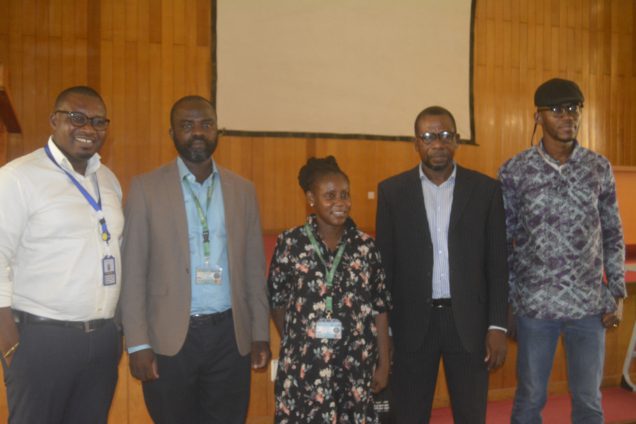
To reverse the trend, the Faculty of Mechanical and Chemical Engineering at the Kwame Nkrumah University of Science and Technology is empowering its lecturers with communications skills in disseminating research.
The Research Communications seminar is aimed at building the capacity of researchers to better communicate their findings to the public.
Dean of the faculty of Mechanical and Chemical Engineering, Prof. George Yaw Obeng, acknowledged some scientists and students of science in Ghana lacked relevant skills and knowledge for effective communication.
“Do ordinary Ghanaians benefit from our research findings? Are our students well trained for interviews? Are our researches visible and accessible to Ghanaians? Sadly, we are not sure our answer is simply yes or no,” Prof. Obeng said.
Professor Obeng indicated “having the skills to communicate research in an effective manner will have a positive impact on both the researchers and the public”.
He is confident the acquisition of effective communication skills would enable researchers to ultimately impact society.
Scientists and researchers in most African countries, including Ghana, are faced with the challenge of communicating their findings for public consumption.
The researchers were equipped with skills in writing for broadcasts, preparing for interviews, media visibility, and importantly how to disseminate their research findings.
Resource persons from the Kumasi unit of The Multimedia Group, Kofi Adu Domfeh and Kwasi Debrah, took participants through practical skills in effective research communication.
Associate Professor at the KNUST’s Brew-Hammond Energy Centre, Professor Francis Kemausuor, acknowledged the training would help scientists to stay relevant in both the public and scientific spaces.
“KNUST as an institution is striving to be one of the best in Africa, this means we researchers must be visible to project the school.
“This exercise is very helpful to us as an institution to help make researchers in the school more visible in both public and scientific spaces.
“Media visibility also promotes the school to be ranked as the best globally,” he said.
Latest Stories
-
One dead, six maimed as bloody land feud tears Krachi Nchumuru apart
13 minutes -
Missing service member rescued by US forces after jet downed in Iran, Trump announces
35 minutes -
Gomoa Easter Carnival: Sarkodie, Kuami Eugene, Tinny, set festival ablaze as Day 3 ends on high note
1 hour -
“Feels amazing” – Antoine Semenyo reveals after Manchester City dismantle Liverpool
1 hour -
Mahama calls for emergency cabinet meeting over rising fuel prices
2 hours -
Asante Gold reports US$345million loss for 2025
3 hours -
Gov’t making progress in clearing $1.7bn power debt – Mahama
4 hours -
Justice is the engine of growth – Chief Justice
5 hours -
Meet us halfway – Trade Minister tasks private sector with AfCFTA success
5 hours -
After more than 14 years at Atletico Madrid, what next for Simeone?
5 hours -
Conquering the World – Building on the foundations laid by Otto Addo
5 hours -
[Playback] Sarkodie, Kwami Eugene, Tinny, Keche and others thrill fans at Gomoa Easter Carnival
6 hours -
Gomoa Easter Carnival: Experts charge indigenes to own festival to ensure sustainability
7 hours -
Gomoa Easter Carnival: Edem Agbana and Joy Prime fans shower festival with huge endorsements
8 hours -
Gathering of Royals 2026: Empowering women, boosting tomato production
9 hours