

Audio By Carbonatix
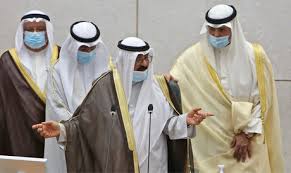
Kuwait’s new Crown Prince Sheikh Meshal al-Ahmad al-Sabah took the oath of office in parliament on Thursday, pledging the Gulf Arab state’s commitment to democracy and peace and calling on Kuwaitis to shun divisions.
The assembly unanimously endorsed the octogenarian Sheikh Meshal for the role in what has been a smooth succession that retained power firmly within the ruling family’s oldest ranks following last week’s death of Emir Sheikh Sabah al-Ahmad.
New ruler Emir Sheikh Nawaf al-Ahmad, 83, assumed power last Wednesday in the U.S.-allied OPEC member state as it faces a liquidity crunch caused by low oil prices and the COVID-19 pandemic against the backdrop of continued tensions between larger neighbours Saudi Arabia and Iran.
Sheikh Meshal, in televised remarks, said Kuwait would uphold its regional and international commitments and “its path of peace and democratic approach”.
He pledged to “raise the banner of popular participation and promote a tolerant spirit that shuns division.”
Diplomats and analysts say that because of his low-key style and age, Emir Sheikh Nawaf may delegate a larger portion of responsibilities to Sheikh Meshal, a forceful figure who had been deputy head of the National Guard since 2004 and before that headed State Security for 13 years, shunning public-facing roles.
Sheikh Meshal’s rise stands in contrast to some other Gulf states, most notably Saudi Arabia, where ruling families are starting to give top jobs to younger princes.
Sheikh Nawaf and Sheikh Meshal, both brothers of the late ruler, are expected to focus on domestic issues as the country prepares for parliamentary elections this year and the government tries to shore up its finances.
Frequent clashes between the hand-picked cabinet, in which ruling family members hold most senior posts, and the assembly have led to successive government reshuffles and dissolution of parliament, hindering investment and economic reforms.
The new leaders are expected to uphold oil policy and a foreign policy shaped by Sheikh Sabah that strove for unity in a polarised region and balanced ties with Saudi Arabia, Iran and former occupier Iraq.
Latest Stories
-
See the areas that will be affected by ECG’s planned maintenance today, Sunday, March 29
7 minutes -
Flood alert: GMet warns of dangerous downpours across Ghana today
49 minutes -
‘Groundbreaking but an uphill struggle’ – Amanda Clinton breaks down UN slavery resolution
1 hour -
Otumfuo demands year-end completion for stalled KNUST hospital
2 hours -
Sir Sam Jonah slams political interference in insurance industry
2 hours -
Yemen’s Houthis enter Iran war with attacks on Israel, while US Marines arrive in region
3 hours -
Potential Houthi threat to Red Sea shipping could further damage global economy
5 hours -
Sir Sam Jonah unveils five-point plan to boost Ghana’s insurance industry
6 hours -
Abstention not a rejection of Ghana’s slavery resolution — EU
6 hours -
‘DDEP was a big blow; full recovery not achieved yet’ – Sir Sam Jonah
6 hours -
The hypocrisy of the global north and the truth about the Transatlantic Slave Trade
7 hours -
2,280 students graduate with B-Tech, M-Tech from Takoradi Technical University
7 hours -
“We are losing ourselves” – Special Prosecutor laments cultural erosion in Ghana’s education system
8 hours -
‘We were trained to serve, not lead’ – Special Prosecutor condemns colonial education legacy
8 hours -
Education must preserve identity and drive innovation – Special Prosecutor
9 hours