

Audio By Carbonatix
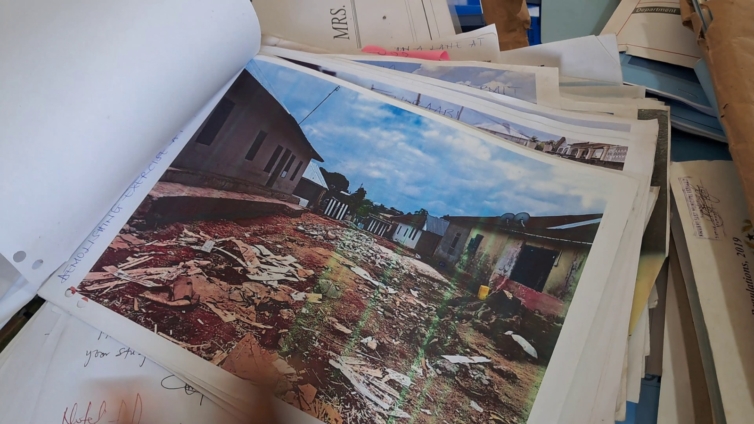
Over the past four years, the Kwabre East Municipal Assembly in the Ashanti Region has demolished at least 20 structures built illegally on waterways.
These buildings were not only unauthorized and unpermitted but also blocked the natural flow of water, increasing the risk of flooding during heavy rains. The demolitions are part of efforts to prevent future disasters and promote safer, more resilient communities.

According to engineers and physical planning officials, some residents begin construction without considering the dangers of building in high-risk areas or seeking professional advice. This lack of planning has exposed several communities to flooding, erosion, and other environmental problems.
Despite the well-known risks that floods pose to both lives and property, some developers in the municipality continue to build on waterways further worsening an already hazardous situation.
Municipal Development Control Engineer, Abubakar Alhassan, said the consequences of such developments increase risk of floods and erosion can no longer be ignored. He stated that the municipality has made significant efforts to address the issue by targeting structures built on waterways. “For the past four years, we’ve demolished not less than 20 buildings [constructed] on waterways,” he said.

He mentioned communities like Bosore, Turba, Asenua, Medoma among others as areas where these demolitions have taken place, serving as a warning to others against building in such locations.
Engr. Alhassan added that once a structure is spotted on a waterway, action is taken immediately to demolish it. “The moment we see somebody developing on a waterways, we demolish it instantly. We activate the demolish act on both on waterways and road to make sure people do not built on road or waterways.”
Meanwhile, the Municipal Director of Physical Planning, Jonas Kwame Bonah, explained that although the assembly has a solid development plan on paper, enforcement faces major setbacks. Chief among them is interference from political figures and some traditional leaders, which affects the work of planning officers and engineers.
“By the time you realize, the chiefs are there selling those portions to developers to develop. We try our best to ensure that those developments are halted,” he said.
“The challenges that we are facing current are the interference of politicians and chiefs. When you stop someone from development, the person will stop today but the time you realise the person has raise up the structure,” Engr Abubakar added.
Both officials say they remain committed to ensuring that flood-prone areas are protected and that illegal structures are dealt with swiftly to save lives and reduce disaster risks.
Latest Stories
-
Ghana’s public sector pay exceeds ECOWAS threshold – Finance Minister
4 hours -
Man City suffer Champions League exit to Real Madrid
5 hours -
Chelsea blown away by PSG to exit Champions League
5 hours -
Thiago and Rayan receive first Brazil call-ups
5 hours -
VAR error cost Brighton penalty against Arsenal
5 hours -
FIFA appears to rule out moving Iran’s matches to Mexico
6 hours -
CAF declare Morocco AFCON 2025 winners with final results overturned
6 hours -
Sporting Lisbon’s superb comeback ends Bodo/Glimt’s run
6 hours -
Ali Larijani, Iran’s ultimate backroom powerbroker, dies at 67
6 hours -
Gov’t urges reforms in education sector to boost competitiveness
6 hours -
No full renegotiation of conditions of service across public sector in 2026 – Mahama to Organised Labour
6 hours -
Osabarimba Kwesi Atta II to grace Gomoa Easter Carnival
6 hours -
High public sector wage bill leaves Ghana with little room to hire new workers
7 hours -
Employees compensation the largest share of gov’t expenditure – Finance Minister
7 hours -
Early indications show Israel tank fire hit UN Lebanon base injuring Ghanaian peacekeepers, source says
7 hours