


Audio By Carbonatix
An Associate Director, Tax and Legal at Deloitte Ghana, Gilbert Yirenkyi-Addo has expressed worry about the lack of skilled labour in advanced technologies, constraining industrial growth in Ghana.
According to him, the world is now fixated on digitalisation and Artificial Intelligence, and therefore Ghana must develop its industrial economy by investing more in technology and creating deliberate policies for the manufacturing sector to thrive.
Mr. Yirenkyi Addo disclosed this as a panelist at the annual Association of Ghana Industries Industrial Summit and Exhibition. The topic for the panel discussion was “Promoting Industrial Development in Ghana; How External Factors Impact our Potential for Growth”.
External Factors Influence Industrial Development
He stated that the success of industrial development is significantly influenced by various external factors.
“These factors, which are often beyond the direct control of the government, can either create opportunities or pose significant challenges to Ghana's potential for industrial growth", he said. “Nevertheless, the current global happenings present Ghana with the opportunity to take advantage and become a competitive hub”, he added.
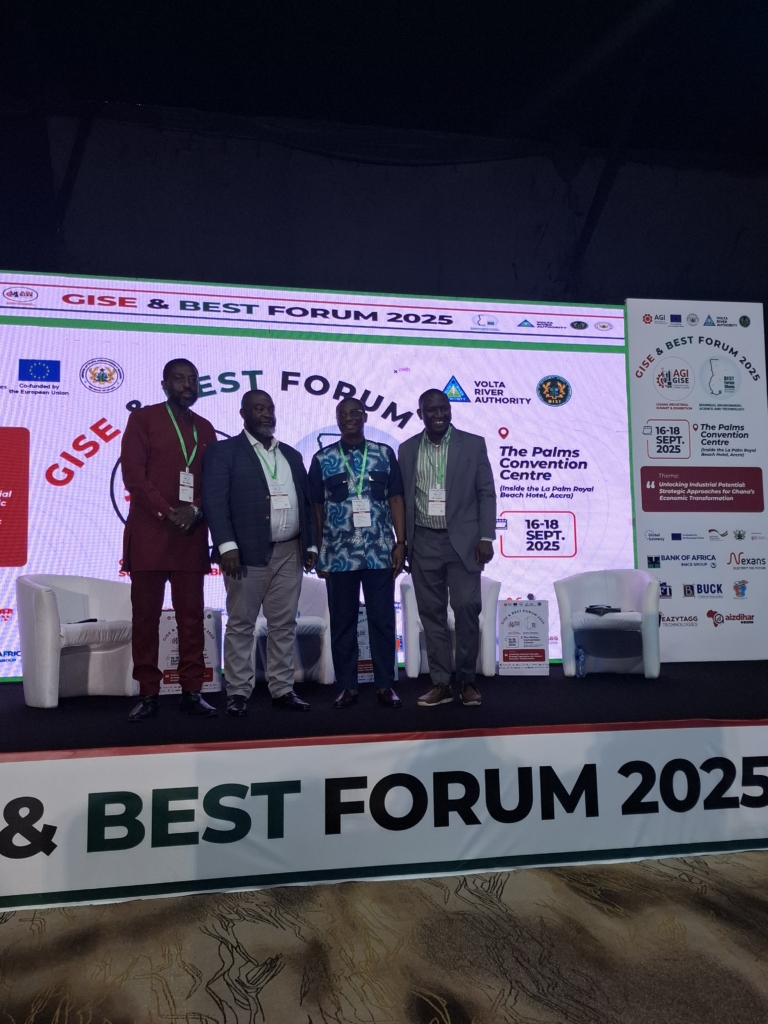
He further stated that external factors such as global economic conditions, commodity price fluctuations, Foreign Direct Investment (FDI) patterns, international trade policies, technology adoption, and skills availability have a significant impact on Ghana’s industrial development.
Therefore, he cautioned against the overdependence on primary commodity exports such as oil, gold and cocoa, which make the Ghanaian economy vulnerable to global price changes, impacting revenue and the stability of the Ghana cedi.
“When global commodity prices fall, Ghana's export revenues decline, leading to a loss of foreign exchange and a weakened currency [the cedi], thereby reducing government revenue. This negatively impacts the government’s ability to finance crucial infrastructure projects and industrial support programmes”.
Overconcentration of FDIs in Extractives
Mr. Yirenkyi-Addo was also concerned about the concentration of FDIs in the oil and gas and mining sectors, saying, it hinders diversification and technology transfer to other industries.
According to him, the concentration of FDIs in the extractive sector has led to the crowding out of other industrial sectors, particularly manufacturing and this remains a key concern in Ghana.
He added that “The manufacturing sector faces competition from imports and challenges in fully leveraging opportunities like the African Continental Free Trade Area due to non-tariff barriers and infrastructure gaps. A lack of skilled labour in advanced technologies also constrains industrial potential as the world is now relying more on digitalization and AI technologies in various aspects of economic growth”.
Latest Stories
-
Trade Minister applauds GUTA as a pillar of economic growth; Prez Mahama honoured
24 minutes -
President’s brother’s takeover of Damang Mines is ‘untidy’ – Alhassan Tampuli
30 minutes -
It’s not true that gov’t decided not to renew the lease for Gold Fields – Bobby Banson
34 minutes -
Ghana to boost tomato production with 60-hectare irrigated farms and processing initiatives
52 minutes -
E&P’s takeover process of Damang Mines was very clean – Inusah Fuseini
55 minutes -
Damang takeover: There is not going to be any job loss; it is a lease change – Bobby Banson
1 hour -
Gold Fields didn’t stop mining at Damang mines; such claims are untrue – Bobby Banson
1 hour -
Engineers and Planners currently operate only in Ghana – Bright Simons
2 hours -
Lands Minister has no legal basis to restrict lease to Ghanaian firms – Bright Simons
2 hours -
Gov’t’s refusal to renew Gold Fields’ lease was simply untenable – Bright Simons
2 hours -
SOS Children’s Villages Ghana deepens partnership with Gender Ministry
2 hours -
Gender Ministry celebrates Christina Koch, reaffirms commitment to empowering girls
2 hours -
Live stream: Newsfile digs into E&P’s takeover of Damang Mines, OSP powers and Anti-LGBTQ Bill
3 hours -
Moody’s maintains Ghana’s rating at Caa1, revises outlook to positive
3 hours -
Zambia elevates tourism education to national priority as President Hichilema backs continental summit
4 hours