

Audio By Carbonatix
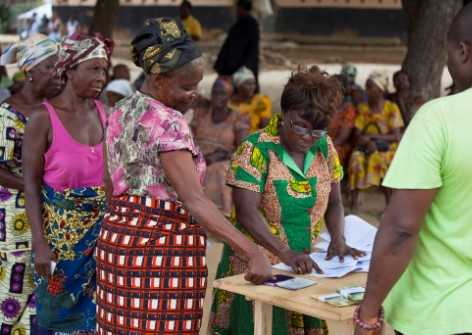
Some beneficiaries of the Livelihood Empowerment Against Poverty (LEAP) programme have commended the government for increasing the cash grant from July this year.
They said they had benefitted from the programme in diverse ways and were appreciative of the government.
LEAP is to smoothen consumption, promote access to social services through linkages and stimulate behavioural change toward productive activities by the provision of cash grants to extremely poor and vulnerable households.
Beneficiaries include extremely poor, elderly, 65 years old and beyond support, orphaned and vulnerable children, persons with severe disabilities who cannot work, and pregnant women or mothers with children under age one.
LEAP is a cash transfer programme introduced by the government in 2008 for extremely poor and vulnerable households, orphaned and vulnerable children, persons with severe disabilities who cannot work, and elderly persons who are 65 years of age and older.
In July 2024, the amount paid to beneficiaries was doubled, one eligible member household, from GH₵128.00 to GH₵256.00, two-member households, GH₵152.00 to GH₵304.00, three-member households, GH₵176.00 to GH₵352.00 and four-member households GH₵212.00 to GH₵424.00 bi-monthly.
This, the Minister for Gender Children and Social Protection, Dakoa Newman, said was to provide relief and support to the beneficiaries to enable them to meet their basic needs more effectively as well as invest in their future well-being.
Mr Kwaku Opoku, a beneficiary, said his family had benefited from the programme since its inception.
He said with his wife, they managed to own a palm oil plantation on his wife’s land.
Mr Opoku said the purpose of the programme would have been defeated if they had only fed on the money without investing in a "small venture".
He said they had been empowered to an extent that when LEAP payments were delayed, no matter how small the farm was, they were able to feed from its proceeds.
‘‘I remember a friend who was sick used his share of the grant to buy medicines and feed himself; he has moved to another region, but he still receives his money," Mr Opoku recounted.
Madam Rebecca Mettle, a caretaker of four orphaned children under the programme, said catering to the needs of the children was possible because of the grant.
She said her earnings from the sale of cassava and plantain were used to buy school uniforms and to pay for the school fees of the children.
Mr Zacharia Yakubu expressed appreciation to the Government for the increase in the cash grant, attributing his well-being to the LEAP programme.
Latest Stories
-
Atletico Madrid stun 10-man Barcelona to seize Champions League semi-final advantage
20 minutes -
Black Stars coach to be announced by next week – Sports Minister
29 minutes -
Chiefs, queen mothers and principal elders of Odau group denounce ‘rebellious Etweresohene’, pledges allegiance to Okyenhene
37 minutes -
KNUST library dress code sparks online backlash over strict rules
45 minutes -
Cultural Diplomacy in Action: Ghanaian youth leaders present symbolic smock to U.S. Chargé d’Affaires
46 minutes -
Ghana Card payment activation under review – NIA breaks silence on financial integration
1 hour -
Ofori-Atta’s ICE release on bail positive; he poses no risk – Amanda Clinton
1 hour -
Ken Ofori-Atta’s passport seized after bail, set to reappear in US Court on April 27
1 hour -
Stuck contraceptives risk HIV surge – Ghana HIV/AIDS Network President warns
1 hour -
Edmond Boateng elected Secretary of Honorary Consular Corps of Ghana
2 hours -
Omanhene Kwabena Asante slams GIADEC CEO over alleged discrimination in mining concessions
2 hours -
Majority of Ghanaian importers lack awareness of cargo insurance – Gyampo
2 hours -
GJA Ashanti applauds Asantehene for securing land for new press centre
2 hours -
CIMAF Ghana donates cement to Afua Kobi SHS
2 hours -
Ghana to benefit from France’s National health platform following Paris talks
3 hours