

Audio By Carbonatix
Oil prices have risen to their highest level in more than two years, after Qatar's energy minister warned he expects all oil and gas exporters in the Gulf to stop production within days.
Saad al-Kaabi told the Financial Times that the conflict in the Middle East, a region that plays a key role in global energy supplies and shipping routes, could "bring down the economies of the world".
Brent crude oil rose more than 9% on Friday, topping $93 a barrel - the highest level since autumn 2023.
Rising oil prices can have wide-ranging effects, not only on how much it costs to fill up your vehicle but also on the prices of some heating, food, and imported goods.
There are warnings that if the price of oil and gas - which has also surged this week - remain high, this could fuel inflation in major world economies such as the UK and US, where it has been on a broadly downward trend.
Kaabi said oil could hit $150 a barrel if the Iran conflict continues over the coming weeks.
He told the FT: "If this war continues for a few weeks, GDP growth around the world will be impacted.
"Everybody's energy price is going to go higher. There will be shortages of some products, and there will be a chain reaction of factories that can't supply."
Already, consumers in the UK are seeing higher petrol and diesel prices. On Friday, the RAC said petrol at UK pumps had increased by 3.7p, and diesel by 6p - reaching a 16-month high - since Saturday.
The Competition and Markets Authority, the UK's competition watchdog, says it is "closely monitoring" how petrol station prices develop.
Household energy bills could also rise, although this probably won't be felt until July as regulator Ofgem's energy price cap has already been set until then.
There have been fears that the current crisis could have a similar impact to Russia's invasion of Ukraine, but so far rises in the prices of oil and gas remain below the peaks experienced in 2022.
Asked about the energy minister's warnings, Jorge Leon, analyst at Rystad Energy, told the BBC the situation poses a "real risk to the global economy".
"I think we're on the edge of trying to understand if this is a very short energy crisis with limited implications, or if we're at the beginning of a massive economic and energy crisis," he said.
"If this lasts for more than two weeks, then the likelihood of seeing very significant implications for the energy system and the global macroeconomic outlook are much higher."
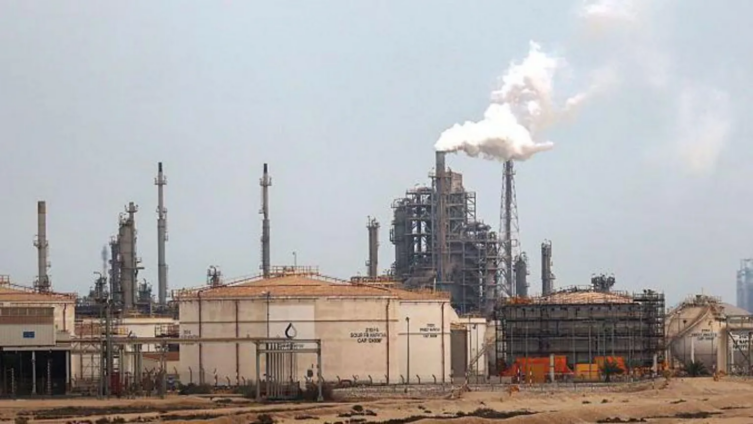
Qatar is a major producer and exporter of oil and liquefied natural gas (LNG).
This week QatarEnergy said it had stopped production of LNG following "military attacks" on its facilities.
It declared "force majeure" - a clause freeing it from liability for failure to supply due to events outside its control - and Kaabi said he believed all other energy exporters would have to follow suit in the next few days if the war continues.
Kaabi, who is also chief executive of QatarEnergy, said even if the war stopped now, it would take "weeks to months" to resume normal output.
About a fifth of the world's oil supply is usually shipped through the Strait of Hormuz each day. But traffic through the narrow passage has all but halted since the US-Israel war with Iran began last weekend.
Blocking the strait could make goods and services more expensive globally, and hit some of the world's biggest economies, including China, India and Japan, which are among the top importers of crude oil passing through the waterway.
The UAE and Saudi Arabia both have pipelines enabling them to transport oil without using the strait.
But analysts have warned that the longer there are threats to ships passing through the strait, the higher the price of oil - and the shipping of it - will be.
Rystad Energy's Leon said if countries in the Gulf cannot export oil they will need to store it, and, when this storage runs out, stop production. They have between days and a few weeks of reaching that point, depending on how much storage they have.
Oil prices exceeding $100 a barrel is a "realistic scenario", but the important thing is how long they stay at that level, he said.
Governments across the world at that point would likely release their oil reserves, as happened after the full-scale invasion of Ukraine by Russia.
Lindsay James, investment strategist at Quilter, said a prolonged halt to all oil and gas production in the Gulf was an "extreme scenario".
Market moves suggest investors expect disruption to traffic through the Strait of Hormuz will be resolved quickly, she said, but added that the risk grows every day that the conflict will be more prolonged than first thought.
"For households, the pressure will be felt primarily in energy prices, rather than a broad inflation shock," she said.
"UK food inflation, for example, is unlikely to be significantly affected because much of the food imported into the UK does not rely on Gulf shipping routes.
"The bigger economic risk comes from persistently higher energy costs, which can weigh heavily on growth."
Latest Stories
-
Ghana, Germany deepen cooperation on railways, labour mobility
1 minute -
Huge crowds greet Pope in Paris for open-air Mass
12 minutes -
‘I never said I’ll declare a state of emergency’ – President Mahama on galamsey
53 minutes -
Bobby Banson condemns EOCO’s attempted arrest of Nana Agyei Baffour Awuah
1 hour -
When Kumasi begins to look like somebody is in charge
1 hour -
Parliamentary probe into cocaine seizure would be a waste of time – Inusah Fuseini
1 hour -
Cocaine seizure: Focus on Ghana’s reputation, not partisan blame – Osae-Kwapong
2 hours -
Two Invitations, Three Interrogations: Did Baffour Awuah tell the whole story?
2 hours -
Drug cartels may be seeing Ghana as easy route – Lenin Anane Agyei
3 hours -
Ghana risks gaining notoriety as drug-trafficking hub – Bobby Banson
3 hours -
Government dismissed my drug trafficking warning, then tried to arrest me – Ntim Fordjour
3 hours -
Day Two: 3rd Republic Bank-JoyNews Habitat Fair Clinic underway at Junction Mall
3 hours -
NACOC addressing inherited gaps in fight against drug trafficking – Deputy Director-General
3 hours -
Taekwondo goes to school as GTF launches five-region youth campaign
3 hours -
The issues Mourinho is struggling to fix at Real Madrid
3 hours