

Audio By Carbonatix
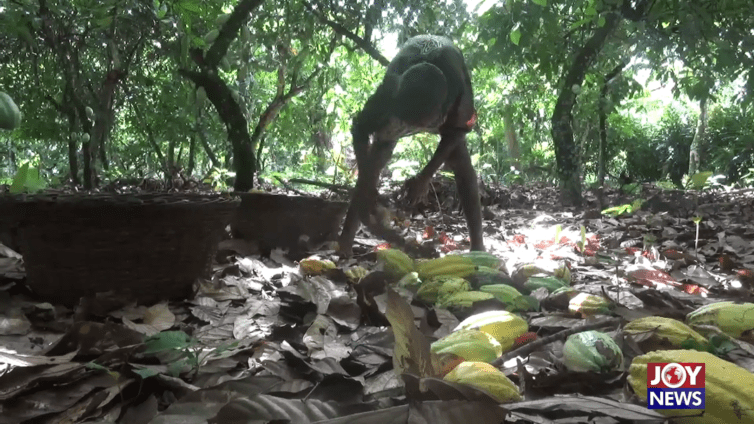
The Commission on Human Rights and Administrative Justice (CHRAJ) has sounded an urgent alarm over an escalating child labour crisis that is actively draining thousands of Ghanaian children out of the classroom and forcing them into premature economic hardship.
The human rights watchdog released the evaluation to commemorate the 2026 World Day Against Child Labour, painting a grim picture of a systemic failure to protect the country's most vulnerable demographic.
Despite decades of legislative promises and international treaties, the reality on the ground remains starkly unchanged for hundreds of thousands of minors.
In a statement released on June 12, 2026, the Commission reminded state authorities of the moral stakes at hand:
“The fulfilment of children’s rights is among the most fundamental measures of a society’s commitment to human dignity and social justice,” the Commission said.
Instead of dignity, however, CHRAJ noted that the relentless demand for cheap youth labour “continues to deprive many children of their right to education, protection, development and a safe and dignified childhood.”
The sheer scale of the crisis is laid bare by chilling data from the Ghana Statistical Service. While global figures show an astonishing 138 million children trapped in labour—including nearly 54 million subjected to hazardous, life-threatening work—Ghana's domestic statistics are equally harrowing.
A recent census tracking economic activity revealed that more than 1.1 million Ghanaian children aged between 5 and 17 were actively engaged in economic activity. Most indicting of all is the direct casualty this has inflicted on national literacy and development.
“Alarmingly, over 458,000 of these children were not attending school,” the statement said, adding that this reflects “the difficult reality that many children continue to miss out on education and opportunities that could shape a better future and help end the cycle of poverty.”
| The Data Behind the Crisis | National & Global Toll |
| Ghanaian Minors in Economic Activity | 1.1+ Million (Ages 5–17) |
| Ghanaian Child Workers Completely Out of School | 458,000+ Children |
| Global Child Labour Estimate | 138 Million |
| Global Minors in Hazardous Work | 54 Million |
What infuriates human rights advocates most is that this exploitation is occurring right under the nose of a comprehensive legal framework. Ghana is theoretically armed to the teeth with protective legislation, including:
- The 1992 Constitution
- The Children’s Act, 1998 (Act 560)
- The United Nations Convention on the Rights of the Child
- The African Charter on the Rights and Welfare of the Child
Yet, CHRAJ warns that these laws are being rendered useless by weak enforcement and biting economic realities. Rallying the nation under the global campaign banner, “Red Card to Child Labour: Fair Play for Children, Decent Work for Adults,” the Commission stressed that this is no longer a mere cultural or social issue, but a blatant criminal violation of constitutional rights.
CHRAJ concluded with a stern ultimatum to policymakers: either aggressively dismantle the systemic poverty pipelines that expose children to predators and employers, or prepare to face an unequal, broken society where long-term national development is permanently undermined.
Latest Stories
-
GMTF targets Volta healthcare gaps with equipment, specialist training and patient support
46 minutes -
Telecel Ghana wins 2 awards at the CCIFG Gala and Awards 2026
1 hour -
Petrol, diesel prices set to fall from Oct. 16 as LPG faces 18.5% hike
1 hour -
Bank of Ghana engages stakeholders in Techiman
2 hours -
PIAC unable to verify GH¢21m petroleum-funded projects in Ayawaso West
2 hours -
Ketu North MP led delegation petitions government over deteriorating Weta Irrigation Scheme
2 hours -
Unpaid contractor delays KATH Mother and Baby Unit as materials deteriorate
2 hours -
Kofi Adams says Ghanaians ignored warnings over World Cup visa payments
2 hours -
Banks to charge 20% VAT on payments for Netflix, Zoom, TikTok and others
2 hours -
Education Minister appeals to GAUA to call off strike, resume work on October 19
2 hours -
Mahama assures Assemblies of God of support for World Congress
2 hours -
Ghana must prioritise home-grown AI solutions to meet national needs – UNDP
2 hours -
Mahama truly cares – Obuobia Darko-Opoku
2 hours -
Fire at GRIDCo Mallam substation disrupts power in parts of Accra
2 hours -
Your client is Parliament, not a party; remain honest even when unwelcome – Speaker
2 hours