


Audio By Carbonatix
A comprehensive national survey on the compensation of Human Resource (HR) professionals has revealed growing concerns over pay disparities, with more than four in every 10 HR practitioners expressing dissatisfaction with their salaries despite the increasingly strategic role they play in organisations.
The findings are contained in the HR Compensation & Salary Satisfaction Survey Report – Ghana 2026, launched by SEDAT Consult Ltd., a human resource consulting firm, during a virtual event attended by HR practitioners, business leaders, consultants and industry stakeholders.
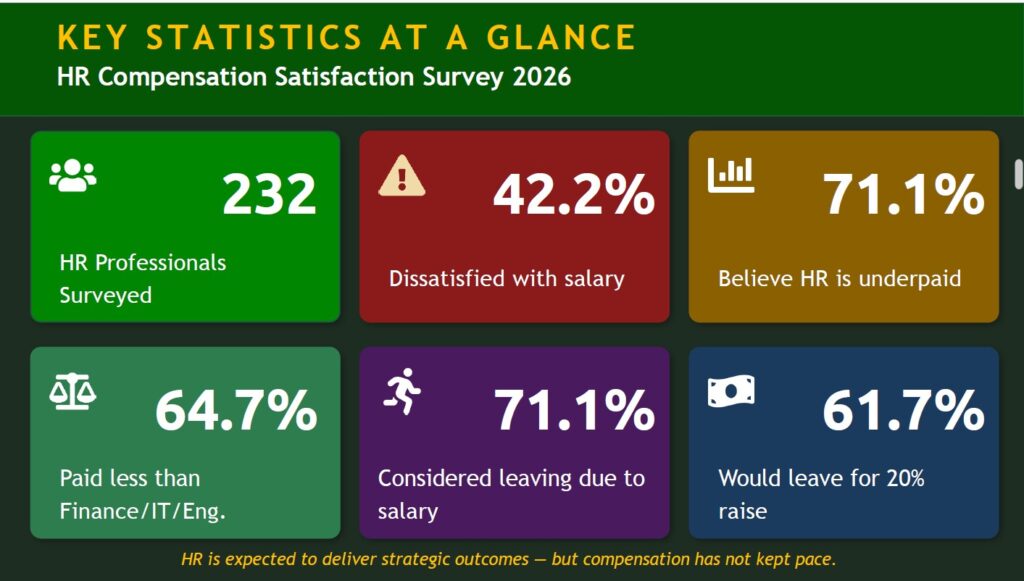
The report, which surveyed 232 HR professionals across multiple sectors of the Ghanaian economy, found that 42.2 per cent of respondents were dissatisfied with their current salaries, while only 28.4 per cent said they were satisfied with their remuneration.
It also revealed that 71.1 per cent believe HR professionals in Ghana are generally underpaid, while 64.7 per cent said HR practitioners receive lower remuneration than colleagues in finance, information technology, engineering and operations despite performing equally strategic functions.
Strategic role
Launching the report on Thursday, July 23, the Founder and Managing Director of SEDAT Consult Ltd., Mrs Patricia Abena Kissi, said the research was undertaken to replace anecdotal discussions about HR remuneration with credible evidence capable of informing policy and organisational decisions.
"For years, HR professionals have shared concerns about being underpaid and undervalued. We believed it was time to move beyond conversations and generate credible evidence that employers, professional bodies, policymakers, and HR leaders can use to drive meaningful change. Our goal is not simply to highlight a problem but to inspire practical solutions that strengthen the recognition, reward, and future of the HR profession in Ghana," she explained.
She described the findings as a wake-up call for organisations to align compensation with the increasingly strategic responsibilities assigned to HR professionals.
Mrs Kissi also challenged HR practitioners to strengthen their business and analytical capabilities, demonstrate measurable organisational value and actively contribute to shaping the future of the profession.
HR Value Paradox
A key feature of the report is what SEDAT Consult describes as the "HR Value Paradox" — the contradiction between the expanding strategic responsibilities assigned to HR professionals and what many perceive as inadequate recognition and remuneration.
According to the report, HR has evolved from a largely administrative function into a strategic partner responsible for talent acquisition, leadership development, organisational transformation, employee engagement, workforce planning and business sustainability.
Despite these expanded responsibilities, many practitioners believe their financial rewards have not kept pace with growing expectations.
The report argues that compensation extends beyond salaries and serves as a reflection of how organisations value particular functions.
It cautions that inadequate recognition could negatively affect employee motivation, commitment, engagement and staff retention.
Retention concerns
The survey also highlights a potential retention challenge within Ghana's HR profession.
According to the findings, 71.1 per cent of respondents said they had considered leaving their organisations because of salary-related concerns, while 61.7 per cent indicated they would accept another job if offered a salary increase of only 20 per cent.
SEDAT Consult warned that such trends could undermine organisations' ability to retain experienced HR professionals at a time when businesses increasingly depend on effective people management to remain competitive.
Underlying challenges
Beyond salary levels, respondents identified several factors contributing to perceptions of under-recognition, including the continued view of HR as an administrative rather than strategic function, limited ability to quantify HR's business impact, organisational budget constraints and weak salary negotiations.
The report stressed that addressing these issues requires broader organisational and institutional reforms rather than salary adjustments alone.
Call for collaboration
Participants at the launch agreed that improving HR compensation would require collaboration among employers, HR professionals, professional bodies, policymakers, researchers and academia.
The Head of Research and Policy at the Chartered Institute of Human Resource Management (CIHRM), Ghana, Mr Yen Sapark, commended SEDAT Consult for producing what he described as a timely and evidence-based study.
He called for stronger collaboration among employers, HR professionals and researchers to generate credible labour market data capable of informing policy, advocacy and compensation decisions.
Mr Sapark also urged HR practitioners to participate actively in future compensation surveys, noting that robust industry data is essential for strengthening advocacy and improving recognition of the profession.
Recommendations
The report recommends that organisations undertake regular salary benchmarking exercises, strengthen internal pay equity systems, adopt transparent compensation frameworks and recognise HR as a strategic partner in business decision-making.
It further encourages HR professionals to improve their competencies in business strategy, HR analytics and data-driven decision-making while communicating the measurable value they contribute to organisational performance.
Professional bodies were urged to champion regular compensation research, strengthen advocacy for equitable remuneration and expand professional development programmes, while government was encouraged to support labour market research and promote fair employment practices across both the public and private sectors.
Annual report
SEDAT Consult announced that the survey would become an annual publication to serve as Ghana's leading benchmark on HR compensation, workforce trends and salary satisfaction.
The firm also disclosed plans to convene stakeholder roundtable discussions involving institutions such as the Fair Wages and Salaries Commission, the Public Services Commission, professional HR bodies, employers and policymakers to develop practical policy recommendations aimed at strengthening the strategic recognition of HR professionals.
Concluding the launch, Mrs Kissi appealed for broad stakeholder support to sustain the initiative.
"If organisations expect HR to deliver strategic business outcomes, then they must also recognise and reward the profession accordingly. The evidence is now before us. The responsibility to act belongs to all of us."
Latest Stories
-
Standard Chartered Bank delivers strong returns and sustainable shareholder value
2 minutes -
Akufo-Addo’s role in the artificial cedi stability is indisputable — Facts do not bend to political convenience
4 minutes -
Breaking Bad actor RJ Mitte dies aged 34
11 minutes -
Wontumi pleads not guilty in GH¢30m Exim Bank loan case
16 minutes -
Beyond the Flyer: Awareness without screening is not enough
22 minutes -
Bekwai MP donates GH¢100,000 to hospital for specialist equipment
30 minutes -
Van Vicker sues Lil Win for defamation, demands GH¢10m
36 minutes -
FIFA/ FIBA agency Pep Sports moves to admit Ghana’s 7-Foot Basketball talent to its Ultra-Modern Sports campus after MyJoyOnline report
38 minutes -
GAUA strike disrupts academic plans at University of Ghana as students, parents express frustration
42 minutes -
Dad’s Army/African Polistas crowned champions of 2026 Accra Polo Club Trustees’ Cup
49 minutes -
Mahama approves Integrated Basic Education Model, with funding expected in 2027 under GETFund formula
52 minutes -
Money-driven elections fuelling corruption – Haruna Iddrisu
56 minutes -
Excessive borrowing ‘cracked’ Ghana’s economy under Akufo-Addo – Haruna Iddrisu
1 hour -
NPP’s silence on economic indicators suggests Mahama is doing better – Haruna Iddrisu
1 hour -
GoldBod must be more accountable to Ghanaians – Haruna Iddrisu
2 hours