

Audio By Carbonatix
The Kwadaso Municipal Director of the National Commission for Civic Education (NCCE), Mavis Achiaa Opoku, has called on stakeholders to collaborate in promoting adolescent reproductive health.
She said reproductive health and gender-based education for the youth are vital for advancing gender equality, improving health outcomes, and strengthening social cohesion.
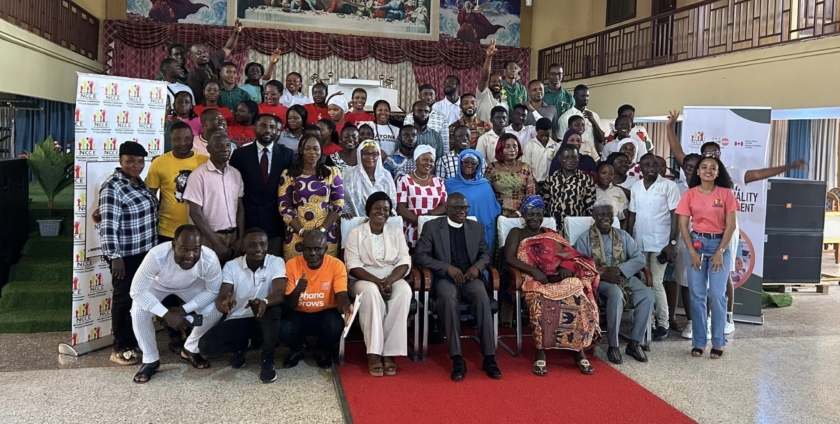
Ms. Achiaa Opoku made the remarks during a stakeholder engagement organised under the auspices of the United Nations Population Fund (UNFPA) 8th Country Programme (2023–2027), which seeks to promote adolescent health, gender equality, and the prevention of gender-based violence.
The event was held under the theme “Empowering Community and Youth for Adolescent Health, Gender Equality, and Preventing Gender-based Violence Through Civic Engagement.”
According to the World Health Organization (WHO), complications from pregnancy and childbirth remain the leading cause of death among girls aged 15–19 globally.
Each year, an estimated 21 million girls aged 15–19 in low- and middle-income countries become pregnant, with 12 million giving birth.
Ms. Achiaa Opoku noted that the stakeholder engagement provided a platform for dialogue, collaboration, and coordinated action in addressing adolescent pregnancy, family planning, and harmful social practices affecting young people, especially girls and underserved youth.
Rita Gbarinaa of the Ghana Health Service highlighted the importance of adolescent health, noting that the adolescent period, between the ages of 10 and 19, is a critical stage of physical, emotional, and social development.
She explained that family planning for adolescents is not about promoting sexual activity among the youth, but rather about empowering them with the knowledge and tools to make informed decisions.
Assistant Superintendent of Police (ASP) of the Domestic Violence and Victim Support Unit (DOVVSU) of the Ghana Police Service Joyce Amponsah Kusi explained that gender-based violence is a physical, sexual, psychological, or economic harm inflicted on individuals based on gender.
She stressed that it often stems from gender inequality and harmful social norms.
She urged intensified community education through churches, mosques, and information centres to tackle the menace, adding, “Parents must take full responsibility for their children by providing their basic needs.”
The stakeholders were drawn from local government, traditional and religious leaders, service providers, civil society organisations, local NGOs, representatives from girl and youth empowerment clubs, security institutions, and the media.
Latest Stories
-
Zambia elevates tourism education to national priority as President Hichilema backs continental summit
37 minutes -
Activa promotes credit insurance to boost SME export growth
38 minutes -
ILTM Africa 2026 opens doors to inbound and outbound luxury travel in Cape Town
42 minutes -
“BP Soul Travel and Tours scored the highest marks” – Sports Minister Kofi Adams endorses agency for World Cup travel
46 minutes -
‘At the age of 12, I was teaching people and collecting money from them’ – Forty Under 40 Awards
2 hours -
I broke my virginity at the age of 26 after university – Richard Abbey Jnr.
3 hours -
Sacked for fees, saved by faith: The untold story of Forty Under 40 Awards founder Richard Abbey Jnr
4 hours -
GCB Bank surges GH¢0.45, ETI gains GH¢0.06 as GSE ends week higher
4 hours -
Two teens jailed 55 years for robbery
5 hours -
UDS demands apology for MPhil student wrongly branded as Tamale robber
5 hours -
“We don’t sell fish!” – Tema Shipyard CEO hits back over dead fish discovery
6 hours -
Sam George defends anti-LGBTQ+ Bill as ‘national priority’ amid debate over gov’t focus
6 hours -
Artemis II astronauts safely back on Earth after trip around moon
7 hours -
Sam George unveils massive 1,150-cell site rollout to end network woes
7 hours -
This Saturday on Prime Insight: Fuel levy suspension, LGBTQ+ legislation, and Damang Mine controversy
7 hours