

Audio By Carbonatix
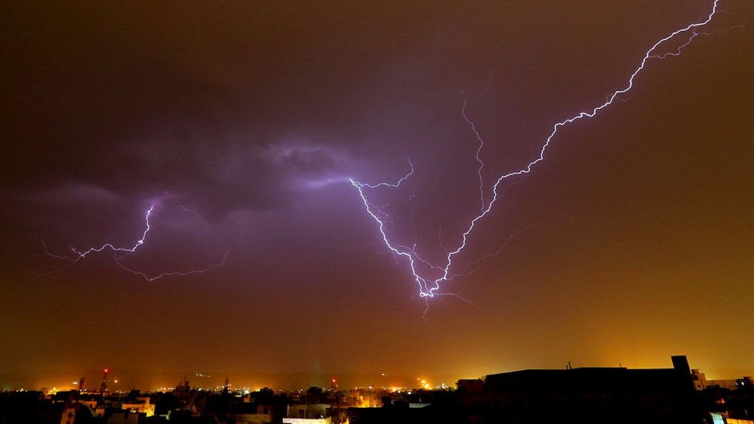
A lightning strike killed at least 16 people and injured many more in Jaipur in northern India on Sunday.
The victims were taking selfies in the rain on top of a watch tower at the city's 12th Century Amer Fort, a popular tourist attraction.
Dozens have also died in lightning strikes in Uttar Pradesh and Madhya Pradesh states.
Lightning strikes kill some 2,000 Indians on average every year, according to official data.
A senior police officer told the media that most of the people among the dead at the fort's tower were young.
Twenty-seven people were on the tower and the wall of the fort when the incident happened and some reportedly jumped to the ground.
Sunday alone saw nine more deaths from lightning strikes reported across Rajasthan state where Jaipur is located, according to local media reports.
At least 41 people - mostly women and children - were reportedly killed in Uttar Pradesh state. The highest toll of 14 was recorded in the city of Allahabad (also known as Prayagraj).
Two men, who were taking shelter under a tree, died on the spot after they were struck by lightning in Firozabad city. The remaining deaths occurred in several districts across the state.
At least seven died in Madhya Pradesh. Experts say casualty numbers are high in the two states because a large number of people work outdoors in agriculture and construction.
The chief ministers of Uttar Pradesh and Rajasthan and India's Prime Minister Narendra Modi have announced compensation for the families of those who died.
The Prime Minister was briefed about the loss of lives and damages due to lightning in parts of Uttar Pradesh. An ex-gratia of Rs. 2 lakh each from PMNRF would be given to the next of kin of the deceased and Rs. 50,000 would be given to the injured.
— PMO India (@PMOIndia) July 12, 2021
India's monsoon season, which sees heavy rains, typically lasts from June to September.
The Indian Meteorological Department (IMD) has said that deaths by lightning strikes have doubled in the country since the 1960s - one of the reasons they cited was the climate crisis.
The data says lightning incidents have increased by 30%-40% since the early- to mid-1990s. In 2018 the southern state of Andhra Pradesh recorded 36,749 lightning strikes in just 13 hours. More than 100 people died in two states in June last year in lightening-related incidents.
Officials say they are more common in areas with thinner tree cover, leaving people vulnerable to being struck.
Latest Stories
-
Big Push agenda targets local contractor development – Agbodza
4 minutes -
Between memory and partnership: Ghana’s moral test on reparatory justice
8 minutes -
“OSP has always lacked the opportunity to speak” – Samuel Appiah-Darko
8 minutes -
Local experts unlock pension capital as Ci Gaba Fund raises GH¢380m to finance SMEs
11 minutes -
US gas price tops $4 for first time since 2022
13 minutes -
I won’t answer for bypassed transactions—Interior Minister warns security heads amid GNFS probe
15 minutes -
48-hour curfew imposed after attack on bar in Nigerian city
17 minutes -
OSP has performed creditably despite constraints – Edem Senanu
19 minutes -
Trump tells the UK and other countries ‘go get your own oil’ from Strait of Hormuz
40 minutes -
Black Stars and the Art of Sacking: When the Coach Must Always Go First
48 minutes -
Ghana to roll out digital maps under new land sector reforms
56 minutes -
Ghana not fully ready for World Cup – Sports Minister
1 hour -
NPA steps up “Stay Back, Stay Safe” campaign in Eastern Region
1 hour -
Ethical Dilemma in Banking: The Case of a Teller in the Cash Cage
1 hour -
Emceeing is 20% talk, 80% event management – Kafui Dey
1 hour