

Audio By Carbonatix
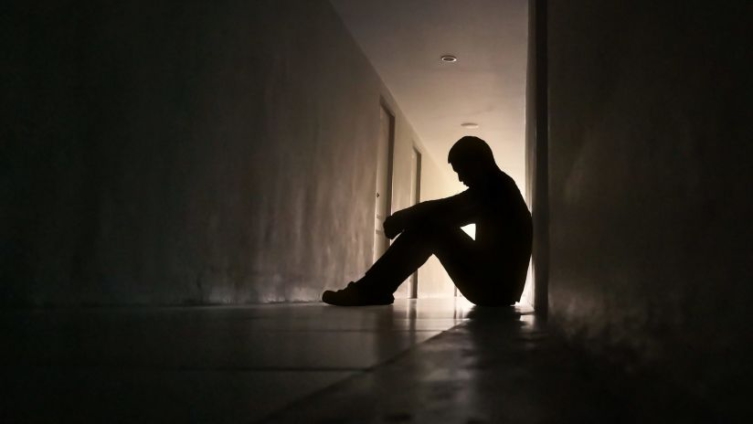
Widespread loneliness in the U.S. poses health risks as deadly as smoking a dozen cigarettes daily, costing the health industry billions of dollars annually, the U.S. surgeon general said Tuesday in declaring the latest public health epidemic.
About half of U.S. adults say they’ve experienced loneliness, Dr Vivek Murthy said in a report from his office.
“We now know that loneliness is a common feeling that many people experience. It’s like hunger or thirst. It’s a feeling the body sends us when something we need for survival is missing,” Murthy told The Associated Press in an interview.
“Millions of people in America are struggling in the shadows, and that’s not right. That’s why I issued this advisory to pull back the curtain on a struggle that too many people are experiencing.”
The declaration is intended to raise awareness around loneliness but won’t unlock federal funding or programming devoted to combatting the issue.
Research shows that Americans, who have become less engaged with worship houses, community organizations and even their own family members in recent decades, have steadily reported an increase in feelings of loneliness.
The number of single households has also doubled over the last 60 years.
But the crisis deeply worsened when COVID-19 spread, prompting schools and workplaces to shut their doors and sending millions of Americans to isolate at home away from relatives or friends.
People culled their friend groups during the coronavirus pandemic and reduced time spent with those friends, the surgeon general’s report finds. Americans spent about 20 minutes a day in person with friends in 2020, down from 60 minutes daily nearly two decades earlier.
The loneliness epidemic is hitting young people, ages 15 to 24, especially hard. The age group reported a 70% drop in time spent with friends during the same period.
Loneliness increases the risk of premature death by nearly 30%, with the report revealing that those with poor social relationships also had a greater risk of stroke and heart disease. Isolation also elevates a person’s likelihood of experiencing depression, anxiety and dementia.
The surgeon general is calling on workplaces, schools, technology companies, community organizations, parents and other people to make changes that will boost the country’s connectedness.
He advises people to join community groups and put down their phones when they’re catching up with friends; employers to think carefully about their remote work policies; and health systems to provide training for doctors to recognize the health risks of loneliness.
Technology has rapidly exacerbated the loneliness problem, with one study cited in the report finding that people who used social media for two hours or more daily were more than twice as likely to report feeling socially isolated than those who were on such apps for less than 30 minutes a day.
Murthy said social media is driving the increase in loneliness in particular. His report suggests that technology companies roll out protections for children, especially around their social media behaviour.
“There’s really no substitute for in-person interaction,” Murthy said. “As we shifted to use technology more and more for our communication, we lost out on a lot of that in-person interaction. How do we design technology that strengthens our relationships as opposed to weakens them?”
Latest Stories
-
2026 U17 WWC: Black Maidens to begin qualifiers next month against Togo
7 minutes -
Sammy Gyamfi defends sole-sourcing for Big Push projects, rejects claims of irregularities
9 minutes -
Gender Minister intervenes in Bulemi family case, supports Down Syndrome awareness walk
9 minutes -
See the areas that will be affected by ECG’s planned maintenance today
13 minutes -
Weight-based bullying as a cause of recurrent headaches, chest pain, and abdominal symptoms in children
15 minutes -
NPP base declining untrue; I doubt findings—Kwadwo Poku
15 minutes -
Al Sharpton backs Ghana’s UN push to declare slave trade gravest crime against humanity
16 minutes -
Ghana’s hospital bed ratio stands at 0.9 per 1,000, below WHO standard- Titus Beyuo
29 minutes -
Fitch Solutions revises Ghana’s GDP growth to 5.5% due to Middle-East conflict
40 minutes -
Over 7,000 Korle Bu staff must be trained before new national patient system begins — Board Chair
43 minutes -
Korle-Bu Board Chairman cites under-investment as cause of ‘no bed syndrome’
58 minutes -
Ghana to establish national command centre for real-time emergency patient redirection
60 minutes -
New bed allocation system coming to Korle Bu but rollout will be gradual – Prof Beyuo
1 hour -
Sammy Gyamfi rebuts claims of inflated contracts, accuses critics of misrepresentation
1 hour -
‘Celebratory, unapologetic, and built to stand out’ – PUMA on Black Stars World Cup kits
1 hour