

Audio By Carbonatix
Lotus Ecoculture, through its subsidiary, Mepe Farms Limited, an agricultural development company, has launched its services seeking to offset $35 billion annual food imports to the African continent.
The company has been trading with smallholder farmer aggregation in the West African markets for over six years.
It utilizes innovative technologies to deliver the highest yields and quality crops in a sustainable zero-waste production cycle, with a specialty in organic grains and greenhouse vegetables.
A communique issued by the company indicated that Mepe Farms has partnered with several businesses and organizations that aim to alleviate poverty, improve food security, and foster economic growth including the Ministry of Food & Agriculture (Ghana) and TROTRO Tractor.
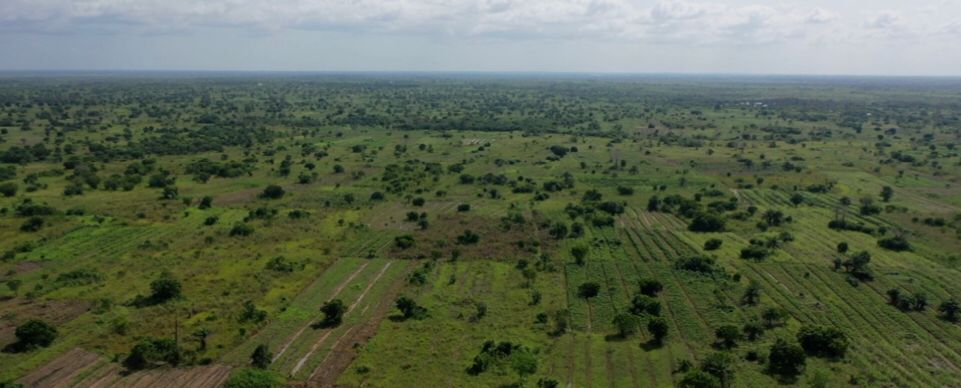
The company has acquired over 3,300 hectares of farmland in the Volta region, hoping to increase farming yields by up to 30% “whilst maintaining a zero-waste, zero-chemical operation.”

It also aims to tackle rising food costs using innovative agronomic and agritech solutions, a fully-mechanised technological process, and zero-chemical input operation to boost growth in Ghana’s agricultural sector.
“All inputs are OMRI (Organic Materials Review Institute) certified, bringing Ghana best-in-class organic inputs, available to farmers in the region at a discounted price.”
Activities of the companies would address the concerns of lack of raw materials in producing animal feed, which has been identified as a major setback in the sector, leading to a frequent shortage of feed.
An estimate of 50 jobs would be created for an all-female agronomic team, “to remedy the fact that women already make up a significant percentage of the agriculture value chain, but earn a fraction of the income.”
Export and off-taker agreements
Mepe Farms have secured massive export agreements to supply various companies in Europe and Asia, and as well as provide raw materials to some factories in Ghana.
The agreement includes the exportation of 4,500 metric tonnes of SoyBeans to European and Asian markets.
The supply of 2,250 metric tons of Soybeans and 3,750 metric tons of maize to support animal feed
production companies operating locally and 3,000 metric tons of organic tomatoes to two processing companies operating in the Bono Region.
Interestingly, all organic waste from cultivation operations will be used as raw materials and converted into Bio-Fertiliser and energy under the company's Assisted Fermentation Technology and Portable Biogas module.
“The Bio-fertiliser is healthier, safer, and more environmentally friendly than its chemical counterparts. This enzyme-induced bio-fertilizer will also be made available for sale to farmers in the region at a discounted price.”
Latest Stories
-
Nearly 2,000 displaced, schools damaged as windstorm wreaks havoc in Gushegu
15 minutes -
Ghana’s Derrick Kohn to work under Marie-Louise Eta as she becomes first woman to coach men’s Bundesliga team
20 minutes -
Accra Open Championships conclude with strong performances ahead of African Championships
27 minutes -
Ghana to begin camping with 12 athletes after Accra Open Championships – Bawa Fuseni
48 minutes -
Anthony Joshua declines showdown with Tyson Fury but admits they ‘probably’ clash next
1 hour -
Tyson Fury dominates Makhmudov, calls out Joshua next
1 hour -
I have supported highway authority financially to fix roads in my constituency – A Plus
2 hours -
US, Iran fail to reach peace agreement after marathon talks in Pakistan
3 hours -
ECG kicks off Phase Two of transformer upgrades at Lashibi; brief outages expected
3 hours -
Port crises loom as 11,000 drivers threaten four-day strike
4 hours -
A source of excellence across generations – Vice President Opoku-Agyemang lauds Mfantsipim
5 hours -
(Photos) Mfantsipim School launches historic 150th anniversary
5 hours -
Knights and Ladies of Marshall group backs Catholic Bishops’ stance on anti-LGBTQ+
6 hours -
Bright Simons: All the Filla in the Ibrahim Mahama/E&P – Gold Fields Saga
7 hours -
Monetise Idiocy In Ghana
7 hours