

Audio By Carbonatix
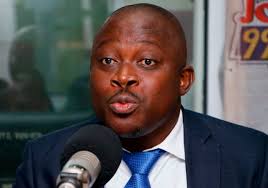
The Member of Parliament for Bongo Constituency, Edward Bawa, has provided insights into measures taken by the National Democratic Congress (NDC) government to tackle the persistent power outages in Ghana.
Mr. Bawa highlighted the concerted efforts by the erstwhile John Dramani Mahama administration to address the power crisis.
Speaking in an interview on Citi TV on Tuesday, April 16, he stressed that the Mahama-led government prioritised resolving the issue and made substantial investments in the energy sector to mitigate the effects of the power outages.
The Mahama administration encountered significant criticism when Ghana experienced a period of power crisis, known as "Dumsor," during its tenure.
Despite the challenges, some NDC leaders have asserted that they managed to resolve the power crisis before the end of their term.
Mr. Bawa reiterated that the Mahama government successfully tackled the root causes of the power outages during its tenure.
He said specific issues such as generation capacity, fuel security, and unpaid accumulated legacy debts were effectively addressed by the government in 2015.
According to him, these measures implemented by the former president aimed to ensure a stable and reliable supply of electricity to meet the needs of the Ghanaian population.
“Essentially, by the close of 2015, the major issues that had to do with the power sector had been dealt with. When the NDC came, obviously these problems were still there waiting to strike again. Unfortunately, it reared its head in 2013, when we had a problem with the breached pipeline and that told us that we needed to do something about our fuel security properly. By the close of 2015, we had procured enough generation power to be able to deal with the immediate cause of “Dumsor”.
“Generation was the immediate issue, that part by the close of 2015, actually had been dealt with. There was also a financial aspect of it which was dealt with, particularly just the end of 2015 and 2016. We were dealing with the debts and then by the close of 2015, we had also dealt with the fuel security issue because we had then brought on board Atuabo Gas Plant that was going to utilize our gas," he said.
Latest Stories
-
Why diaspora investors are using Accra real estate to hedge against global uncertainty in 2026
5 minutes -
GWL urges public support to stem water thefts
7 minutes -
Fire guts 2-storey apartment at Ashaley Botwe
8 minutes -
Come down and account, it’s a constitutional requirement – Martin Kpebu to Ofori-Atta
17 minutes -
The power of the private courtyard: How regalia is redefining resort-style living in Accra
29 minutes -
Beyond roads and bridges: Understanding the true role of your MP
29 minutes -
UK says Russia ran submarine operation over cables and pipelines
31 minutes -
NPRA recovers GH¢27m in 2025, 30% of defaulted pension contributions
34 minutes -
Power fluctuations slash Ashanti region water production by 959,000 cubic metres in March
39 minutes -
Beyond the festivities: Gomoa must turn visibility into development
47 minutes -
DVLA clarifies it is not responsible for Toyota Voxy commercial operations
49 minutes -
Calls for Ofori-Atta’s return a non-issue if trial proceeds in absentia – Pius Hadzide
51 minutes -
France names Ghana first beneficiary of newly established National Health Compact
57 minutes -
US Immigration, extradition outcomes likely to influence each other in Ofori-Atta case – Amanda Clinton
60 minutes -
29-year-old woman rescued after hiding in drain to escape attackers
1 hour