

Audio By Carbonatix
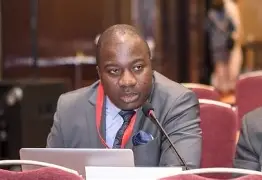
The Majority Leader and Chairman of the Independent Constitutional Bodies of Parliament, Mahama Ayariga, has called on the Commission on Human Rights and Administrative Justice (CHRAJ) to launch full-scale investigations into institutions that top the annual corruption index.
The annual index done by Transparency International ranks institutions that citizens believe to be corrupt or involved in some level of corruption-related activities nationwide.
Appearing before the Independent Constitutional Bodies Committee of Parliament to justify the 2025 budget allocation for the Commission on Human Rights and Administrative Justice (CHRAJ), Commissioner Joseph Whittal revealed that the Commission has already begun probing reports of perceived corruption across state institutions.
He noted that CHRAJ has advanced its approach by conducting its own national assessments rather than relying solely on the Transparency International Corruption Perception Index (CPI).
“In 2022, beyond the Transparency International CPI, we conducted—jointly with the Ghana Statistical Service—what we call actual experience of corruption in the public service,” he said. “That report is online on our website. Anyone can go for it.”
Mr. Whittal explained that, unlike perception-based surveys, this study examined the real, lived encounters of citizens with corrupt practices.
“Where we actually looked at not only perception but Ghanaians’ or citizens' experience of how they participated somehow in the issue of corruption,” he said. “Either by giving bribes or being demanded of bribes, and even other things in kind, such as sextortion, among others.”
He stressed that CHRAJ has completed its investigative work and that the responsibility now lies with policymakers to respond appropriately.
“So that report is there. It is now left with policymakers to see how they can take that and tell me what should be done,” he said.
According to Mr. Whittal, corruption findings point to individuals within institutions, not the institutions themselves.
“If you look at that very carefully, corruption is not of an institution. It is of public offices,” he said. “So we can only investigate and make recommendations or decisions on specific allegations against specific public officers we have made findings against—but not the institution.”
However, Chairman of the Committee, Mahama Ayariga, argued that CHRAJ’s work must not end at identifying individuals; it should spark broader institutional reforms and, where necessary, prosecutions.
“But there must be something triggering the perception,” he said. “And so if we really want to be changing institutions, when you make that finding, you should report to CHRAJ that there's a perception that this institution is corrupt.”
He urged the Commission to investigate the systemic drivers of corruption rather than waiting solely for formal complaints.
“So can you go into their systems and find out what practices enable corruption, and then make recommendations—let's say to the Independent Constitutional Bodies Committee—that these practices of these institutions enable corruption” he said. “And therefore, you recommend that this or that should change. These regulations should be enacted to make it more difficult for corruption to happen.”
Mr. Ayariga referenced international models as examples of proactive anti-corruption approaches.
He questioned Ghana’s constitutional limitation that requires CHRAJ to act only when a complaint is filed.
“So even though our constitution says that to investigate complaints, every clause to activate the mandate is always triggered by complaints,” he said. “So can we advance our constitutional architecture by rethinking the concept of complaining?”
According to him, CHRAJ’s own annual reports should be enough to trigger action without waiting for citizens to lodge complaints.
“So that when you make all these findings in your annual surveys, it should trigger a complaint to CHRAJ. CHRAJ should go into the practice of those institutions that the citizens say are corrupt,” he said.
Latest Stories
-
Willie Colón, trombonist who pioneered salsa music, dies aged 75
1 minute -
Guardiola tells team to chill with cocktails as Man City pile pressure on Arsenal
3 minutes -
Majority blasts Minority over Burkinabe border bloodbath claims
1 hour -
Analyst says Burkina Faso killings were a calculated signal to Ghana
2 hours -
Veep extends Ramadan greetings, donates to Cape Coast Central Mosque
3 hours -
UBIDS secures $6.6m prefabricated classroom complex to end space deficit
4 hours -
Gold Fields Ghana Foundation deepens childhood cancer awareness drive; invests $4.8m in community health
5 hours -
Iran students stage first large anti-government protests since deadly crackdown
5 hours -
Fire guts Saboba Hospital’s Children Ward
6 hours -
Interior Ministry extends aptitude test dates for WASSCE applicants in 2025/26 security services recruitment
7 hours -
National Investment Bank donates GH₵1m to support GAF barracks redevelopment project
7 hours -
Gomoa-East demolition: 14 suspects remanded by Kasoa Ofaakor Court
8 hours -
Divers recover bodies of seven Chinese tourists from bottom of Lake Baikal
9 hours -
From windstorm to resilience: How Wa school is growing climate protection
10 hours -
Reclaiming the Garden City: Dr. Kwame Adinkrah urges Kumasi to rein in billboard proliferation
10 hours