

Audio By Carbonatix
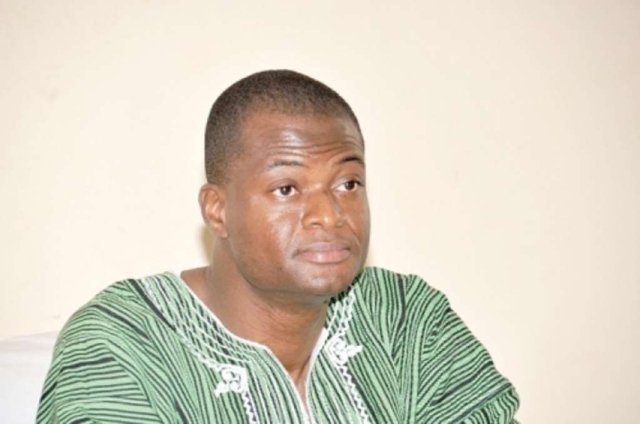
The Dean of the University of Ghana School of Law, Professor Raymond Akongburo Atuguba, has said many of the country’s laws are outmoded, making it difficult for people to adhere to ethical principles in the corporate world, particularly the banking sector.
“Our laws are not in tune with times; how do you determine ethics with such a legal framework?” he questioned.
Speaking at the GCB Platinum Thought Leadership Conference in Accra last Friday, Prof. Atuguba said the country still had about 10 English laws in its statutes passed between 1539 and 1863.
He said since the laws, including the Bills of Exchange Act, 1961 (ACT 55), were passed years ago, there had been significant developments which required that new laws were passed to align with current trends but that had not been done.
His presentation was on the topic: “Ethics, financial conduct and the political economy in Ghana and other emerging markets”.
He defined ethics as an extension of the law, hence it would be difficult for people to abide by the ethical principles that govern businesses.
The one-day conference brought together bankers and subject matter experts from the fields of finance and economics.
Present at the event were the President of the Council of Foreign Relations Ghana, Ambassador D. K. Osei; a former Vice-Chancellor of the University of Ghana, Prof. Ernest Aryeetey; the Head of the Economics Department of the University of Ghana, Prof. William Baah-Boateng, and the former Country Senior Partner of PwC Ghana, Felix Addo.
It featured discussions and presentations on various topics in the banking and finance sectors.
Prof. Atuguba mentioned the Public Procurement Act, 2003 (ACT 663), as one of the laws which was expensive to obey.
“The cost of obeying the Act surpasses the benefits the law is supposed to bring”, he said.
He added that it took the Supreme Court to declare portions of the Companies Act, 2019 (ACT 992) unconstitutional.
A seasoned banking professional with Growth and Investment Partners, Albert Kobina Essien, said challenges in procurement and the use of credits which led to the financial sector clean-up persisted in the banking sector.
“For most of the indigenous banks, we still have a challenge of proper credit delivery,” he said.
Latest Stories
-
The attack on Ghanaian traders in Burkina Faso and the blame game: Why Hybrid Security Governance holds the key (I)
13 minutes -
TaxForGalamey: Stop taxing galamsey immediately or face sanctions – Gov’t cautions MMDCEs
17 minutes -
FNB Ghana strengthens balance sheet with higher earnings and improved asset quality
28 minutes -
Stakeholders call for stronger action to advance women’s economic empowerment at UKGCC–British High Commission IWD Event
36 minutes -
Global Network of Export-Import Banks holds 6th exchange programme in Accra
40 minutes -
Prudential Bank Ladies celebrate IWD with candid talk on Love, Life, and Livelihood
41 minutes -
Kejetia Market now a ‘death trap’ – Federation of Kumasi Traders warns
43 minutes -
NDPC DG urges shift to resilient, shock-responsive social protection systems
44 minutes -
New Town building collapse: Enforce existing laws — Architecture Alliance
48 minutes -
Kudus to play under new coach as Tottenham appoint De Zerbi
49 minutes -
Gov’t may review fuel taxes amid rising oil prices – Kwakye Ofosu
57 minutes -
Iran–US conflict pushes fertilizer prices higher, raising food security risks in 2026
1 hour -
Iran using children in security roles in war, reports and witnesses say
1 hour -
Evalue-Ajomoro-Gwira MP pledges to safeguard peace in Lower Axim and Nsein
1 hour -
Global collaboration in focus as Malaysia courts Ghanaian top business executives
1 hour