

Audio By Carbonatix
All student unions in Ivory Coast are being shut down, the government has announced, after the killing of two students which is being blamed on the powerful Student and School Federation (Fesci).
Several Fesci members have been arrested in connection with the murders of Khalifa Diomandé and Zigui Mars Aubin Déagoué, which took place in August and September.
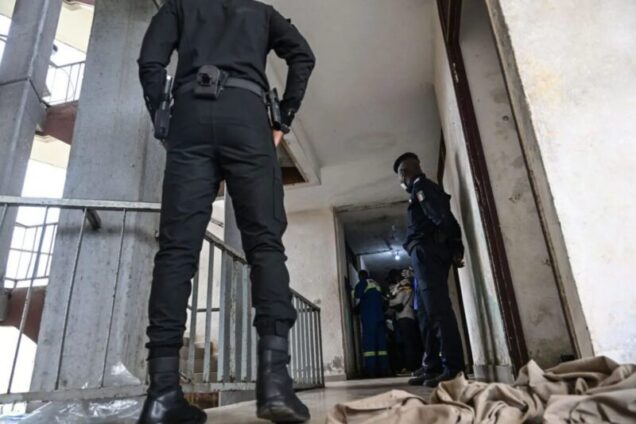
An underground tunnel used for torturing people and a brothel were found during investigations at Félix-Houphouët-Boigny University in the main city of Abidjan, the authorities say.
Students tell the BBC it was an open secret that Fesci ran both illicit sites but that everybody was too afraid to speak out.
"You wouldn't have believed you were in a university in an organised country," said a former student who has asked to remain anonymous.
"I was threatened by Fesci many times, they tried to rape me," she tells the BBC. "My boyfriend tried to stand up for me, and he was beaten up," she alleges. On other occasions, she says she had to pay Fesci members to leave her alone.
She says she is still traumatised and has not set foot on the campus since dropping out after her ordeal eight years ago.
"I don’t know how it lasted so long but now I feel relieved for the victims," she adds.
Extortion was common, say students.
"I was supposed to pay $100 (£77) per month for my room," explains Jose Aristide, "but they were forcing me to pay $250 per month.
"There was no other option. Everyone feared them."
On Thursday, Ivory Coast's Security Council said it had carried out a series of raids on universities in Abidjan and the central city of Bouaké in which more than 100 machetes and grenades were seized.
They also found and expelled 5,000 undeclared residents at university campuses across Abidjan, Bouaké and Daloa.
When the student union ban was announced that same day, people celebrated.
One lecturer tells the BBC he welcomes the ban, saying he hopes it will bring some peace to the campuses.
Originally set up in the 1990s as a student body, Fesci soon became an anti-government protest group and has long been suspected of involvement in organised crime.
It has also served as a springboard into politics for some.
Former Fesci leaders include Guillaume Soro - a rebel leader-turned-prime minister, and Charles Blé Goudé - a former youth minister who was accused then acquitted of massive human rights violations during post-election violence that happened a decade ago.
Latest Stories
-
Prudential Life settles GH¢100,000 medical bills under its PRUCares Valentine Experience Initiative
3 hours -
Wa West Picnic: Peter Lanchene Toobu champions peace, health and unity in landmark celebration
3 hours -
Dr Mensah Market flooded after downpour in Kumasi
4 hours -
Armed men reportedly storm Adjen Kotoku Onion Market amid tensions
4 hours -
Tecco Mensah writes: Why football fans must look beyond statistics
5 hours -
Police recover stolen Honda CR-V in Kumasi within 48 hours
6 hours -
Apetorku Gbodzi 2026 Festival opens in Dagbamete with development focus
6 hours -
President Mahama arrives in Lyon to co-chair One Health Summit
6 hours -
Beverly View Plus Hotel draws crowds amid coastal Easter rush in Volta
6 hours -
Maiden Zongo Festival held in Wa amid calls to tackle drug abuse among the youth
7 hours -
FDA warns of fake HIV test kits on Ghanaian market
7 hours -
Africa urged to build resilient health systems as donor support tightens
7 hours -
Easter gesture: Ablakwa settles medical bills for 85 North Tongu constituents
9 hours -
Africa must harness its population strength—Titus-Glover
9 hours -
Visa-free access doesn’t mean unlimited stay – Lom Ahlijah
9 hours