

Audio By Carbonatix
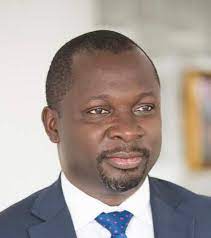
The CEO of the Ghana Association of Banks, John Awuah, has dismissed claims that the National Economic Dialogue (NED) was merely a repetition of past discussions without real solutions.
Speaking on Joy FM’s Super Morning Show, he emphasised that the dialogue was different from previous economic discussions. “This National Economic Dialogue is very far from business as usual and very far from offering the same solutions to old problems,” he stated.
He explained that while Ghana’s economic challenges have persisted for decades, the real issue has been a lack of proper execution of proposed solutions.
“Even if some of the solutions have been discussed before, we have not really attempted to implement them. The difference this time will depend on how seriously the managers of the economy take the recommendations,” he noted.
He highlighted the role of the private sector in shaping discussions at the dialogue. “I was deeply involved in the process as part of the private sector group, and solutions that came up, they are not necessarily even rehashed solutions, some are actually thinking without the box solutions. Things we are now dreaming and hoping that the managers of the economy will take these solutions and run with them,” he said.
Mr Awuah also stressed that economic transformation requires patience and sacrifice. “Ghana cannot become the United States overnight, we have to start somewhere. The real question is whether we have the willpower to change course and accept the sacrifices that we must take,” he said.
Using the local rice industry as an example, he explained the importance of long-term economic planning. “If we decide to prioritise locally-produced rice over imported brands, we might not have the best quality immediately. But if we commit to it, future generations could become rice exporters. That is how other developed nations built their economies,” he pointed out.
He further explained that addressing Ghana’s economic challenges are structural and once the structure changes, things will break down, and when things break down, that is where we will be re-digging and rebuilding the foundation.
“The country’s problems are structural and once you change the structure, things may break down before they improve. The real test is whether we are ready to do the difficult work of rebuilding the foundation,” he stated.
According to him, while some progress can be seen in two to three years with aggressive implementation of the solutions as discussed, full economic transformation will take longer.
“If we are deliberate and measured in executing the structural changes discussed at NED, we might see early results within two to three years. However, the real impact will be felt beyond four years,” he said.
Latest Stories
-
Pastor William Gyimah remanded over threats against Vice President Prof Opoku-Agyemang
45 minutes -
Sunyani Technical University dismisses 3 students over examination malpractice
49 minutes -
NPRA prosecutes 11 employers, recovers GH¢27m in 2025
51 minutes -
NAIMOS cracks down on illegal mining activities along River Tano
52 minutes -
2026 World Cup: Officials selected are the world’s very best – FIFA defends referees list
1 hour -
NAIMOS taskforce embarks on major anti-galamsey operations at GREL plantation and along Ankobra River
1 hour -
Akufo-Addo arrives in Cotonou to lead ECOWAS mission to observe Benin presidential election
1 hour -
AMA, Mexican Embassy renew commitment to strengthen bilateral cooperation, deepen sister-city ties
1 hour -
Bolt pushes for expanded support for women-owned enterprises
2 hours -
Today’s Front pages : Friday, April 10, 2026
2 hours -
‘We don’t have time’ – Fianoo calls for Schäfer to lead Black Stars temporarily
3 hours -
CAF will not favour any country – President Motsepe
3 hours -
Otto Addo was appointed through the backdoor – Kudjoe Fianoo slams GFA
3 hours -
UG Corporate Football League back from the Easter break
3 hours -
Qualcomm unveils startup selection for Qualcomm Make in Africa 2026
3 hours