

Audio By Carbonatix
Prime Minister KP Sharma Oli has resigned amid Nepal's worst unrest in decades, as public anger mounts over the deaths of 19anti-corruption protesters in clashes with police on Monday.
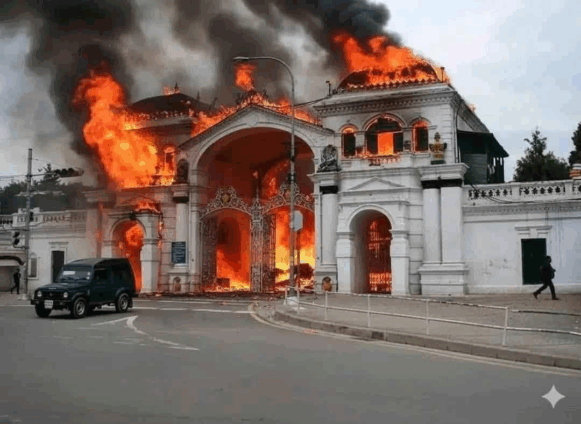
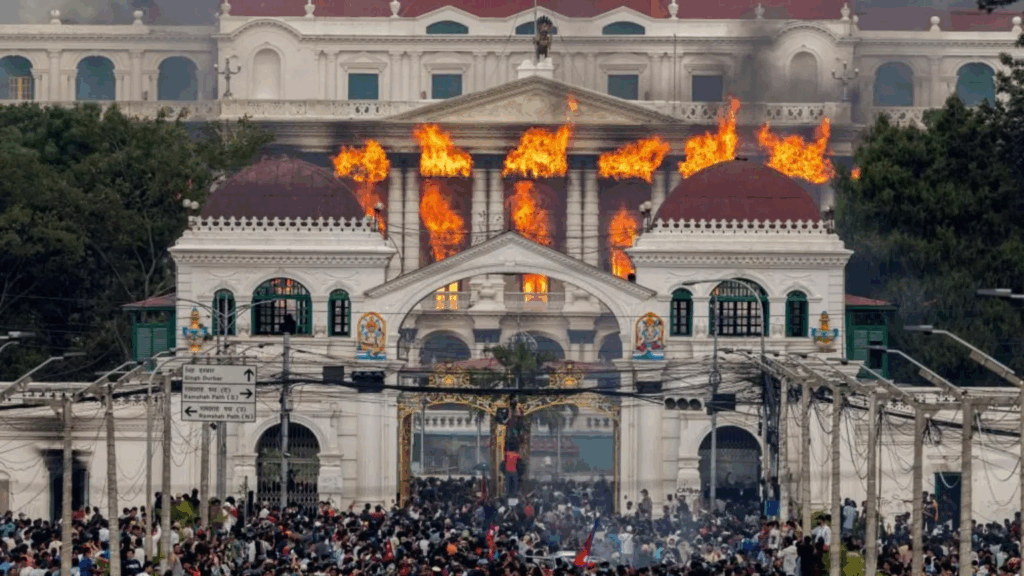
On Tuesday, crowds set fire to parliament in the capital Kathmandu, sending thick black smoke billowing into the sky. Government buildings and the houses of political leaders were attacked around the country.
Three more deaths were reported on Tuesday. Amid the chaos, jail officials said 900 inmates managed to escape from two prisons in Nepal's western districts.
The demonstrations were triggered by a ban on social media platforms. It was lifted on Monday, but by then protests had swelled into a mass movement.
Nepal's army chief issued a statement late on Tuesday accusing demonstrators of taking advantage of the current crisis by damaging, looting and setting fire to public and private property.
It said if unrest continued, "all security institutions, including the Nepal Army, are committed to taking control of the situation," effective from 22:00 local time (16:15 GMT; 17:15 BST), without detailing what this might entail.
While the prime minister has stepped down, it's not clear who will replace him, or what happens next, with seemingly no one in charge. Some leaders, including ministers, have reportedly taken refuge with the security forces.
So far, the protesters have not spelt out their demands apart from rallying under the broader anti-corruption call. The protests appear spontaneous, with no organised leadership.
Inside parliament, there were jubilant scenes as hundreds of protesters danced and chanted slogans around a fire at the entrance to the building, many holding Nepal's flag.
Some entered the building, where all the windows have been smashed. Graffiti and anti-government messages have been spray-painted on the exterior.
Kathmandu resident Muna Shreshta, 20, was among the large crowd outside parliament.
Corruption has been a long-term issue, she told the BBC, adding that it is "high time our nation, our prime minister, and anyone in power change, because we need to change".
"It has happened now, and we are more than happy to witness this and fight for this. I hope this change will bring something that is positive to us."
Ms Shreshta thinks taxes paid by working people need to be used in ways that will help the country grow.
Last week, Nepal's government ordered authorities to block 26 social media platforms for not complying with a deadline to register.
Platforms such as Instagram and Facebook have millions of users in Nepal, who rely on them for entertainment, news and business.
The government justified its ban in the name of tackling fake news, hate speech and online fraud.
But young people criticised the move as an attack on free speech.
Although the ban was hastily lifted on Monday night, the protests had already gained unstoppable momentum, targeting the political elite and plunging the nation into chaos.
A government minister said they lifted the ban after an emergency meeting late on Monday night to "address the demands of Gen Z".
In the weeks before the ban, a "nepo kid" campaign, spotlighting the lavish lifestyles of politicians' children and allegations of corruption, had taken off on social media.
Thousands of young people first attempted to storm the parliament building on Monday. Several districts were put under curfew. Most of the deaths occurred around parliament and government buildings on that day.
On Tuesday, protests continued unabated. A crowd in Kathmandu torched the headquarters of the Nepali Congress Party, which is part of the governing coalition, and the house of its leader, Sher Bahadur Deuba.
The house of KP Oli - a 73-year-old four-time prime minister who leads the Communist Party - was also set on fire.
He said he had resigned to pave the way for a constitutional solution to the current crisis.
"In view of the adverse situation in the country, I have resigned effective today to facilitate the solution to the problem and to help resolve it politically in accordance with the constitution," Oli wrote in his letter to President Ramchandra Paudel.
An aide to Paudel told Reuters news agency the president had accepted the resignation and begun the "process and discussions for a new leader".
Latest Stories
-
Girls must have equal place in Ghana’s digital future – Vice President
11 minutes -
High Court issues EOCO warrant to arrest Manhyia South MP Baffour Awuah
16 minutes -
Ghana at the heart of global PR excellence
23 minutes -
Ghana Institute of Architects clarifies position on ARC-ASG dispute amid ongoing case
25 minutes -
NDC supporters storm Fomena constituency office over alleged disqualification of chairman aspirant
27 minutes -
NPA CEO assures tanker drivers of action on welfare concerns
28 minutes -
Karpowership seeks contract extension as Ghana’s power demand grows
31 minutes -
Gender Ministry inaugurates committee to drive early childhood development
33 minutes -
Four Schools, One Crown: Prempeh, Corpus Christi, Mfantsipim and St Augustine’s battle for NIQ trophy
34 minutes -
HIV status cannot be used to deny employment under Ghana law – Ghana AIDS Commission
35 minutes -
Buffer Stock calls for expansion of national storage capacity as it falls below 50,000 metric tonnes
35 minutes -
Central Regional Minister urges use of religious platforms to change environmental, sanitation practices
58 minutes -
Henry Kweku Banning
59 minutes -
Execution of US murderer Christa Pike halted an hour before it was due to happen
1 hour -
GoldBod generates US$1.87bn in FX in September, exceeds monthly target
1 hour