

Audio By Carbonatix
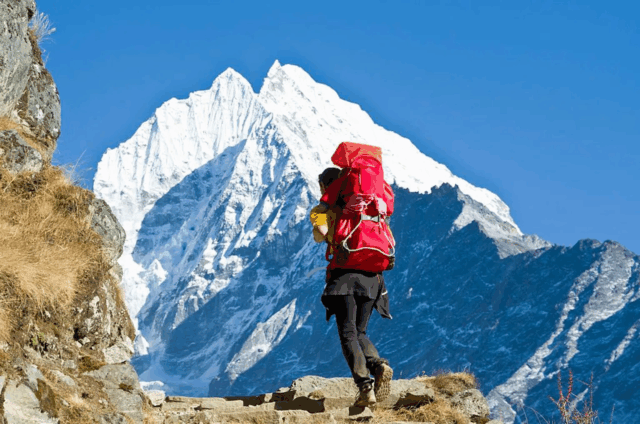
Nepal will make 97 of its Himalayan mountains free to climb for the next two years in a bid to boost tourism in some of its more remote areas.
It comes as permit fees to summit Mount Everest, the world's highest peak, during peak season will go up to $15,000 (£11,170) from September, the first increase in nearly a decade.
Nepal's tourism department said it hopes the initiative will highlight the country's "unexplored tourism products and destinations".
Mountaineering generates a significant source of revenue for Nepal, which is home to the world's 10 tallest mountains. Climbing fees brought in $5.9m last year, with Everest accounting for more than three-quarters of that.
The peaks for which fees will be waived are located in Nepal's Karnali and Sudurpaschim provinces, standing between 5,970m (19,590 ft) and 7,132m high.
Both provinces, located in the far-western region of Nepal, are among the country's poorest and least developed provinces.
"Despite their breathtaking beauty, the number of tourists and mountaineers here is very low as access is so difficult. We hope the new provision will help," said Himal Gautam, director of Nepal's Tourism Department.
"They can create jobs, generate income, and strengthen the local economy," he said, as reported by The Kathmandu Post.
But it is unclear if authorities have plans to improve infrastructure and connectivity to these remote areas - and how well communities in these areas might cope with an influx of climbers, if the free-to-climb initiative does take off.
Climbers have historically shown little interest in these 97 remote peaks - only 68 of them have ventured there in the last two years. In contrast, some 421 climbing permits were issued for Everest in 2024 alone.
Everest, the world's highest peak at over 8,849m, has in recent years been plagued by overcrowding, environmental concerns and a series of fatal climbing attempts.
In April 2024, Nepal's Supreme Court ordered the government to limit the number of mountaineering permits issued for Everest and several other peaks, saying that the mountains' capacity "must be respected".
In January this year, authorities announced a 36% mark-up in permit fees. For those attempting the summit outside the peak April to May season, it will now cost $7,500 to climb Everest during September to November and $3,750 during December to February.
Nepal's parliament is also debating a new law that will require anyone wanting to scale Everest to have first summited a mountain over 7,000m in the country.
This makes the peaks in Karnali and Sudurpaschim "ideal training grounds", according to The Kathmandu Post.
Latest Stories
-
Total expenditure as of July 2026 amounted to GH¢147.07bn, 16% below target – BoG
3 hours -
Total revenue & grants stood at GH¢144.5bn in July 2026, slightly below target – BoG
3 hours -
Ghana Sports Fund urges sports federations to submit credible proposals and measurable targets
3 hours -
Sally Rooney books withdrawn in UK over Palestine Action support
3 hours -
Musk says US government may be behind slowdown of Ukraine drone speeds
3 hours -
Picking Chief Justices nearing retirement could give Mahama immense power – Bentil
4 hours -
Netflix to shed 1,000 jobs in steepest cuts since 2022
4 hours -
Burnham had two hospitality dinners with Man City chairman, deleted records show
4 hours -
Semenyo ‘froze’ after alleged racist abuse, court told
4 hours -
‘Shameless’ – Mourinho critical of Vinicius Jr ban timing
5 hours -
Loyalty can outweigh competence in Chief Justice selection – Bentil
5 hours -
Man City suffer as PSG masterclass sets up Champions League win
5 hours -
Customer Service Africa CEO urges business leaders to observe staff and customer interactions
5 hours -
On night of mayhem for Liverpool, Barcola arrives in style
5 hours -
Muzic Mensah finds healing and renewed love in new single ‘WayƐ Late’
5 hours