

Audio By Carbonatix
A tunnelling expert involved in the rescue operation at a blocked Nepalese hydropower tunnel has described to the BBC how they managed to reach survivors.
Arnold Dix has been advising Nepal's hydropower authorities on how to dig through the blocked tunnel to Trishuli 3A Hydropower Station, which was one of several stations hit by last week's massive flash flood on the Nepal-Tibet border.
"It's like layer upon layer of layer of miracles" that they found two men on Friday, he said, given that the multiple challenges they faced.
The first hurdle was to locate the hydropower station, in a landscape rendered nearly unrecognisable by the flood that has so far killed 1,300 people.
"I've never known an rescue operation where you had to look for an entrance of a tunnel that was previously up the hill, that was now underground. You can imagine the enormity of the avalanche, it completely buried the entrance," said Dix, who is the president of the International Tunnelling and Underground Space Association.
Using engineering techniques, old topographic maps, satellite imagery of the area after the disaster, video footage from helicopters, and "anything else we could find on the surface of the mountain such as power poles", Dix and his team triangulated the likely position of the entrance and started digging.
They found it - but the next challenge was to locate the survivors.
"We knew they would be up ahead, but we didn't know where exactly. So you just have to start digging in the right direction. And you listen out if you can hear anybody," he said.
Rescuers had to get through a tunnel blocked entirely by mud and rocks - some bigger than cars - and had to resort to using explosives to clear the way.
"We had to use explosives which we normally never do because of the risk of blowing up people [trapped in the tunnel] and blowing ourselves up," said Dix.
He credited the Nepalese army for doing "a wonderful job" in managing the explosions with precision to ensure they would not destabilise the tunnel.
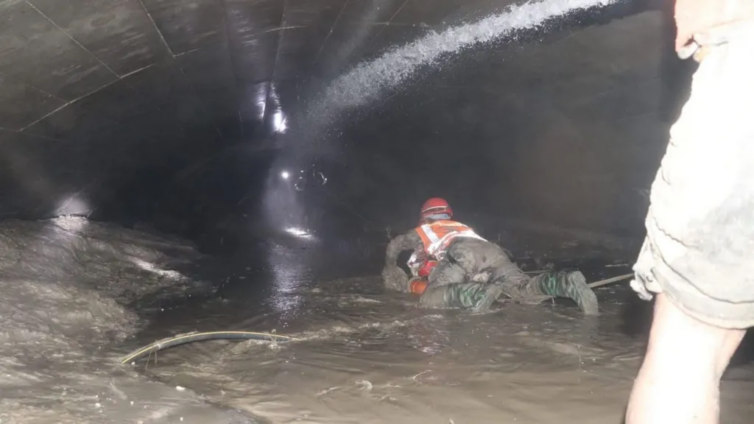
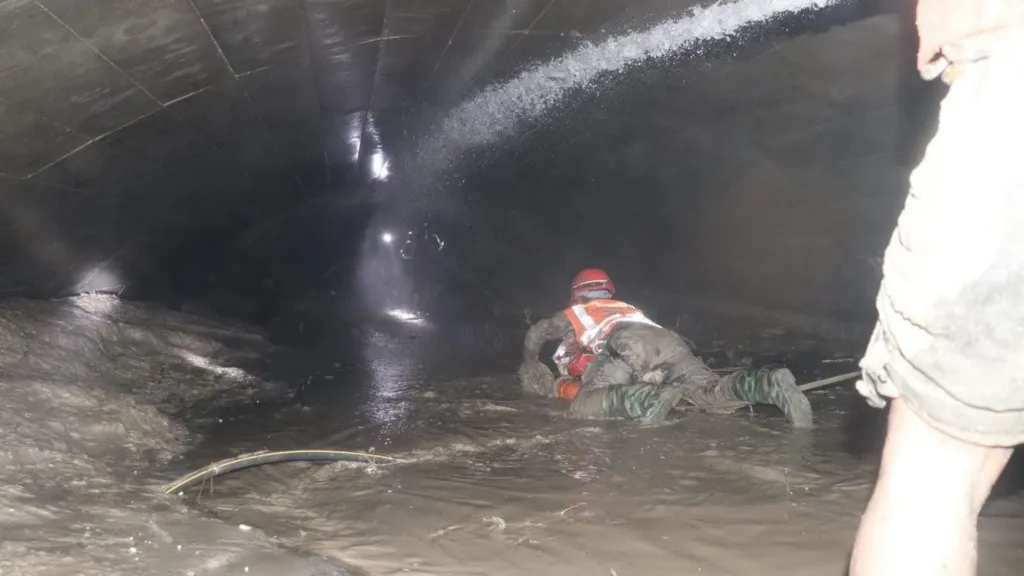
At the same time, they discovered the tunnel was still full of water.
Using excavators and pumping machines, Nepalese rescuers dug a series of trenches from the tunnel all the way to the river outside, so they could drain the water.
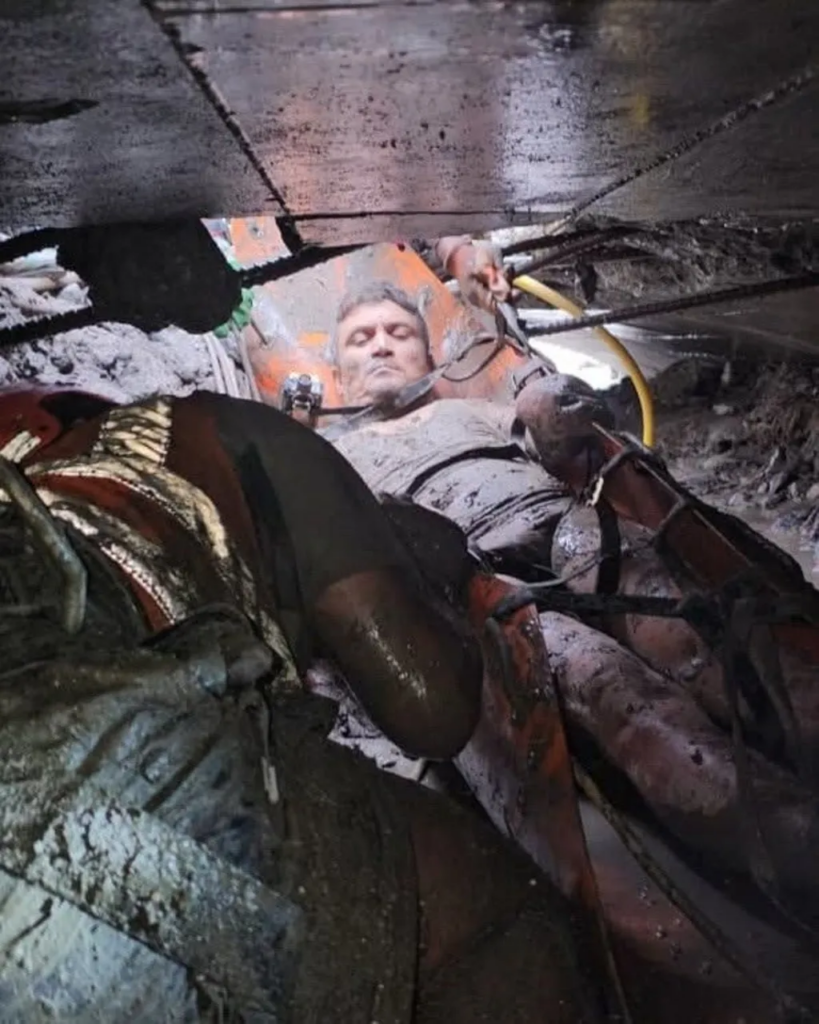
Finally, they had to dig a passageway, "a tiny tunnel the size of a person", through the debris at the top of the tunnel.
The advantage of this location "is that you can use the original tunnel's roof as your little tunnel's roof. Also, it mitigates risk of flooding," said Dix.
In the early hours of Friday morning, rescuers heard what they thought could be voices.
According to local reports, they called out "don't worry, we're here to rescue you" - and heard back a faint "okay".
Shortly after that, they pulled out Sanjaya Shah and Kabir Maharjan, alive.
But with dozens of people still thought to be trapped inside the tunnel, the work is far from over.
Rescuers heading to 'Goldilocks zone'
Dix estimated that they had dug about 60m from the entrance by now, and they would need to dig another 150m more to reach the hydropower station located deep inside the mountain.
Rescuers are hoping that the debris from the flood would not have reached the station, because if it did, "there would be all kinds of complications - anybody in the station could have been hit by rocks and mud or it could be flooded".
The team on the ground are still facing significant dangers.
"Up ahead, even now, we might run into water which would drown the people tunnelling," said Dix. "And we also have the risk of another flood outside happening, so water could come from behind. So there's the risk of facing water on both ends."
But, buoyed by Friday's successful rescue, the team is now hopeful it will reach more survivors in time.
"It's a big relief, that we are on the right track. And it gives us renewed energy that our thinking [on how to conduct the rescue] works... we have never done something like this before."
Dix said they are now heading towards what he called the "Goldilocks zone" which would be "more friendly to life".
This zone is at the uppermost level of the hydropower station where there is some space where survivors may be located.
"We got two people out. If we were playing at a casino, some might say it's time to walk away, but we say game on, time to take on the house."
Latest Stories
-
Kenya confirms second Ebola case – a relative of the first victim
1 hour -
Hidden video recording device found in cabin of Australian navy ship
1 hour -
Saudi Arabia overturns death sentence for man over Facebook comment, Sri Lanka says
2 hours -
Burnham says he wants to ‘repair bridges’ between Ukraine and US
2 hours -
Pope walking and recovering ‘as expected’ after surgery, doctors say
2 hours -
Total expenditure as of July 2026 amounted to GH¢147.07bn, 16% below target – BoG
4 hours -
Total revenue & grants stood at GH¢144.5bn in July 2026, slightly below target – BoG
4 hours -
Ghana Sports Fund urges sports federations to submit credible proposals and measurable targets
4 hours -
Sally Rooney books withdrawn in UK over Palestine Action support
4 hours -
Musk says US government may be behind slowdown of Ukraine drone speeds
4 hours -
Picking Chief Justices nearing retirement could give Mahama immense power – Bentil
4 hours -
Netflix to shed 1,000 jobs in steepest cuts since 2022
5 hours -
Burnham had two hospitality dinners with Man City chairman, deleted records show
5 hours -
Semenyo ‘froze’ after alleged racist abuse, court told
5 hours -
‘Shameless’ – Mourinho critical of Vinicius Jr ban timing
5 hours