

Audio By Carbonatix
Former Trade and Industry Minister and Flagbearer for the United Party, Alan Kwadwo Kyerematen, is advocating private-sector financing for the proposed US$4 billion Accra–Kumasi Expressway, arguing that government should not commit scarce public resources to infrastructure projects capable of generating revenue.
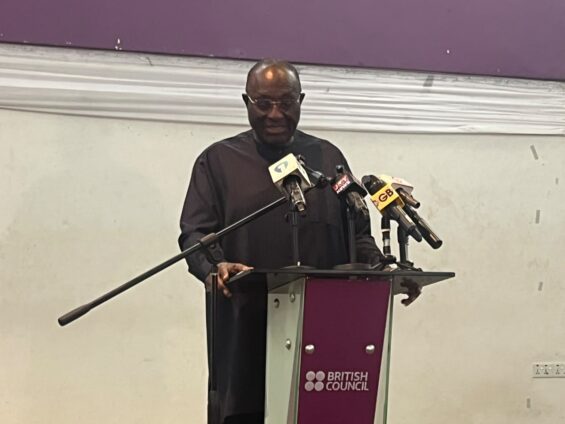
Speaking at a public lecture at the British Council on the theme “Transformation of the Ghanaian Economy: From Stability to Prosperity,” Mr Kyeremanten questioned why the state should fully finance a commercially viable road when private investors could provide the capital and recover their investment from the project.
The Accra–Kumasi Expressway is currently estimated to cost about US$4 billion. Government has said it intends to finance the project without borrowing, with significant domestic funding already mobilised.
But Alan Kyeremanten believes the project presents an opportunity to demonstrate a different approach to infrastructure financing.
“You are using four billion dollars to finance a commercial road, which currently can be financed by the private sector. What happens in every country? Once the toll road is constructed, you don’t use government resources to fund it. It can pay for itself,” he noted.
He argued that instead of committing the entire US$4 billion to the expressway, the government could allow private investors to finance, construct and operate the road under an arrangement that enables them to recover their investment.
“We need to commend the government for at least thinking about public-private partnerships between our two actors, because it doesn’t make sense that for over 60 years we continue to rely on government resources to finance everything,” he stated.
Alan Kyeremanten says the principle should extend beyond the expressway to other infrastructure projects with the capacity to generate their own revenue.
“Once the road is constructed, you don’t use government resources to fund it if it can pay for itself. Let the private sector manage that. Can you imagine what we can do with our public resources if we free them up?”
He believes such an arrangement could release substantial public funds for other pressing infrastructure needs, including the rehabilitation and construction of roads within communities across the country.
The proposal comes as government prepares to begin construction of the expressway after completing the clearing of its right-of-way. President John Mahama recently announced that an initial US$2 billion had been secured domestically, with government targeting the full funding requirement by the end of 2026.
Alan Kyeremanten argues that greater use of private capital should form part of a broader economic transformation strategy in which government creates the policy environment while commercially viable projects are increasingly financed by the private sector.
Latest Stories
-
Afenyo-Markin’s lawsuit against Sammy Gyamfi takes focus away from development – Kpebu
11 minutes -
FWSC urges media to guard against misinformation in proposed IPEC transition
11 minutes -
MoMo Fest 2026: Shatta Wale to Rock Accra Stadium on October 17
13 minutes -
GTEC’s letter directing public universities to reopen by October 16 is unprofessional – GAUA
34 minutes -
Suspect in viral video assaulting wife jailed for 3 months
34 minutes -
GAUA insists strike will end only after Fair Wages addresses market premium issue
34 minutes -
Kpemka seeks compensation as he sues BOST over alleged unlawful termination
38 minutes -
GES asks applicants to check status of 2026 promotion applications on October 15
1 hour -
Kobe Boujee joins Olympics.com team for Dakar 2026 Youth Olympic Games
1 hour -
Slaty egret’s shifting nesting sites offer clues to changing ecosystems
1 hour -
First phase of arrears for promoted teachers to be paid on Friday – Haruna Iddrisu announces
1 hour -
Caveman Watches partners with Mfantsipim School for 150th anniversary
2 hours -
We’ll pursue GH¢15m defamation suit against Sammy Gyamfi to its logical conclusion – Afenyo-Markin’s lawyers
2 hours -
Martin Kpebu urges Afenyo-Markin not to return to court over Sammy Gyamfi lawsuit
2 hours -
GRA submits preliminary report on drug shipment case to Mahama – Commissioner-General
2 hours