

Audio By Carbonatix
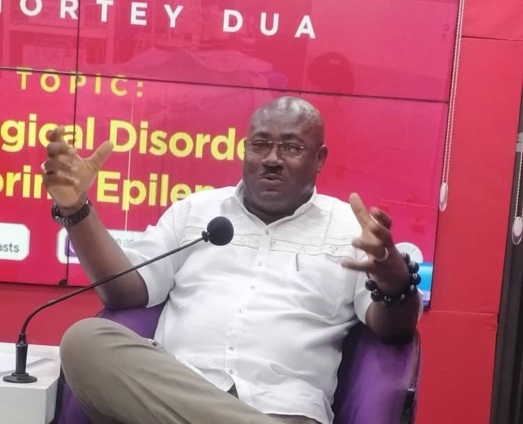
Neurologist and Head medical SubBMC at Korle-Bu Teaching Hospital has offered crucial advice on how to properly assist someone experiencing a seizure.
Prof Patrick Adjei's guidance was aimed at dispelling common misconceptions and promoting safe, effective ways to help those with epilepsy.
In an interview on Joy FM’s Ultimate Health show, Prof. Adjei emphasised the importance of not putting anything in the person’s mouth during a seizure. Contrary to popular belief, attempting to insert an object, such as a spoon, can cause more harm than good.
"If you try to force something into their mouth, you could push the tongue backward, potentially blocking the airway, which could be fatal," he explained to host Nortey Dua.
Additionally, the force of muscle contractions during a seizure is so strong that it could cause the person to bite down hard enough to break a tooth, which might then obstruct their airway.
Instead, Prof. Adjei recommended that bystanders focus on ensuring the person’s safety by helping them lie down and protecting their head.
“Place something soft under their head to prevent injury as they convulse,” he advised adding that if nothing soft is available, using your foot as a cushion can be an alternative.
He also cautioned against restraining the person, as this could lead to broken bones due to the intense muscle contractions.
The distinguished professor highlighted the importance of recognizing when a seizure turns into a medical emergency.
"A regular seizure typically lasts about three minutes," he noted. "However, if it extends beyond five minutes, it's critical to seek immediate medical attention."
He reassured listeners that all medical professionals in Ghana are trained to handle epilepsy emergencies, underscoring the importance of getting the person to a healthcare facility promptly.
These actions can make a significant difference in preventing harm and ensuring the well-being of persons with epilepsy.
The medical practitioner also explained that the term 'epileptic' influences the stigmatisation. He urged all to rather say "Persons living with epilepsy, or persons with epilepsy" as the former connotes a certain level of denigration, disregard for the individual having the condition.
Latest Stories
-
NDC threatens sanctions over oversized campaign posters, gives aspirants 5 days to comply
52 minutes -
Star Oil paid GH¢2.7bn in taxes, levies in nine months of 2026
1 hour -
Samson’s Take: The rule of law is cheaper before the bulldozer
1 hour -
GRA blames system failure for delay in issuing receipt over passenger’s customs duty
1 hour -
Livestream: Newsfile discusses World Cup visa scandal, beach demolitions, education strikes, BRICS bid
2 hours -
NC-PTAs welcomes end of teachers’ strike, urges parents to prepare children for Monday
2 hours -
Government procures over 2,000 transformers as Ghana’s electricity access hits 89.13% – Energy Minister
2 hours -
UTAG-UG threatens strike on October 19 over unpaid allowance
2 hours -
Let The Constitution direct Chieftaincy to deliver “All Development Is Local”
3 hours -
John Jinapor outlines renewable energy, nuclear power priorities for 2027
4 hours -
Ghana explores centre of excellence for hearing, communication and cochlear implant care
5 hours -
Schizophrenia-related disorders lead mental health cases recorded in Ghana
5 hours -
Dutch authorities enlist Ghana in hunt for fugitive drug lord Bolle Jos
6 hours -
Ghana housing finance conference adopts communiqué to improve affordable housing access
10 hours -
Special Initiatives Minister urges Wa Technical Institute to enrol more girls as EU-backed solar training lab opens
10 hours