

Audio By Carbonatix
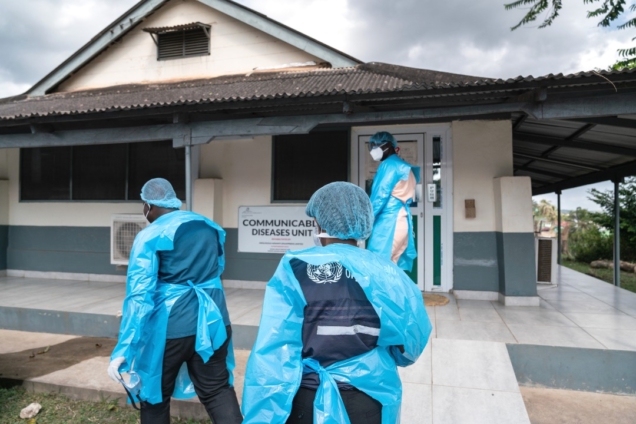
The World Health Organisation (WHO) has warned of a suspected new outbreak of the Ebola-like Marburg virus in north-west Tanzania, saying that at least eight people have already been killed by the disease.
On Tuesday, the WHO said that nine suspected cases of Marburg were reported in the region of Kagera over the last five days.
"We would expect further cases in the coming days as disease surveillance improves," WHO chief Tedros Adhanom Ghebreyesus said on X.
The highly infectious disease is similar to Ebola, with symptoms including fever, muscle pains, diarrhoea, vomiting and, in some cases, death through extreme blood loss.
Tanzania experienced its first Marburg outbreak in March 2023 in the Bukoba district. It killed about six people and lasted for nearly two months.
Tanzania's authorities have not yet confirmed the latest outbreak.
The WHO reported that patients, including healthcare workers, have been identified and are being monitored.
It added that the country's rapid response teams have been deployed to help identify suspected cases and contain the outbreak.
The WHO cautioned that the risk of the virus spreading in the region remained "high" because Kagera was a transit hub with much cross-border movement to the Democratic Republic of the Congo, Uganda, Burundi and Rwanda.
"We do not recommend travel or trade restrictions with Tanzania at this time," Dr Tedros said on X.
The WHO said the global risk posed by the outbreak was "low", and there were no concerns at this stage of the disease spreading internationally.
In December, neighbouring Rwanda declared the outbreak over in the country after the virus infected 66 people and killed 15.
On average, the Marburg virus kills half of the people it infects, according to the WHO.
In March 2023, Tanzania's Bukoba district experienced its first Marburg virus outbreak, which killed about six people and lasted for nearly two months.
The Marburg virus is transmitted to humans from fruit bats and then through contact with the bodily fluids of infected individuals.
There are no specific treatments or a vaccine for the virus, although trials are happening.
Latest Stories
-
Ghana to replicate digital innovation success in Malawi
11 minutes -
She Gives: The ripple effect of women who choose to give
32 minutes -
Nadowli-Kaleo District observes 69th Independence Day with cultural exhibition and academic awards
36 minutes -
Chambas Team of Red Alert, Narcotics Commission join forces to combat drug abuse
54 minutes -
Tano North MCE launches 75 km road project under DRIP initiative
1 hour -
Galamsey Chemicals and Air Pollution linked to rising Diabetes risk in children
2 hours -
EduSpots celebrates a decade of digitalised community-led education and shares future vision
2 hours -
Karpowership empowers female students as STEM sector remains predominantly male-dominated
3 hours -
Accra New Town Experimental 1 JHS students decry lack of laboratories, poor classroom conditions
3 hours -
Yale School of Management names Togbe Afede XIV as global chair
4 hours -
Citizen Attoh: The multifaceted voice of Ghana’s media and heritage
4 hours -
Breaking borders, building futures: How African-led AI is rewriting the rules of global innovation
5 hours -
Guinea orders dissolution of 40 political parties, including three main opposition groups
5 hours -
Dozens killed as Israeli special forces raid Lebanese village in search of 40-year-old remains
5 hours -
Trump demands ‘unconditional surrender’ from Iran as Putin speaks with Iran’s president
6 hours