

Audio By Carbonatix
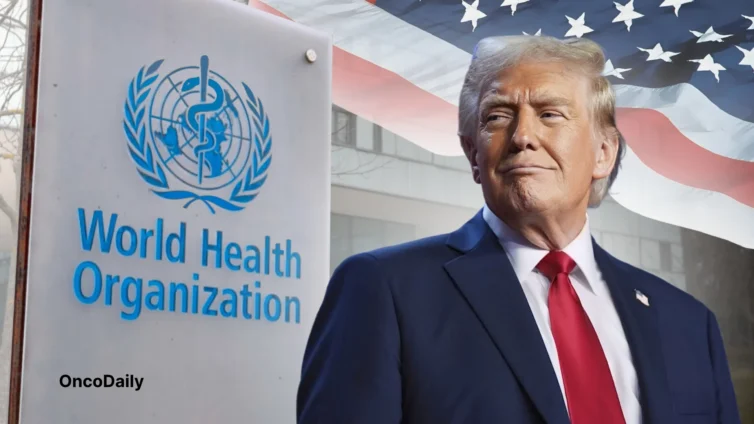
The United States' decision to withdraw from the World Health Organisation (WHO) poses a significant threat to Ghana’s health system and the stability of global health governance, the Member of Parliament for Abuakwa South, Dr Kingsley Agyemang, has warned.
He said the move could weaken international health coordination, disrupt critical public health programmes and expose low- and middle-income countries to heightened health risks.
“The United States’ departure from the WHO is not merely a political signal; it is a structural shock to the architecture of global health,” Dr Agyemang said in a press statement issued on Monday, January 26. “For countries like Ghana, which rely significantly on multilateral technical support and coordination, the implications are profound.”
Funding gap and public health risks
Dr Agyemang noted that prior to its withdrawal, the United States accounted for about 15 per cent of the WHO’s total budget through assessed and voluntary contributions, making it the organisation’s largest historical donor.
He cautioned that the loss of this funding could undermine the WHO’s ability to support disease surveillance, emergency response, technical assistance and policy guidance — areas that are critical to Ghana’s health system.
“A constrained WHO budget will inevitably weaken support for outbreak preparedness and response,” he said. “Diseases such as cholera, meningitis and emerging zoonotic infections do not respect borders, and Ghana cannot afford to confront them in isolation.”
He added that funding shortfalls in global health typically affect countries with limited fiscal capacity the most, increasing their vulnerability to health crises.
Threat to global coordination
Beyond national concerns, Dr Agyemang warned that the US exit could fragment global health leadership and weaken collective action.
“The WHO’s convening power is essential for setting standards, coordinating donors and ensuring equitable access to vaccines and essential medicines,” he said. “If global leadership becomes fragmented, we risk duplication of efforts, weaker compliance with international health regulations and partnerships driven more by interests than by public health needs.”
He noted that such fragmentation could complicate Ghana’s long-term health planning and increase uncertainty in health financing.
Opportunity for strategic reform
Despite the risks, Dr Agyemang described the development as a potential turning point for Ghana to strengthen its health system and reduce dependence on external funding.
“This moment should compel Ghana to accelerate domestic health financing reforms and diversify its global health partnerships,” he said. “Countries that broaden their alliances and mobilise domestic resources are better positioned to withstand shocks in external aid.”
He cited ongoing reforms, including the expansion of the National Health Insurance Scheme and emerging funding strategies for non-communicable diseases, as steps in the right direction.
Call for collective action
Dr Agyemang acknowledged progress made by the Government of Ghana but stressed the need for coordinated national action to safeguard health security.
“This is not a time for complacency,” he said. “All stakeholders must consolidate existing gains through strategic investments in disease surveillance, emergency preparedness and primary healthcare, even amid financial constraints.”
He also urged Ghana to deepen South–South cooperation, strengthen local pharmaceutical production and intensify diplomatic engagement with international partners to help stabilise global health financing.
“At this pivotal moment, sustained multilateral cooperation remains indispensable,” he said. “Protecting vulnerable populations and strengthening collective global resilience must remain our shared priority.”
Latest Stories
-
DVLA extends regional office hours to 10pm under 24-Hour Economy
4 minutes -
‘Ghanaians are becoming like Kweku Ananse’ – Agyinasare warns against culture of lies
5 minutes -
‘The nation failed us’ – Okada Riders’ PRO defends young riders caught between survival and the law
6 minutes -
DVLA plans demerit point system, real-time monitoring of testing stations
7 minutes -
Health Committee Chair lauds NHIA’s swift disbursement of insurance claims
7 minutes -
Okada Association says it’s preparing training centre as gov’t works on new regulations
8 minutes -
Imperial General Assurance backs Team Auto Racing Ghana ahead of historic Angola showrun
16 minutes -
Before they failed the BECE, did Ghana fail them?
17 minutes -
Photos: Mahama swears in Emelia Afi Agbenyo, Joseph Kwaku Asamoah as EC Deputy Commissioners
19 minutes -
Centre for CSR, West Africa partners with Climate x Culture Summit to champion corporate sustainability at Google AI Centre
25 minutes -
Petrosol donates medical equipment to Bolgatanga Hospital
26 minutes -
Zongo Health Campaign screens over 110 Mamobi residents
40 minutes -
Cybercriminals using AI tools to carry out operations – Cyber Security Authority
47 minutes -
Ghana must invest more in mental health and healthier workplaces – Nurse advises
47 minutes -
NAPG Summit equips Administrative Professionals for strategic impact and the AI-driven workplace
56 minutes