

Audio By Carbonatix
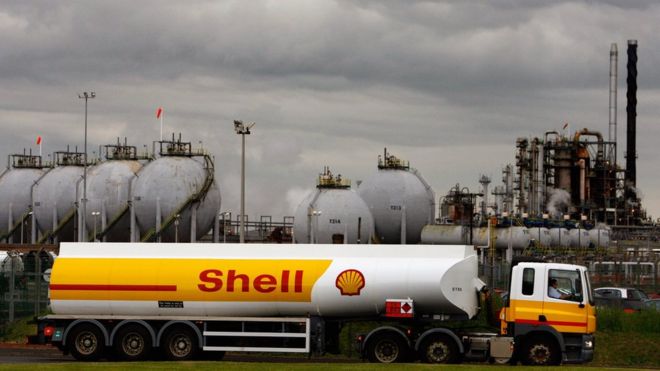
Nigeria has blocked Shell's sale of its entire onshore and shallow-water oil operations, but approved a similar deal by Exxon Mobil, the country's upstream oil regulator said on Monday.
Shell's asset sale for up to $2.4 billion to the Renaissance consortium, comprising five companies, was first announced in January.
Exxon's deal with Seplat Energy has awaited regulatory approval for more than two years since a $1.28 billion fee was announced in February 2022.
In a speech at an event in the capital Abuja, Nigerian Upstream Petroleum Regulatory Commission (NUPRC) CEO Gbenga Komolafe said the Shell deal "could not scale (the) regulatory test," but did not elaborate. Exxon's transaction was granted ministerial approval.
President Bola Tinubu had signalled on Oct. 1 that the Exxon-Seplat deal would receive ministerial approval in a matter of days after getting clearance from the regulator.
"We welcome the regulator’s announcement and look forward to formally receiving the ministerial consent as we work toward the conclusion of the sale," Exxon said in a statement.
A Shell spokesperson did not immediately respond to a request for comment.
The rejection is a blow to Shell's strategy to pivot toward deepwater for future investments and reflects the growing challenges that oil companies face in Nigeria.
Oil majors operating in Nigeria, Africa's largest oil exporter, have been retreating from onshore operations hampered by theft and sabotage, opting to focus future investments on newer and more lucrative deep offshore fields.
The Shell assets hold a combined estimated volume of 6.73 billion barrels of oil and condensate and 56.27 trillion cubic feet of associated and non-associated gas.
Under Exxon's deal, Seplat will own 40% of four oil mining leases and associated infrastructure, including the Qua Iboe export terminal, and 51% of the Bonny River natural gas liquids recovery plant previously owned by Mobil Producing Nigeria Unlimited, Exxon's local unit.
In trying to exit the oil-rich Niger Delta, Shell follows Exxon Mobil, TotalEnergies and Eni who wanted to do so due to security concerns.
NUPRC approved the sale of onshore assets by Eni's local unit to Oando in July and another from Equinor (to new entrant Project Odinmim.
Environmental activists and some communities opposed the Shell-Renaissance deal, tying Shell to a string of lawsuits for environmental restoration and compensation for land and rivers damaged by oil spills.
In April, NUPRC started evaluating Shell's divestment to the consortium, which comprises four Nigerian exploration and production companies and an international energy group.
Latest Stories
-
Imprisonment should be rehabilitative, not punitive – Ghana Prisons boss at UNGA
18 minutes -
Ga Adangbe traditional priests petition Mahama over McDan aviation licence revocation
29 minutes -
Anti-LGBTQ Bill: NDC’s arrogance is worrying – Hassan Tampuli
39 minutes -
Let’s give OSP time to mature, not to scrap it – Hassan Tampuli
43 minutes -
Nigeria convicts 386 Islamist militants in mass trials
48 minutes -
Djibouti president wins election with 97.8% of vote, state media says
53 minutes -
We don’t have mandate to deduct tax from rent allowance of security services personnel – Interior Ministry clarifies
1 hour -
Ablakwa receives Presidential Special Envoy on Reparations to advance global agenda
1 hour -
Christina Koch becomes first woman to travel around the moon on Artemis II
2 hours -
Epstein survivors’ calls to meet King Charles and Queen harder to ignore as US visit approaches
2 hours -
UN Secretary-General names Ghana’s Anita Kiki Gbeho as South Sudan envoy
2 hours -
Mali withdraws recognition of Sahrawi Republic, backs Morocco’s autonomy plan
2 hours -
Gov’t distributes over 8,500 laptops to One Million Coders project
2 hours -
Julius Debrah, ‘man to beat’ as NDC’s James Agbey dismisses Musah Dankwah’s polls
2 hours -
GPRTU in Savannah Region to protest alleged eviction in Damongo
2 hours