

Audio By Carbonatix
Nigeria has raised salaries for civil servants by between 25% and 35% amid to help them cope with the rising cost of living.
The lowest-paid government employee will now earn $324 (£258) a year, Reuters news agency reports.
Police and military officers are among state workers who are set to benefit from the pay rises, which will be backdated to January.
The announcement came on the eve of Wednesday's Workers' Day holiday.
However, the rate of inflation is currently more than 30% - the highest figure in nearly three decades.
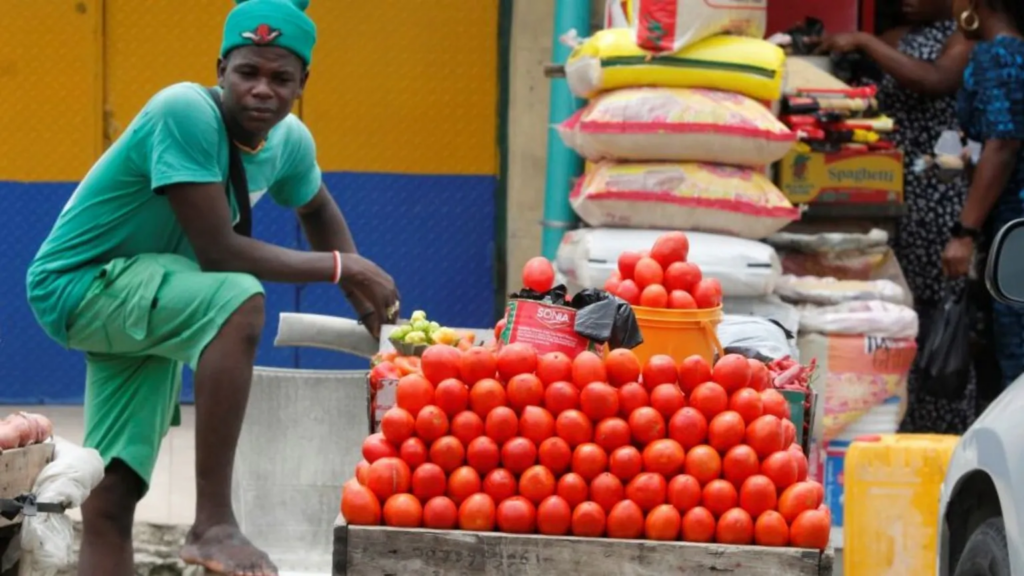
The cost of food has risen even more - by 35%, according to the latest data from the National Bureau of Statistics, so the pay rises mean that salaries for civil servants stay roughly the same in real terms - what it can buy in the shops and markets.
Pensions for those workers who benefit were also increased by between 20% and 28%, the National Salaries, Incomes and Wages Commission (NSIWC) said.
The hikes come after the government recently raised the salaries of academic staff members and healthcare workers.
However, the monthly minimum wage, set by the government and which all employers are supposed to observe, has not changed since 2019, when it was put at 30,000 naira - this is now worth just $19 (£15) after a sharp fall in the value of the naira over recent months.
The government also recently increased electricity tariffs for consumers who use the most power as it seeks to wean the economy off subsidies that have weighed heavily on public finances.
The trade union umbrella group, the Nigeria Labour Congress (NLC), welcomed the latest pay increase but urged the government to ensure that it was reflective of the harsh economic situation in the country.
"These categories of workers are already in the privileged sector but we expect it to be extended also to other categories of civil servants who are in lower cadre and are vulnerable," NLC spokesman Comrade Benson Upah told local media.
Negotiations are ongoing between the government and the main labour unions about an increase in the minimum wage.
Food prices as well as the prices of goods and services have doubled in many parts of the country since the removal of a fuel subsidy last year.
Petrol shortages have worsened in Nigeria's major cities, with long queues observed since last week, as Africa's biggest oil producer struggled with a fuel scarcity.
Authorities blamed the shortage on supply disruptions due to logistical challenges.
Most of Nigeria's oil is exported, while the fuel which is used locally is mostly imported due to a lack of refining capacity.
Latest Stories
-
Gov’t orders deployment of Metro Mass buses to cushion commuters amid fuel price hike
44 minutes -
Key Indian state polls begin in test for Modi’s party
51 minutes -
Playback: Gomoa Easter Carnival in photos
57 minutes -
Gov’t orders removal of fuel taxes to ease pump price hikes
1 hour -
“Whatever the decision of CAS, we will respect it” – CAF President Motsepe after AFCON final meetings in Morocco
1 hour -
Emma Ankrah: When waiting becomes part of treatment – Reflections on hospital care
1 hour -
Ghana urges travellers to prepare for new EU border system roll-out
2 hours -
Mahama enforces fuel coupon ban for ministers as cabinet moves to slash fuel taxes
2 hours -
Task force probes strange fish deaths in Tema
2 hours -
Neglected traffic lights turn Awoshie–Anyaa highway into deadly hotspot
2 hours -
EOCO declares Dr Gabriel Tanko Kwamigah-Atokple a fugitive over alleged gold fraud
2 hours -
GSE records GH¢1.09bn trade in equity market; 10 stocks register gains
2 hours -
Fuel prices: Ghana places 15th in Africa
3 hours -
Africa must look inward: Reframing resilience in a shifting global economy
3 hours -
9 dead, 2 missing after boat capsizes on Volta Lake
3 hours