

Audio By Carbonatix
Security expert and Executive Secretary of the Global Security for Africa Research and Good Governance (GLOSARGG), Francis Ahovi, has described the ongoing violence in the Nkwanta enclave within the Oti region as a national security emergency that demands immediate and coordinated intervention.
According to him, the latest clashes in the area reflect "deep-rooted" ethnic tensions, structural insecurity, and a failure of local peacebuilding systems.
Mr Ahovi noted that the violence is not an isolated incident, but a manifestation of Ghana’s weak peripheral security governance. He cited unresolved chieftaincy disputes, land ownership disagreements, and political neglect as major causes of the recurring conflict in the region.
He criticised the perceived absence or partiality of the state, which he said has created fertile ground for militia formation and reprisal attacks.
He lamented the lack of timely humanitarian corridors and the slow response in providing food, medical care, and emergency shelter.
To address the crisis, he proposed a five-point roadmap. First, he called for the deployment of a neutral peacekeeping force to stabilise affected areas and disarm militias, supported by local intelligence units.
Second, he urged the Ghana Health Service, NADMO, and Ghana Education Service to set up trauma centres, mobile clinics, and emergency shelters, with support from the Red Cross and UNHCR.
Third, he recommended the establishment of a neutral peace and reconciliation commission made up of retired judges, clergy, and non-local traditional leaders. He also suggested that inter-ethnic dialogue be coordinated by the National Peace Council and civil society organisations.
Fourth, he advocated a review of chieftaincy recognition processes, the digitisation of land records to reduce disputes, and the introduction of peace education and early warning systems in local schools.
Lastly, he called for the formation of an independent body to track human rights violations and ensure sanctions against individuals or politicians found to be fuelling the violence.
Mr Ahovi called on the Government of Ghana, ECOWAS, the African Union, and civil society actors to act swiftly in preventing further escalation.
“The time for rhetorical condemnation is over,” he said. “If the Nkwanta conflict is not decisively addressed, it could undermine national cohesion and damage the credibility of Ghana’s peace architecture.”
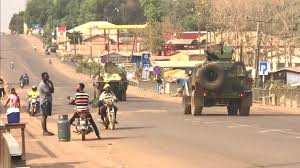
Tension remains high in the Nkwanta South Municipality following the shooting of two Konkomba youths, Ujakpa Nakoja and Niyasangma Joseph, by unknown assailants at Abrewankor Junction, leaving both in critical condition.
This follows a student at Nkwanta Senior High School who died when struck by a stray bullet while writing his mock examination.
Latest Stories
-
24-Hour Economy not just talk — Edudzi Tamakloe confirms sector-level implementation
11 minutes -
Four arrested over robbery attack on okada rider at Fomena
13 minutes -
NDC gov’t refusing to take responsibility for anything that affects Ghanaians – Miracles Aboagye
39 minutes -
Parental Presence, Not Just Provision: Why active involvement in children’s education matters
1 hour -
24-Hour economy policy fails to create promised jobs – Dennis Miracles Aboagye
1 hour -
Ghana Embassy in Doha urges nationals to take shelter after missile attack
1 hour -
Government’s macroeconomic stability commendable, but we need focus on SME growth – Victoria Bright
2 hours -
Macro stability won’t matter without food self-sufficiency- Prof. Agyeman-Duah
2 hours -
How Virtual Security Africa is strengthening safety at Mamprobi Polyclinic
2 hours -
Ghana on right track macroeconomically, but structural gaps remain – Fred Dzanku
2 hours -
ADB MD honoured for impactful leadership at PMI Ghana engagement
2 hours -
Bringing Ofori-Atta’s photo to Parliament and displaying it was unfair – Afenyo-Markin
3 hours -
Minority leader calls 24-Hour economy policy more PR than practical solution
3 hours -
Afenyo-Markin accuses government of using anti-corruption drive to target opponents
3 hours -
GPL: Kotoko announce new board of directors
3 hours