

Audio By Carbonatix
The proliferation of fake Covid-19 drugs on the Ghanaian market will soon see a change as Noguchi Memorial Institute for Medical Research is developing a model to detect fake Covid-19 drugs.
Senior research fellow, Dr Peter Kojo Quashie says the model would involve the use of a pseudo-virus which is a virus similar to the real one but non-infectious.
According to him, in this technique the genetic material is separated and as such the pseudo virus cannot make more copies of itself.
This makes the pseudo viruses safer than using the real virus. The scientists will now use these pseudo viruses to screen the herbal products to see which one prevents infection without the high risk of using the real virus.
And this can be performed in a level 2 bio-safety containment safety since it does not pose any danger.
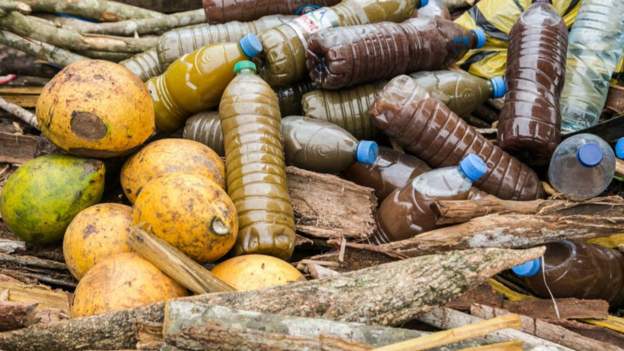
Dr Quarshie says it has become important to do so because of the proliferation of herbal products touting to cure or prevent the coronavirus in the country.
As such, when the model is developed, the general public will be made aware of drugs that are really potent and those that are fake.
He said, “We thought it was very important to be able to find a way to screen these medications or these herbal preparations which are already on the market.
So that is why we are working on having a full system where we can quickly screen ones which actually have antiviral activity or immune-modulatory activity to help screen out some of the quacks.
And at least once we finish that we can get a report that will be used to validate or at least as part of the labelling for some of these preparations.”
He said it would be very difficult to get the quack herbalists and their products off the market, but what could be done would be to provide the general public with the right information for them to make informed decisions about the products they buy.
“And I think at the end of the day, you can’t stop the quack herbalists but you can try to put as much information there on which ones that have at least some activity.
We can’t ignore them because they are the realty and most people will trust it. So it’s better that we as scientists find a way to quickly screen them,” he said.
Latest Stories
-
Netherlands Fire Chief in Ghana to support fire safety reforms and market fire prevention efforts
2 hours -
Mason goes on remand for stealing
2 hours -
Gov’t cuts fuel taxes, deploys buses to curb impact of rising fuel prices
2 hours -
Interior Minister calls for intelligence-driven strategy as Ghana strengthens counter-terrorism efforts
2 hours -
Adenta Circuit Court remands Pastor William Gyimah over viral threats against Vice President
3 hours -
“We’ve implemented changes to prevent a repeat of the AFCON final” – CAF President Motsepe
3 hours -
Gov’t orders deployment of Metro Mass buses to cushion commuters amid fuel price hike
4 hours -
Key Indian state polls begin in test for Modi’s party
4 hours -
Playback: Gomoa Easter Carnival in photos
4 hours -
Gov’t orders removal of fuel taxes to ease pump price hikes
5 hours -
“Whatever the decision of CAS, we will respect it” – CAF President Motsepe after AFCON final meetings in Morocco
5 hours -
Emma Ankrah: When waiting becomes part of treatment – Reflections on hospital care
5 hours -
Ghana urges travellers to prepare for new EU border system roll-out
5 hours -
Mahama enforces fuel coupon ban for ministers as cabinet moves to slash fuel taxes
5 hours -
Task force probes strange fish deaths in Tema
5 hours