

Audio By Carbonatix
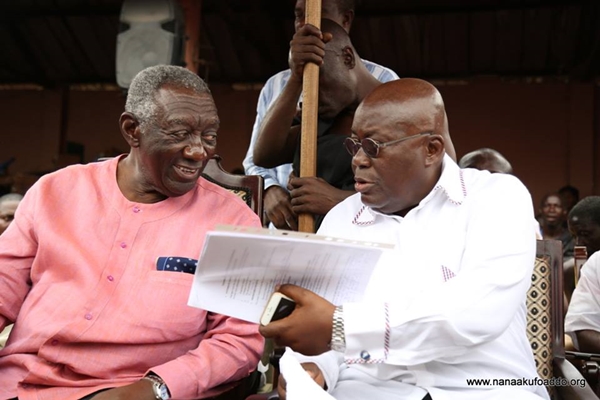
Former President John Agyekum Kufuor says the New Patriotic Party’s (NPP) defeat in the 2024 general elections should serve as a strong reminder to all political leaders that Ghanaian voters will not tolerate misgovernance.
In an interview on The Delay Show, the former President linked the party’s electoral setback to several controversial decisions under the Akufo-Addo administration, including the Domestic Debt Exchange Programme (DDEP), the National Cathedral project, and the failed Power Distribution Services (PDS) concession.
“The Ghanaian electorate cannot be taken for granted. Politicians must learn from this,” Mr Kufuor said, emphasising that the loss reflects the public’s response to choices made in government.
According to him, the NPP’s historic victory in 2016 was heavily influenced by the legacy of his own administration, which shaped the party’s messaging at the time. However, he observed that the direction of governance changed after President Nana Addo Dankwa Akufo-Addo took office.
“Before the 2016 election that brought Akufo-Addo to power, the campaign was anchored on my achievements. They played a major role in the victory,” he noted. “The government started well, but things shifted after he assumed office.”
Mr Kufuor said although the administration initially appeared promising, post-COVID-19 decisions deepened public dissatisfaction. He cited the troubled bond market, setbacks surrounding the PDS agreement, and persistent concerns over the National Cathedral project.
Touching on the Cathedral, the former President expressed worry over the use of state resources, saying he was not consulted during the planning stages and only became aware of developments when the construction was already underway.
He also questioned why important state buildings, including residences for judges and other officials, were demolished for a project that remains incomplete.
Looking back at the party’s electoral fortunes, Mr Kufuor highlighted the contrast between the overwhelming win in 2016, the tense and closely contested 2020 elections that produced a hung Parliament, and the decisive defeat in 2024.
“We won massively in 2016. The 2020 elections were tight and gave us a hung Parliament, and 2024 was something else altogether,” he remarked.
He said the trend underscores a critical message: political leaders must uphold discipline, transparency and sensitivity to public expectations if they hope to maintain the confidence of the electorate.
Latest Stories
-
Man Utd ruled out signing Osimhen ‘because of Afcon’
4 hours -
South African TV personality who planned to take his life dies aged 61
4 hours -
At least 169 people killed in South Sudan ‘surprise’ attack
4 hours -
Anglican divisions deepen as rebel clerics pick rival to first female leader
4 hours -
Leeds say boos during Ramadan pause ‘disappointing’
4 hours -
Premier League deletes Vicario social media post
4 hours -
Real Madrid beaten at home by Getafe for second successive loss
5 hours -
‘Clubs refused to look at me after my crash’ – Antonio on Qatar move
5 hours -
Mayweather to fight kickboxer before Pacquiao rematch
5 hours -
India and Canada reset ties with ‘landmark’ nuclear energy deal
5 hours -
Mahama should equally credit NPP for economic stability – Economist
5 hours -
Mbappe has knee sprain with no surgery planned
5 hours -
Interior Ministry releases funds to settle 2025 rent allowance arrears for security services
6 hours -
Ghana evacuates diplomatic staff from Iran; embassy shut indefinitely — Ablakwa
6 hours -
France to boost nuclear arsenal and extend deterrence to European allies
6 hours