

Audio By Carbonatix
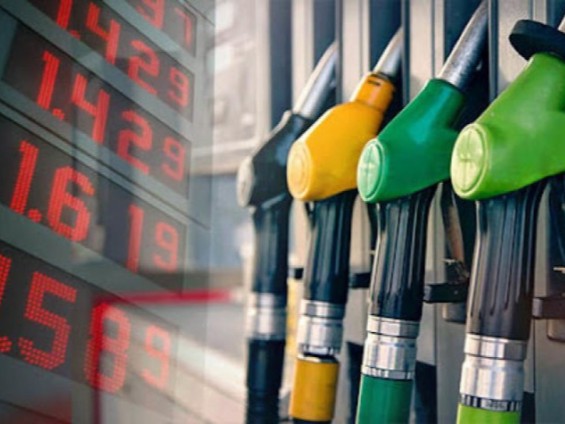
Some Oil Marketing Companies (OMCs) have started increasing prices of petroleum products at the pumps in line with industry projections.
A major player in the industry, Star Oil has taken the lead selling a lite of petrol at GH¢13.67 from the previous price of GH¢12.79.
Diesel has also been increased by some significant margin from GH¢14.95 on July 1 2026 to GH¢16.27.
Market Leader, Goil has also shot up its prices, selling a litre of petrol at GH¢13.88 from the previous price of GH¢12.79.
Diesel has also gone up to GH¢16.30 per litre from its old price of GH¢15.35.
A careful look at the numbers again showed that GOIL has also priced above the price floor set by the industry regulator.
Joy Business is learning that more oil marketing companies will later today adjust their prices in line with industry predictions.
A careful look at the price quotes of Star Oil showed that the firm has priced above the price floor of petrol at GH¢13.38 and diesel at GH¢16.27.
Based on the National Petroleum Authority price quotes, no oil marketing company should sell a litre of petrol below GH¢13.38 and diesel at GH¢14.35.
Reasons and industry projected price quotes
Data from the Chamber of Oil Marketing Companies (COMAC) indicate that the price of petrol is expected to increase by between 3.79% and 5.31%, with a litre likely to sell at about GH¢14.52.
Diesel isa also expected to increase by about 7 pesewas per litre, pushing the pump price to around GH¢16.00 per litre.
LPG is also projected to increase by between 1.10% and 1.30% per kilogramme.
According to the COMAC, the increase has been driven by renewed geopolitical tensions, which have pushed up international crude oil and refined petroleum product prices amid concerns over supply disruptions and shipping security through the Strait of Hormuz.
The Chamber also noted that the Ghana cedi weakened slightly during the pricing period. For the July 16 pricing window, the exchange rate moved from GH¢11.4333 to GH¢11.4970 per US dollar, representing a 0.55% depreciation.
International oil prices have also experienced sharp swings. Average crude prices initially declined by 7.96%, from US$78.12 per barrel to US$71.90 per barrel.
However, the prices rebounded after reports of a ceasefire breach on July 7 and 8. By July 14, Brent crude had climbed above US$84 per barrel following reports of Iranian missile strikes on two UAE tankers, heightening concerns over shipping through the Strait of Hormuz.
The renewed uncertainty has restored a geopolitical risk premium to the oil market, reversing part of the earlier decline in crude prices.
Among refined petroleum products, diesel recorded the largest increase at 8.14%, followed by petrol at 4.96%, while LPG prices declined marginally by 0.92% on the international market.
Latest Stories
-
Police arrest suspect over jewellery theft during fire outbreak
2 hours -
EOCO returns Hanan’s £6,700, GH¢2,750 and devices after defence challenge
2 hours -
Opplift Youth Entrepreneurs Summit 2026 equips entrepreneurs with skills, mentorship and support
3 hours -
Rival clubs want range of punishments for Man City
3 hours -
Tear gas in Paris and Marseille as school protests grow across France
3 hours -
Kane inspires England to win over Czech Republic in UEFA Nations League
3 hours -
Finland orders halt to work on two Google data centres
3 hours -
Substitute Merino scores twice as Spain win in Croatia
3 hours -
Ronaldo wants Portugal ‘punishment’ but not retiring
3 hours -
White House defends Trump comment to let Iran ‘take out’ LA and San Diego
4 hours -
Asos confirms hackers sent ‘unauthorised’ notification to app users
4 hours -
US televangelist Jim Bakker, disgraced from sex scandal and fraud, dies at 86
4 hours -
Congolese-born golfer to represent Ghana at Turkish Airlines World Cup grand final
4 hours -
Amazon wins global rights to stream Emmys in six-year deal
4 hours -
European Film Festival returns to Ghana after a 5-year break
4 hours