

Audio By Carbonatix
On 2 April, Sierra Leone reported its second COVID-19 case. The government reacted quickly, the country was on lockdown for 72 hours and borders were closed. Other countries in sub-Saharan Africa, like South Africa, have also reacted by locking down. The rapid reaction is laudable, especially in the face of Western sluggishness. But, the crisis that these, and many other countries in sub-Saharan Africa, face will be unprecedented if warmer climates do not impede the virus - the evidence is in the balance.
There are public health and health service issues that make controlling spread of the virus and treatment of affected people exceedingly challenging. Consider Kroo Bay – in Sierra Leone - where over 10,000 people cram into informal housing on the banks of rivers that drain plastic into the sea. How can people practice social distancing in these slums where single room houses spaced less than one metre apart contain multiple people? Where there is no social security and feeding your family requires hustling in the informal economy? Where regular handwashing is impossible because piped water is non-existent?
Then, what to do when people become sick? South Africa is relatively fortunate in having health services that endeavour to provide broad-based care for many conditions, free of charge. But even South Africa has struggled to develop these services given the focus on combatting HIV.
Many policy makers in other sub-Saharan African countries that depend on foreign aid for health service funding have to go where the money is. If donors – and the majority do - dictate that funding is spent on malaria, maternal and child health, or HIV - those services are developed. Other services that could contribute to health systems that can treat multiple diseases are not developed. Hence strong primary care systems that can triage and advise people with COVID-19, or intensive care units that can treat those who need ventilation, are vanishingly rare.
Even if they were present, in many countries in sub-Saharan Africa, healthcare is not free at the point of use, and people are too poor to take out health insurance. Meaning that people who get sick have to pay for that care with their own money. People who get sick and can’t afford to pay for care may die.
It is likely to be a tough few months for our friends living and working in sub-Saharan Africa. But when we emerge from COVID-19, as we inevitably will, we all need to work together to find whole system solutions that address housing and healthcare, rather than sticky-plasters for interests often dictated by foreign governments and funders.
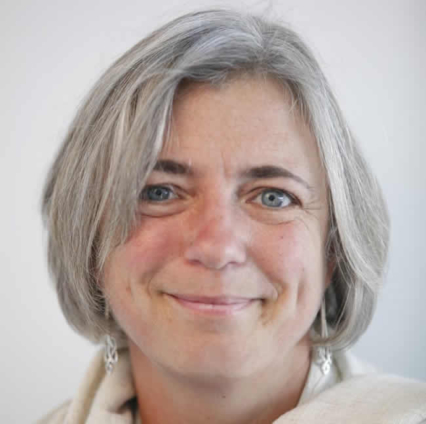
Professor Justine Davies, IGI-IAS Global Health lead – University of Birmingham
Latest Stories
-
Ghana’s US envoy links job creation to ending youth deportations
7 minutes -
Blair and Rubio among names on Gaza ‘Board of Peace’
1 hour -
Minister calls for inter-ministerial force to fix Accra’s rush-hour transit crises
2 hours -
Sarkodie’s Rapperholic UK edition sells out Royal Albert Hall
2 hours -
Academic exodus: Ghanaian PhD students in UK forced to withdraw as Scholarship Secretariat fails to pay fees
3 hours -
Antoine Semenyo’s £65m Manchester City switch sparks discussions in UK Parliament
3 hours -
Transport crises, Prof. Frimpong-Boateng v NPP and LGBTQI issues take centre stage on Joy Prime’s ‘Prime Insight’
4 hours -
Ghana Navy busts major fuel smuggling syndicate along Volta coast
5 hours -
Karaga MP donates 4,000 gallons of fuel to boost livelihoods in New Year outreach
5 hours -
GIPC CEO engages European Parliament delegation on Ghana’s investment reforms
5 hours -
Oppong Nkrumah, 5 others didn’t accept campaign support from Bryan Acheampong – Pius Hadzide backtracks
6 hours -
BoG rejects market speculation, emphasises data-driven policies
7 hours -
BoG targets consolidation, discipline in 2026 policy direction
7 hours -
GJA-Ashanti commends EPA’s continuous engagement with journalists who were involved in accident
7 hours -
Wenchi needs development, help us – Chiefs to Aseidu Nketia
7 hours