


Audio By Carbonatix
A series of seemingly normal photographs have gone viral over the internet, but is there more than meets the eye?
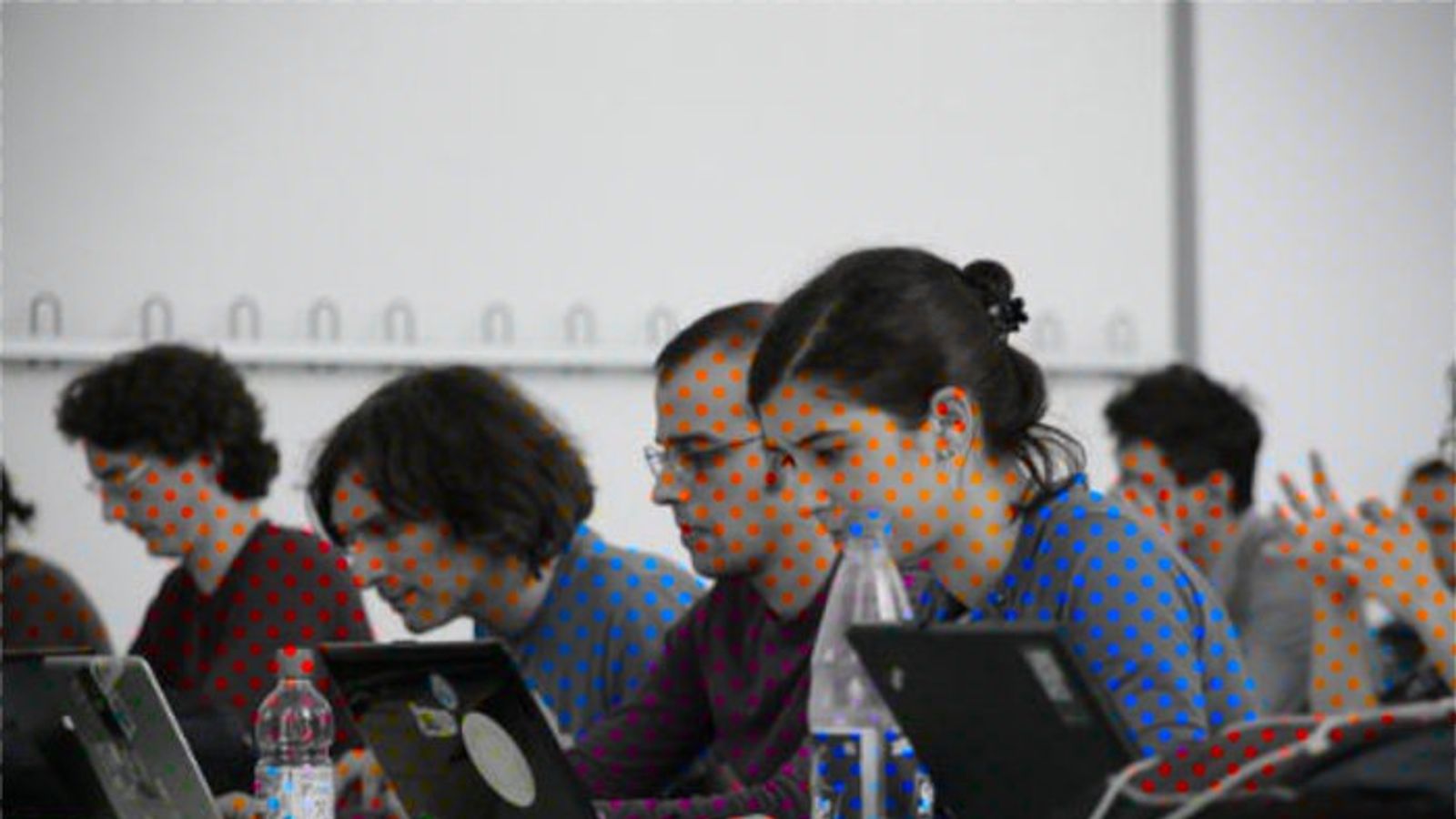
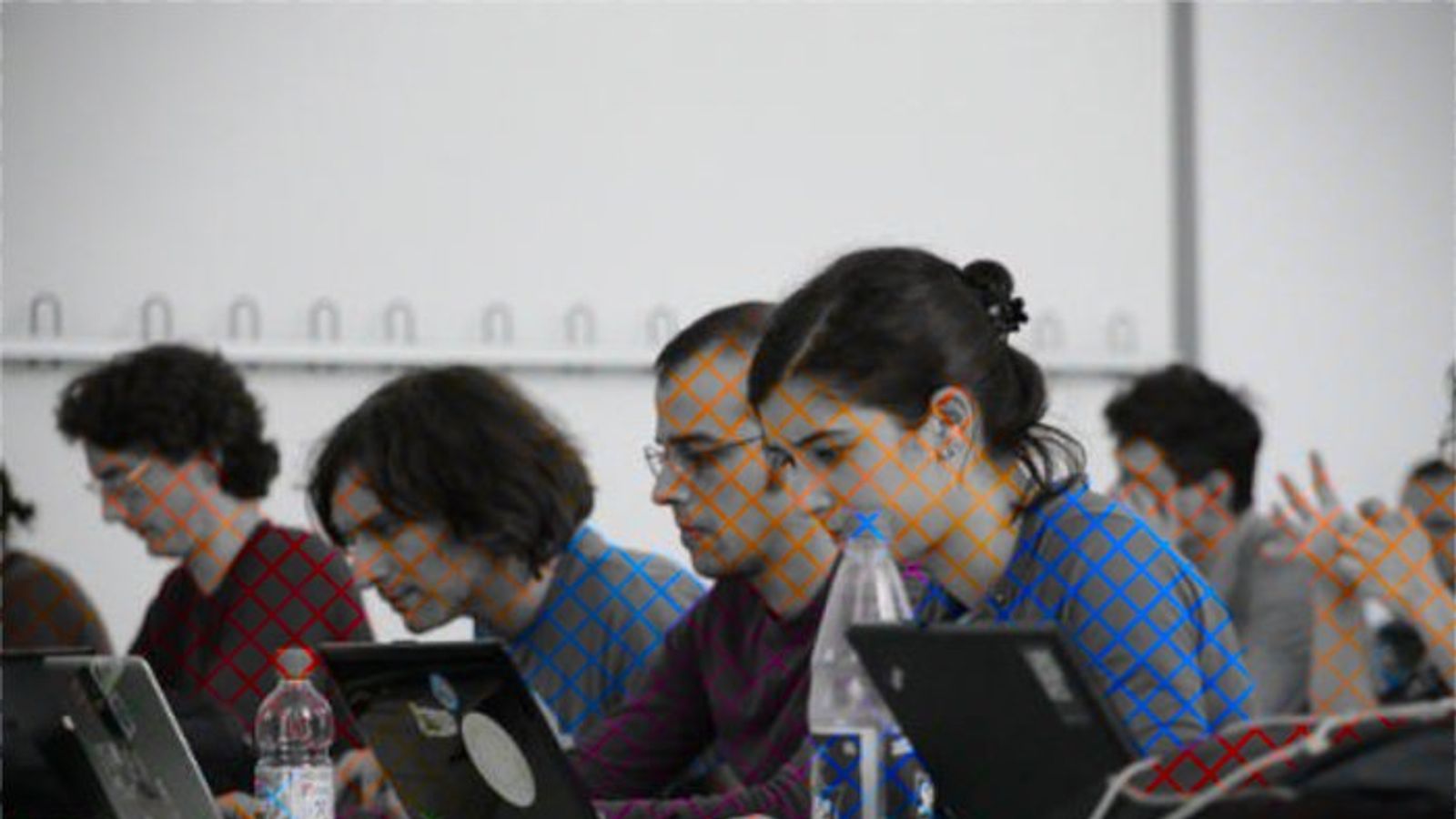
Oyvind Kolas has produced a number of images in which he uses a "colour assimilation grid illusion" over black and white photographs to trick the brain into seeing a full-colour picture.
In a number of experiments, he has used a grid of lines, dots and lines at differing angles across the original image to produce the illusion.
The software developer and digital media artist has developed the technique, which is interpreted as colour as the brain tries to average out the colour against the grayscale background.
Mr Kolas explained on his website that it can be compared to the way printers use colours. The colour mix seen by the eye and interpreted by our brains works to create the final image in our mind.
 His work is not just limited to photographs and still images. He has created a video where the colour grid is laid over moving characters.
 Objects have colours because they reflect those particular wavelengths of light and absorb other wavelengths - for example a red car reflects red wavelengths and absorbs the remaining colours.
These wavelengths of light then travel to the eye, which works using photoreceptor cells called rods and cones.
There are 120 million rods which detect mainly black and white information, while there are up to seven million cones which identify different wavelengths of light roughly corresponding to red, green and blue.
We see colour because the brain pieces together all of the information that the rods and cones collect, and it often fills in "missing" parts in order to interpret the world around us.
These monochrome images appear to have colour because the brain is filling in the missing information.
Around 8% of men and 1% of women have difficulties seeing some colours, commonly known as colour blindness, and therefore they may perceive these pictures differently.
Objects have colours because they reflect those particular wavelengths of light and absorb other wavelengths - for example a red car reflects red wavelengths and absorbs the remaining colours.
These wavelengths of light then travel to the eye, which works using photoreceptor cells called rods and cones.
There are 120 million rods which detect mainly black and white information, while there are up to seven million cones which identify different wavelengths of light roughly corresponding to red, green and blue.
We see colour because the brain pieces together all of the information that the rods and cones collect, and it often fills in "missing" parts in order to interpret the world around us.
These monochrome images appear to have colour because the brain is filling in the missing information.
Around 8% of men and 1% of women have difficulties seeing some colours, commonly known as colour blindness, and therefore they may perceive these pictures differently.
His work is not just limited to photographs and still images. He has created a video where the colour grid is laid over moving characters.
So how does it work?
The human brain and eyes work together to see colours, which are all different wavelengths of light.
Objects have colours because they reflect those particular wavelengths of light and absorb other wavelengths - for example a red car reflects red wavelengths and absorbs the remaining colours.
These wavelengths of light then travel to the eye, which works using photoreceptor cells called rods and cones.
There are 120 million rods which detect mainly black and white information, while there are up to seven million cones which identify different wavelengths of light roughly corresponding to red, green and blue.
We see colour because the brain pieces together all of the information that the rods and cones collect, and it often fills in "missing" parts in order to interpret the world around us.
These monochrome images appear to have colour because the brain is filling in the missing information.
Around 8% of men and 1% of women have difficulties seeing some colours, commonly known as colour blindness, and therefore they may perceive these pictures differently.DISCLAIMER: The Views, Comments, Opinions, Contributions and Statements made by Readers and Contributors on this platform do not necessarily represent the views or policy of Multimedia Group Limited.
Tags:
DISCLAIMER: The Views, Comments, Opinions, Contributions and Statements made by Readers and Contributors on this platform do not necessarily represent the views or policy of Multimedia Group Limited.
Latest Stories
-
Mr President, Ghana was mentioned at the UN; why aren’t we talking about it?
1 hour -
Accra to convene Africa’s regulators and markets on tokenisation at AVAS 2026
1 hour -
The Paradox of Plenty — When every smartphone becomes a newsroom
2 hours -
GTA sensitises taxi drivers in ‘Know Ghana’ tourism campaign
3 hours -
Archbishop Agyinasare calls for responsible speech amid growing social media abuse
3 hours -
‘It will be inexcusable for gov’t not to honour payment of teachers’ arrears by 30th October’ – Haruna Iddrisu
3 hours -
Forbes’ World’s Best Employers 2026: No Ghanaian firm ranked among 900 companies
3 hours -
Electronic processing of teachers’ data: ‘The decision is the Controller’s’ – GES boss
3 hours -
Teachers’ Strike: Haruna Iddrisu questions paper-based processing of promoted teachers’ data
4 hours -
Savannah Region: Kunfusi bridge collapses again, leaving nearly 4,000 residents cut off
4 hours -
Teachers’ strike: GES targets Monday deadline to submit promotion data to Controller
4 hours -
Inflation to average 11.3% in 2027 – Fitch Solutions
4 hours -
‘I didn’t campaign for NDC to come and do this nonsense’ – Kpebu on EOCO’s conduct
4 hours -
Fitch Solutions maintains policy rate forecast of 14% by December 2026
4 hours -
Diaspora Nasara Caucus congratulates Mohammed Ali Suraj, new NPP executives
6 hours