

Audio By Carbonatix
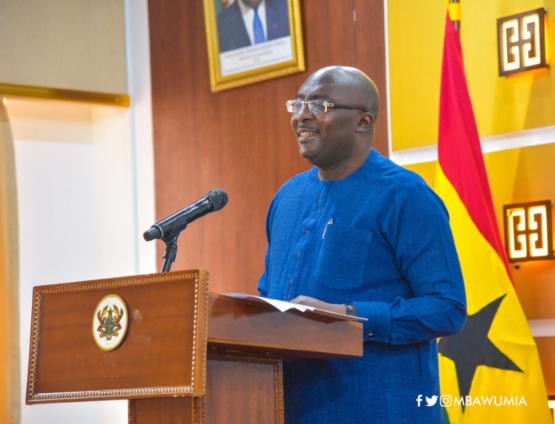
Vice President Mahamudu Bawumia says Ghana is prepared for the digitalised economy which would be the new global norm after the Covid-19 pandemic.
Speaking at the launch of the Microfinance and Small Loans Centre (MASLOC’s) Integrated ICT System, Dr Bawumia indicated that the current global health crisis has awakened many nations to the importance of digitalisation.
However, he said Ghana will not be left out since President Akufo-Addo has aggressively pursued digitalisation of government operations and every aspect of the economy when he assumed office in January 2017.

“Covid-19 has been destructive in many ways of our lives but destructive events can catalyze change for the better, we are witnessing an awakening of a new world order which will be an increase reliance and confidence in technology.
“Thankfully Ghana is already on course as far as digitalization is concerned,” he said.

MASLOC's integrated ICT system is a new innovation which will automate all the operations of microfinance companies to improve efficiency in the institution.
The platform which is a collaboration between the centre, the ARP Apex bank and designed by the Eban Capital, the software providers automates end to end process of credit management, loan application, credit assessment, disbursement of loan, loan repayment and monitoring and reporting all to make loan assessable.
Addressing officials of the MASLOC, Dr Bawumia said the initiative is a technological solution that would address payment and settlement challenges of MASLOC and make it business friendly to its customers.
He further commended the leadership of MASLOC for the initiative since it is in line with President Nana Akufo-Addo’s vision of a digitalised economy and formalize the informal sector as well.
“With this Integrated ICT system, MASLOC is poised to effectively deliver on its objective of providing funds to SMEs especially the unbanked customers who form a greater percentage of the informal sector of the economy.
“And the organisation will also position itself for the next world order of service delivery.”

Finance minister Ken Ofori Atta speaking about the effect of the pandemic on the economy, revealed that the lockdown was not extended because a chunk of the Ghanaian population operate within the informal sector; the hardest hit sector during the restriction.
It therefore became "increasingly impossible to continue" with the lockdown directive he added.
Latest Stories
-
Friends of Bridget Bonnie Marks her 35th birthday with donation to Kasseh Model Health Centre
20 minutes -
Landfilling waste management creates no value, it’s an economic waste
47 minutes -
Photos: Speaker Bagbin Commissions MPs constituency office under parliamentary decentralisation programme
1 hour -
Black Stars technical advisor Winfried Schäfer sacked as GFA shakes up backroom staff
1 hour -
Wenchi water project almost complete, critical to gov’t agenda – GWL MD
1 hour -
Anti-LGBTQ+ bill not part of government’s legislative agenda – Inusah Fuseini
1 hour -
Anti-LGBTQ Bill: Forget the rumour mongers, I’m a man of action, and will pass the bill – Speaker
2 hours -
Women and children among those killed in Sudanese army shelling of wedding celebration
2 hours -
President Mahama is not sincere with Ghanaians on LGBTQ bill matter – Hassan Tampuli
3 hours -
Gov’t to establish Prison Industrial Hub to equip inmates with income-generating skills – Prison Service boss
3 hours -
Alhassan Tampuli donates cement, roofing sheets to support storm victims in Gushegu
3 hours -
Alhassan Tampuli appeals for urgent support for storm victims in Gushegu
3 hours -
The hypocrisy must stop; pass Anti-LGBTQ+ Bill now – Alhassan Tampuli to Mahama
3 hours -
Imprisonment should be rehabilitative, not punitive – Ghana Prisons boss at UNGA
3 hours -
Ga Adangbe traditional priests petition Mahama over McDan aviation licence revocation
4 hours