

Audio By Carbonatix
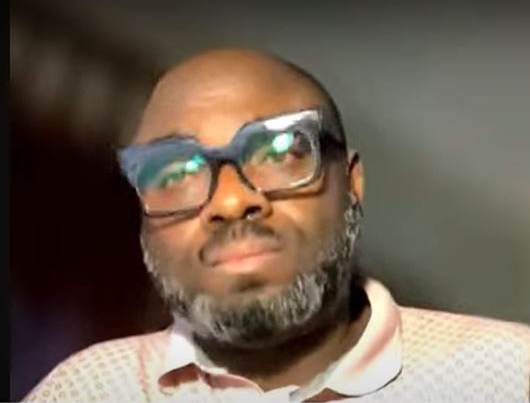
Associate Professor at the University of Ghana Business School, Professor Lord Mensah, says Ghana’s exchange rates have never been properly managed.
According to him, the government has been managing it with loans and bonds from international donors thus following Ghana’s inability to return to the Eurobond market to raise money as a result of several downgrades by international rating agencies, it has caused a major shortfall in dollar reserves and the economic crisis ongoing.
He noted that the reliance on loans and bonds came at the expense of the country’s drive to become a net exporter and the creation of a heavily industrialised economy.
Speaking on JoyNews’ PM Express, he said, “Our exchange rates have never been managed. We’ve been managing it with loans and clearly, everything shows on the grounds.
"We have sacrificed our export drive policies; we have sacrificed our production which will reduce some importation for just loans in managing our exchange rate.
“The reason why we can see the dollar moving without control is our absence on the Eurobond market. For the past few years, it is only this year that the government found it difficult to go on the Eurobond market.
He continued, “All other loans are coming in; the Cocoa syndicated loans are coming in, we could get loans from Afreximbank and all those but the problem we are having is access to the Eurobond market. And access to the Eurobond market in the sense that most of our debt which are foreign we have to service them using foreign currency.”
He explained that now with the path to the Eurobond blocked for Ghana, government is struggling to raise dollars to service interest payments, support importations as well as finance other local projects.
“And the Eurobond anytime we go there, if you look at the prospectus clearly it tells you that we borrow to defray existing debt and then we borrow extra to bring some in-house to grow the economy.
"So effectively it has been the case that every year we have access to the Eurobond market to serve our interest payments and so, therefore, the Cocoa syndicated loans and all other loans come in to give us some buffer to meet the local demand of the dollar.
“So now that the Eurobond market has been frozen on us it has turned out to be difficult to meet this demand of interest payment and at the same time the local traders and all those transactions that go on in the environment,” he said.
Latest Stories
-
‘I am disappointed’ – Yaw Ampofo Ankrah breaks silence after NSA suspension
12 minutes -
Douglas Boateng receives IMM Institute Supply Chain Lifetime Achievement Award
26 minutes -
Pentecost University to host international sustainability conference
57 minutes -
Ampofo Ankrah did not collect World Cup visa money – Lawyer
1 hour -
Baffour Awuah to spend night in EOCO custody – Atta Akyea
1 hour -
Torgbiga Wenya III opposes proposed elevation of 36 Anlo chiefs to Paramount status
1 hour -
The strengthening El Niño and what it could mean for Ghana
1 hour -
Baffour Awuah formally charged with money laundering, loss of public funds – Lawyer
1 hour -
Drone flight over EOCO building could attract 30-year jail term – Security consultant
1 hour -
Flying drone over EOCO premises is strictly prohibited – Security consultant
1 hour -
SIC file was surrendered to client, EOCO has no reason to search Manhyia South MP’s firm – Atta Akyea
1 hour -
EOCO search of Baffour Awuah’s law firm raises confidentiality concerns – Atta Akyea
2 hours -
“I will never ignore an invitation from EOCO if I had received one” — Manhyia MP
2 hours -
Baffour Awuah ready to cooperate fully with EOCO investigation – Bosome Freho MP
2 hours -
How a Ghanaian technology is helping fish farmers detect hidden threats before fish die
2 hours