

Audio By Carbonatix
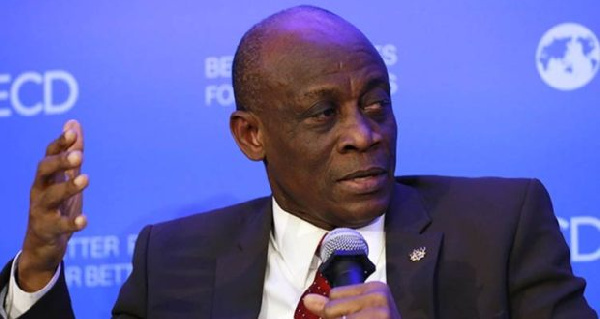
Former Finance Minister, Seth Terkper says the National Democratic Congress (NDC) administration of 2013-2016 had an effective plan to deal with the banking sector crisis.
This plan, he argues, would rather have saved most of the indigenous banks instead of collapsing them.
The Bank of Ghana (BoG) revoked the licenses of seven indigenous banks between August 2017 and January 2019.
The BOG said these banks had been mismanaged, leaving depositors at the risk of losing savings. It, therefore, stepped in to save the situation.
Government has been criticised for opting to collapse the banks after Finance Minister Ken Ofori-Atta revealed that it cost the taxpayer some GH¢21 billion to ensure the safety of depositors funds.
The former Finance Minister, Seth Terkper on Monday addressed a lecture organized by the NDC’s Professionals Forum.
He argued that the NDC administration would have handled the situation differently.
Mr Terkper said the NDC administration undertook an asset quality review of the banks, which gave it a sense of the state of the banks.
He admits some malfeasance was discovered, but the appropriate approach would have been to slowly sell the banks' assets while trying to keep most of the banks operational.
He further stated that the NPP government did not need to borrow to deal with the situation. He claimed the NDC government, through the Energy Sector Levy Act, left some GH¢43 billion available to the government.
“I don’t think we should accept this narrative that we left the current administration to go and borrow to resolve the banking sector crisis. So what happened to the 43 billion cedis? Couldn’t it be used to restructure?” Mr Terkper quizzed.
On the impact of Covid-19 on the economy, the former Minister said the pandemic cannot be blamed entirely for the state of affairs.
The former Minister insisted the current administration has received the most support for a crisis in the nation's history.
“IMF $1 billion, Bank of Ghana $1.7 billion, World Bank, African Development Bank and others put together $500 to $600 million and counting. A lot of resources have flowed in, and so that is where we must dig deeper. Covid is painful, but a lot of resources have flowed.”
Latest Stories
-
FTBLRLIFE targets Ghana in expansion of global grassroots football network
38 minutes -
Former ‘American Idol’ contestant sentenced to life without parole for wife’s murder
2 hours -
Education Ministry commends Ghanaian teachers on World Teachers’ Day 2026
2 hours -
NPP can reconcile with aggrieved members who want to return – Nana Akomea
3 hours -
Tamale Child Deaths: Vehicle owner arrested as IGP deploys homicide team
3 hours -
From ShattaFest to MoMo Fest: Entertainment takes centre stage in youth engagement
3 hours -
Nigerian military aircraft crashes, killing 32
3 hours -
MTN encourages Ghanaians to use MoMo for saving, investing and financial planning
3 hours -
Absa Bank Ghana names Stephen Ato Frimpong as Board Chair
3 hours -
Pickford ‘almost caused crash’ with careless driving
3 hours -
Author and former politician Jeffrey Archer dies aged 86
3 hours -
No education reform can succeed without teachers – Education Ministry
3 hours -
Gauff condemns racist abuse after China Open win
4 hours -
Medvedev disqualified for hitting spectator with ball
4 hours -
Oliseh scores twice in late comeback win for France
4 hours