

Audio By Carbonatix
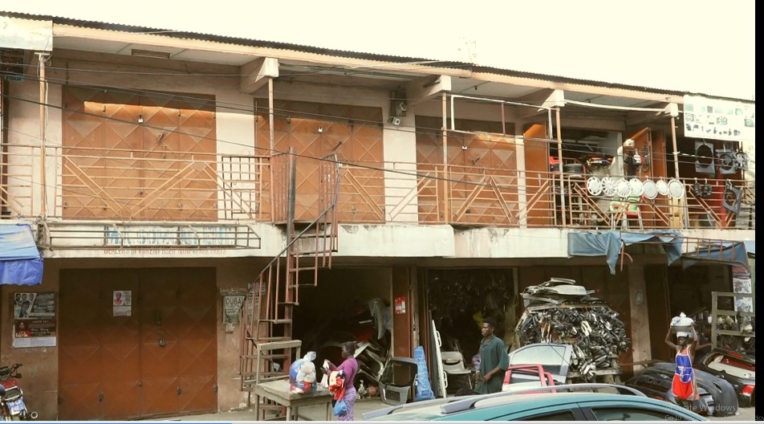
Over 50 shops at the Abossey Okai Spare parts market have shut down their operations due to default in paying their loans.
Some of the owners of the shops blamed the situation on the high cost of doing business in the country, as a result of high inflation and volatilities in the exchange rate regime earlier this year.
They also cited high taxes at the port as contributing to the default in repaying their loans.
“A lot of traders go for loans to import goods to the market. Due to the high cost of port duties and the unstable exchange rate regime, we are compelled to increase prices but at the end, customers don’t buy and we lose”, a trader who gave his name as Julius said.
According to Julius, many of his colleagues have to leave the country in search of better opportunities to pay back their loans.
“It is not easy my brother. A lot of people are travelling outside the country to look for better conditions. Why operate a shop here when you can't break even”.
Expressing his disappointment, Julius said he is unhappy with the current economic situation in the country and as a result will also leave for Dubai for a carpentry profession.
"Listen! We don't have any business to do. All we have is what we do here. Look at the shops, they are all closed with no spare parts in there. Do you know why? They have all travelled because the banks are chasing them for repayment of the loans which they can't repay.
"The only option now is to travel abroad, get some monies and pay your debt. I don't think you will meet me here in your next visit. I am also going to Dubai to make money"" he said.
Kwesi, who primarily deals in automobile engines, had to rely on his children living abroad to pay a local bank a loan for ₵2 million, which, in his words, almost got him imprisoned.
He stated that the operations of the spare parts merchants are being hampered by the failure to implement pricing control policies.
"They came to my shop with some policemen. To be frank with you, the goods I used the money for were in the shop and buyers were not willing to buy because of the price. I had wanted to resort to reduction of the goods which means I won't be able to recoup my principal I used to purchase the goods"
“I would be happy if we could have price control, but it appears it won't work out because people just want to sell their goods just to stay in business. The issue of taxes too is a big problem for us”, he stated
Latest Stories
-
Kwaku Azar writes: A-G vs OSP
20 minutes -
Mfantsipim–Adisadel rivalry built excellence, not division – Sam Jonah
45 minutes -
Vice President launches Mfantsipim’s 150 years of shaping Ghana’s greatest mind
1 hour -
I assure Otumfuo, Mahama will join him to commission KNUST Teaching Hospital by end of this year – Haruna Iddrisu
2 hours -
Barcelona dominate derby to extend La Liga lead
2 hours -
Gov’t to roll out free special education for persons with disabilities from July 1 – Education Minister
2 hours -
Importers and Exporters Association declares full support for Publican AI port system
2 hours -
“We used it to test our officiating officials’ readiness” – Bawah Fuseini after CAA Athletics event
3 hours -
Volleyball emerges as Ghana’s fastest rising sport
3 hours -
National Sports Fund needs strong leadership from the top – Administrator David Wuaku
3 hours -
JoySports Exclusive: Steve McLaren in talks with GFA after expressing interest in Black Stars job
3 hours -
Fire guts auto parts warehouse at Bubuashie, one fire officer injured
3 hours -
I owe my victory to coach Ofori Asare – Allotey after winning WBA Africa Gold Super Flyweight belt
3 hours -
Church of Pentecost supports over 2,000 BECE candidates in Obuasi with career guidance seminar
5 hours -
Brandon Asante and Coventry all but promoted to Premier League despite Sheffield Wednesday draw
5 hours