

Audio By Carbonatix
Ghana's healthcare sector is grappling with a critical shortage of healthcare services in many areas, while an overwhelming surplus of trained health professionals remains unemployed.
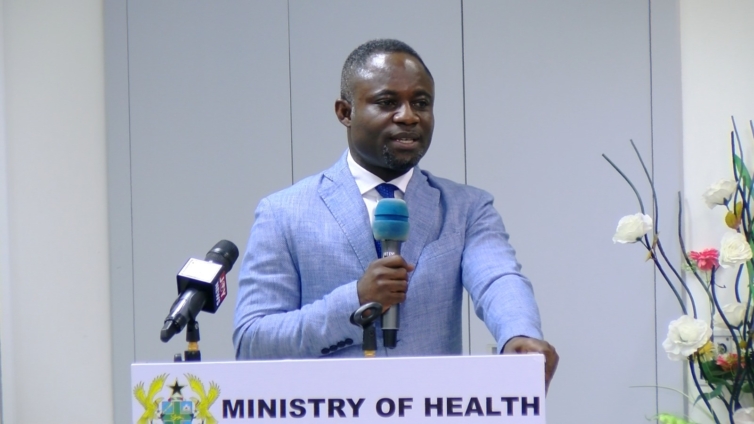
The Minister for Health, Kwabena Mintah Akandoh, has revealed the true scale of this crisis in Parliament, disclosing that the number of trained health professionals currently seeking employment far exceeds earlier estimates, now totalling over 70,000 across various disciplines.
This figure shatters the previously widely cited approximation of 30,000 unemployed health workers, painting a far grimmer picture of human resource challenges in a sector vital to national development and well-being.
Ghana's doctor-to-patient ratio stands at roughly 1:8,000, significantly below the World Health Organisation's (WHO) recommended 1:1,000.
Similarly, the nurse-to-patient ratio often falls short of optimal levels, especially in rural and underserved areas.
Delivering further details in Parliament, Mr. Akandoh provided a granular breakdown of the staggering figures:
- Nurses: The largest cohort of unemployed professionals, numbering 48,878. This includes:
- 15,947 from the 2021 batch
- 17,176 from the 2022 batch
- 15,755 from the 2023 batch . The Minister acknowledged that approximately 15,000 nurses were granted financial clearance in December 2024, signalling an effort to address the backlog. However, he cautioned that these individuals are still in the process of being formally placed on the government payroll, indicating delays in actual deployment.
- Allied Health Professionals: A staggering 21,570 allied health professionals remain unemployed. Mr. Akandoh revealed a dire situation for this critical group, which includes laboratory technicians, physiotherapists, radiographers, nutritionists, and others, stating that "no financial clearance has been granted for allied health professionals since 2019." This five-year recruitment freeze has led to an enormous backlog and a significant brain drain in these specialized fields.
- Pharmacists: The situation for pharmacists is equally bleak, with 1,621 currently jobless. Like allied health professionals, no recruitment has occurred for pharmacists since 2019, exacerbating the shortage of pharmaceutical services, particularly in remote areas. Ghana has approximately 4,500 licensed pharmacists, translating to a ratio of about 1 pharmacist per 7,500 people, far below the optimal standards.
- Medical Doctors: Despite the often-cited shortage of doctors in Ghana, over 900 qualified medical doctors remain unemployed and are awaiting placement. The Minister confirmed that the Ministry has recently begun efforts to recruit these doctors, offering a glimmer of hope for this highly trained group. Ghana trains roughly 500-600 doctors annually from its public medical schools.
"The problem is, therefore, enormous," Mr. Akandoh admitted, acknowledging the gravity of the situation that leaves thousands of skilled professionals idle while many Ghanaians lack access to quality healthcare services. "But we are committed to finding solutions to it," he assured Parliament.
As part of broader efforts to tackle this colossal unemployment challenge, Minister Akandoh disclosed that the government is exploring "managed migration" as a temporary strategy to ease the burden.
This approach seeks to facilitate the ethical and organized movement of Ghanaian health professionals to countries with demand for their services, ensuring that their skills are utilized while potentially generating remittances and building international experience.
He revealed that "over 13 countries have formally expressed interest in recruiting Ghanaian nurses and other qualified health professionals," indicating a significant international demand for Ghana's healthcare workforce.
Countries like the UK, Canada, and Germany have increasingly looked to African nations to fill their own healthcare staff shortages.
Mr. Akandoh reaffirmed the Ministry’s commitment to securing both local and international opportunities.
The dual strategy aims to reduce the daunting backlog of unemployed professionals and simultaneously improve health service delivery across the country by strategically deploying available personnel where they are most needed.
The Minister's disclosure highlights the urgent need for a long-term, comprehensive human resource plan for Ghana's health sector that aligns training output with recruitment capacity and national health needs.
Latest Stories
-
Germany suspends military approval for long stays abroad for men under 45
5 minutes -
Liverpool face uphill Champions League task after PSG thrashing in Paris
5 minutes -
‘Ketamine Queen’ sentenced to 15 years in Matthew Perry overdose death
16 minutes -
Atletico Madrid stun 10-man Barcelona to seize Champions League semi-final advantage
49 minutes -
Black Stars coach to be announced by next week – Sports Minister
59 minutes -
Chiefs, queen mothers and principal elders of Odau group denounce ‘rebellious Etweresohene’, pledges allegiance to Okyenhene
1 hour -
KNUST library dress code sparks online backlash over strict rules
1 hour -
Cultural Diplomacy in Action: Ghanaian youth leaders present symbolic smock to U.S. Chargé d’Affaires
1 hour -
Ghana Card payment activation under review – NIA breaks silence on financial integration
2 hours -
Ofori-Atta’s ICE release on bail positive; he poses no risk – Amanda Clinton
2 hours -
Ken Ofori-Atta’s passport seized after bail, set to reappear in US Court on April 27
2 hours -
Stuck contraceptives risk HIV surge – Ghana HIV/AIDS Network President warns
2 hours -
Edmond Boateng elected Secretary of Honorary Consular Corps of Ghana
2 hours -
Omanhene Kwabena Asante slams GIADEC CEO over alleged discrimination in mining concessions
3 hours -
Majority of Ghanaian importers lack awareness of cargo insurance – Gyampo
3 hours