

Audio By Carbonatix
A survey conducted by the Institute of Economic Affairs (IEA) has identified unemployment as the most important issue that must be addressed by the John Mahama administration.
According to the survey, respondents overwhelmingly pointed to economic and governance-related problems, with unemployment and Illegal mining (galamsey) at the forefront.
“Nearly half of respondents (46%) identify unemployment as the most pressing national issue, making joblessness the most frequently mentioned concern. This highlights the central role of employment in public perceptions of national well-being”.
“The second most cited issue, mentioned by 30% of respondents, is illegal mining, commonly known as galamsey. The prominence of galamsey highlights widespread concern over environmental damage, water pollution and related health issues, and the long-term sustainability of natural resources,” the survey said.
In addition, the survey captured concerns over the cost of living as widespread and intense, despite the high job approval for President Mahama (68%).
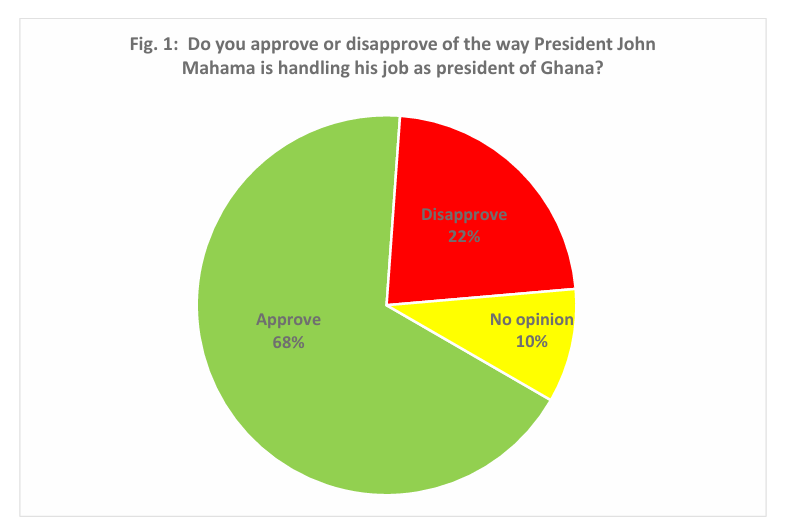
“Seven in ten respondents (71%) report being very concerned about the price of food and consumer items, while two in ten respondents (20%) say they are 2 somewhat concerned.
Overall, more than nine in ten Ghanaians (91%) expressed at least some level of concern about rising prices. The results showed that, although most people believe the president is leading the country in the right direction, challenges related to basic necessities remain unresolved and require his urgent attention.
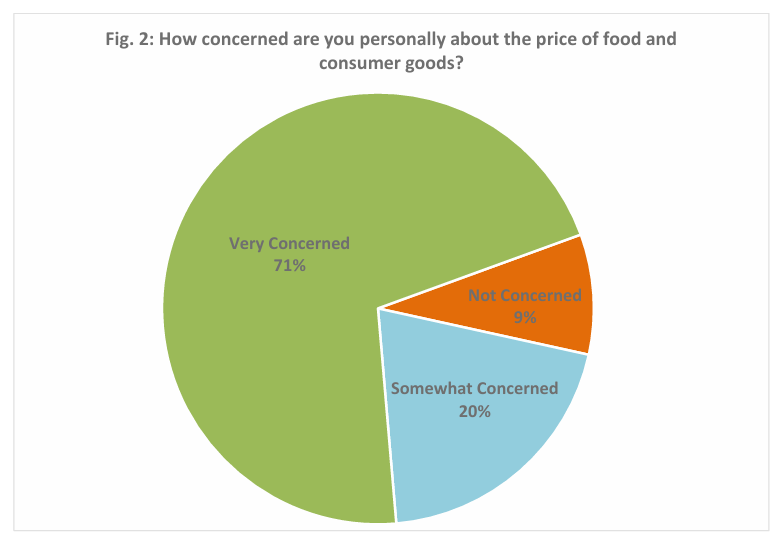
Meanwhile, the survey said public perception of President John Mahama’s job performance is broadly positive, with a greater percentage of the population approving of his job performance.
“When asked whether they approve or disapprove of the way President Mahama is handling his job, 68% of respondents say they approve. About 22% say they disapprove, while 10% report having no opinion”.
The survey said the approval rating suggests a solid base of public support for the president, even amid widespread concern about some socioeconomic and governance issues.
“The gap between approval and disapproval— over forty percentage points— indicates that positive assessments of the president’s performance extend well beyond his critics. However, the presence of a notable minority (22%) who disapprove, along with those who hold no opinion, suggests that support is not universal and that further efforts are needed to engage and win over more Ghanaians”.
Latest Stories
-
Vibes The Movie: Big Ghun’s Ghanaian film earns five nominations at 2026 REFFA
11 minutes -
MamaCare CEO warns unresolved conflicts among health workers could undermine maternal and neonatal care
35 minutes -
Health professionals urged to translate medical knowledge into practice to save mothers
41 minutes -
Conflicts among care providers linked to maternal, neonatal deaths – Expert
2 hours -
GIS marks 10th TIME conference, champions improved teaching practices
2 hours -
BRICS Or Balance? What Ghana’s bid really means
3 hours -
GPRTU wants full TRAFFITECH-GH implementation to start in 2027
3 hours -
Mahama announces plans to import electric wheelchairs for PWDs
3 hours -
KGL U17 Colts 2026: Western beat Prempeh Elite Academy to set up final final with Greater Accra Region
4 hours -
Late Solanke strike salvages 10-man Spurs draw at Man United
4 hours -
Gender Ministry to monitor welfare of Nana Akua Addo’s children amid domestic violence case
4 hours -
Benedict Okyere Yeboah: Ghana’s football problem goes beyond sacking a coach
4 hours -
GPL 2026/27: Darkwah Wiafe’s winner sees All Blacks beat Kotoko
4 hours -
ITF World Tour : Patel Wins Boys’ Singles Final at J100 Accra
4 hours -
Ghana must pursue BRICS partnership if it brings economic benefits – Kpebu
4 hours