

Audio By Carbonatix
The Institute of Economic Affairs (IEA) has described proposals by the government and the Constitution Review Committee to improve the representation of women and other marginalised groups in Parliament as “grossly insufficient”.
In its constitutional review statement issued on Wednesday, September 2, 2026, the IEA called for a broader proportional representation system and mandatory quotas across public institutions.
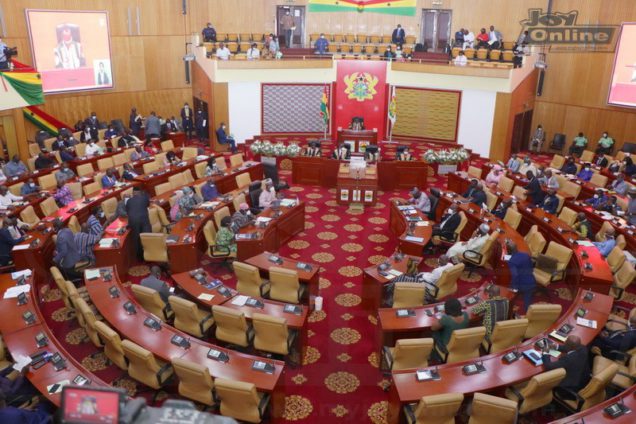
The government has proposed capping Parliament at 300 members, comprising 276 constituency representatives and 24 additional members elected through proportional representation.
The additional seats would be allocated to women, persons with disabilities and young people, subject to a feasibility study.
However, the government rejected the Prempeh Committee’s broader proposal to use proportional representation as a general mechanism for increasing the participation of women and other under-represented groups, limiting the arrangement to the 24 additional seats.
“The IEA considers the proposals from both the Prempeh Committee and the Government grossly insufficient,” the Institute stated.
It proposed a system under which political parties would nominate women and members of other marginalised groups based on the proportion of votes secured in an election.
“There is the need for a system of proportional representation that allows political parties to nominate women and persons from other marginalised groups based on the proportion of votes won in an election,” the IEA said.
The Institute also called for mandatory quota and non-quota measures to ensure that every public institution comprises at least 30 per cent of each gender and other identified groups.
On District Assemblies, the Prempeh Committee proposed restructuring the 30 per cent appointed membership by introducing quotas for traditional authorities, women, businesses, persons with disabilities, young people and non-governmental organisations.
The government, however, wants to retain the existing one-third appointed membership, with the selection arrangements determined under the Local Government Act.
The IEA maintained that stronger constitutional measures were necessary to address the persistent under-representation of women and marginalised groups in Ghana’s political institutions.
Latest Stories
-
Burnham had formal meeting with Man City chair while mayor
6 minutes -
Is Ghana producing too many lawyers? What is the best lawyer-to-citizen ratio?
8 minutes -
NDC sinking Ghana’s democracy with Emelia Agbenyo’s appointment – Miracles Aboagye
18 minutes -
Seedorf back in football as Corinthians head coach
31 minutes -
Hincapié and Zubimendi injured in post-match training session
40 minutes -
Fridges in French supermarkets hit by cyberattack
51 minutes -
Qantas flight grounded after bedbug outbreak
60 minutes -
Reality Zone with Vicky Wireko: International Day of the Girl, shaping today’s girl for tomorrow’s future – ZONTA Clubs lead the way
1 hour -
Global health must be led by countries, not designed for them – Mintah Akandoh
2 hours -
Mahama honoured at 2026 World Health Summit in Berlin for global health leadership
2 hours -
Breast cancer is not a death sentence – Besease Kontire Obaapanin, Magmina Foundation lead awareness campaign
2 hours -
EcoBank invests in digital education of 4 Garisson School to mark 40 years in Africa
3 hours -
AGI urges investment in skills and raw materials to strengthen local manufacturing
3 hours -
GPL 2026/27: ‘We have to rectify our mistakes’ – Boadu reacts to Aduana FC defeat
3 hours -
No disability access, no building permit – KMA declares
3 hours