

Audio By Carbonatix
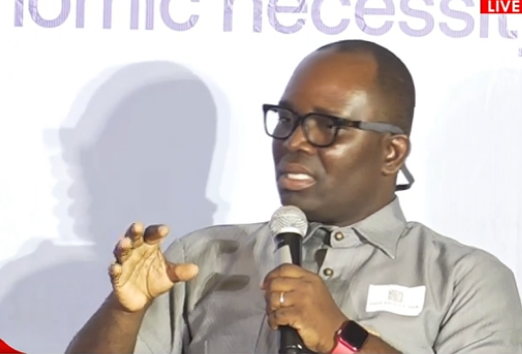
An Associate Professor at the University of Education, Winneba, Prof. Enoch F. Sam, has called for the implementation of an integrated transport system in Ghana, arguing that the country’s heavy reliance on road transport has come at the expense of other viable options.
Speaking at the Graphic–Stanbic Bank Breakfast Meeting on 24 February under the theme, “Why resetting Ghana’s urban transport system is an economic necessity,” Prof. Sam said Ghana must broaden its focus beyond roads to include rail and other modes of transport.
“We should implement an integrated transport system. In Ghana, we focus so much on road transport, often to the detriment of others. We have rail and other options, and these are areas we should also be banking our hopes on so that we can get the best out of them,” he said.
He highlighted the risks associated with transporting certain goods exclusively by road.
“If you go to other countries, some of the goods we transport on the road naturally should not be on the road. Some are even hazardous. If we have other modes, these could go on them, while freeing road space for passenger commuting,” Prof. Sam explained.
He also stressed the need for evidence-based planning, particularly in the context of resetting the transport sector.
“In terms of budgeting, especially in this era of resetting, we need to understand what is happening. First, what is our priority? What are we seeking to achieve? As someone from academia, I will always push for data and science, and that is what we fail at in this country,” he said.
Prof. Sam shared lessons from his time studying in Belgium, where private sector industries collaborate with universities to address practical challenges.
“I studied in Belgium, and there, private sector industries would bring resources to the university and say, ‘This is a problem we see. What can you do for us? Give us data, conduct research, so that we can find a solution.’ We cannot solve problems without first understanding their root causes,” he noted.
He further emphasised that transport planning must reflect the diverse needs of citizens, pointing out that individuals have unique preferences, expectations and travel patterns.
By taking into account the collective perspectives of the population, planners can design a system that functions effectively for all.
Prof. Sam concluded that the proposed reset of Ghana’s urban transport system must prioritise efficiency, safety and data-driven solutions, ensuring the country fully benefits from all available modes of transport.
Latest Stories
-
Gov’t committed to finishing Tema Motorway by 2027, says Agbodza
5 minutes -
OSP under threat from political interference — Kissi Agyebeng calls for constitutional protection
8 minutes -
T.I. Ahmadiyya SHS, Kumasi, celebrates 75 years of excellence
17 minutes -
Court orders SHS students to pay compensation for assault on teacher
18 minutes -
Students of Nkwantanang M.A 6 Basic School benefit from ‘Break the Silence’ Menstrual Awareness Initiative
26 minutes -
Fuel price hike exposing NDCs’ deceitful politics—Mercer
28 minutes -
Farmers trained in snail rearing, beekeeping and mushroom cultivation under EMBRACE project
34 minutes -
Insurance contracts railroaded by unseen political hands – IMANI
39 minutes -
When Builders Are Broken: A nation’s conscience on trial
44 minutes -
Otto Addo: A pointless gamble that failed spectacularly
44 minutes -
Bond market: Turnover declines by 59% to GH¢377.59m
56 minutes -
Touching children’s lives elevates me – James Kofi Annan
58 minutes -
Police arrest man over viral threats against High Court judge
58 minutes -
Parliament submits five bills to President Mahama for assent
1 hour -
Otto Addo lacked credentials for Black Stars job – Ekow Asmah
1 hour