

Audio By Carbonatix
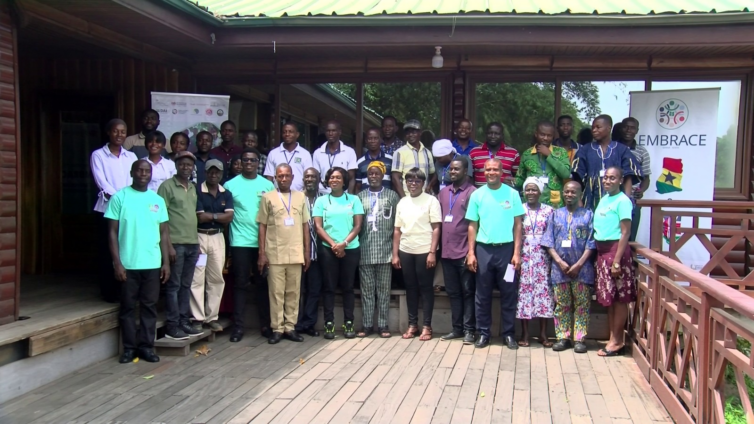
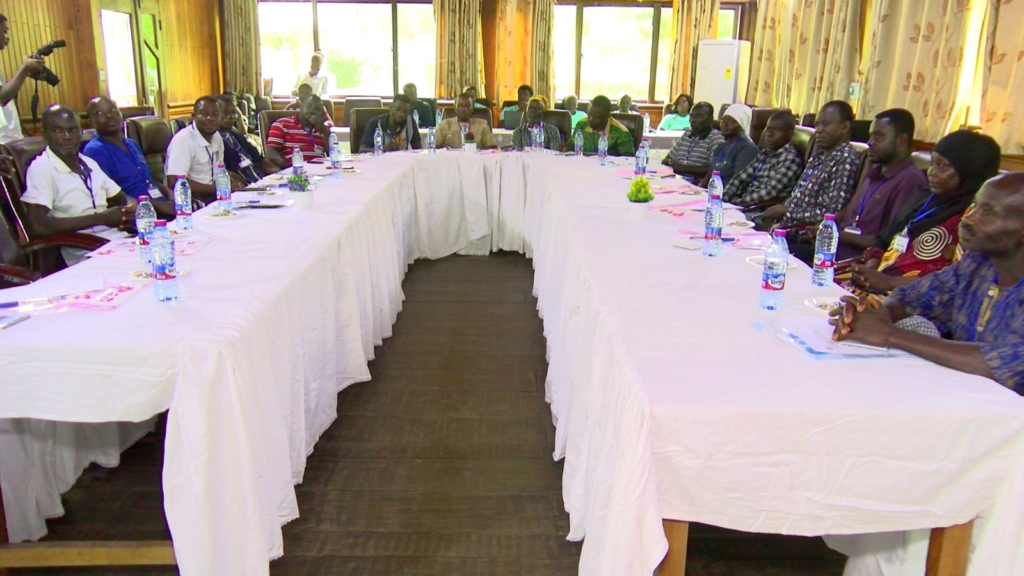
Farmers and community extension officers from across three regions of Ghana have undergone a three-day training program in snail rearing, beekeeping and mushroom cultivation.
This is under the EMBRACE project, an initiative aimed at reversing biodiversity loss and strengthening the resilience of smallholder farming communities.
The training, organised by the Forestry Research Institute of Ghana, an institute under the Council for Scientific and Industrial Research (CSIR-FORIG), brought together beneficiaries from 15 communities spanning the Ashanti, Ahafo, and Western North regions.
EMBRACE is designed to respond to the growing threat of biodiversity loss and climate vulnerability in smallholder farming systems.
Rural communities across the country depend heavily on natural resources for food, income, and cultural identity. Yet rapid deforestation, land degradation, and the neglect of underutilised crops and endangered tree species continue to erode their resilience.
The project seeks to bridge scientific evidence with indigenous community knowledge, developing agroforestry models and conservation strategies that safeguard genetic diversity, enhance ecosystem services, and ensure fair benefit-sharing among participating communities.
Director of Commercialisation at CSIR, Mrs Naomi Owusu Appiah, speaking at the event, underscored the urgency of the training.

She noted that the technologies being taught are a direct response to the alarming decline of species as a result of climate change, rapid urbanisation, and destructive human activities.
“The technology helps us to mimic the natural environment so that even though we are not in the forest, we can still create a natural environment in the cities where we will be able to farm snails and make a livelihood out of them,” she said.

Project Lead, Dr Clement Oppong Peprah, emphasised that the initiative goes beyond income generation, positioning the program as a critical tool in the fight against food insecurity in rural Ghana.
“Aside from income, we are also thinking of food security as well. We also think that as they are growing the animals, they can also gain the protein out of them,” he said.
He also called on policymakers to address the unregulated importation of weedicides, pesticides, and other agrochemicals, which he said pose a serious threat to snail populations and broader ecosystem health.
Dr Oppong Peprah urged the government to provide incentives for the local production of organic weed control alternatives.
“We plead with policymakers to find a way that we can have a proper balance to the importation of these chemicals and give more incentives to companies that process these kinds of organic weed controls,” he added.
Participants expressed strong enthusiasm for the program, with many highlighting the potential for the newly acquired skills to cushion them against seasonal income shocks.
“During the dry season, production becomes very low, and farmers face a lot of hardship. But I understand that this training, it will help them to get something better, not only during the dry season, because it’s an additional business. They can do it while farming, so they can get something from the farming and the extra business as well,” one participant said.
Beyond their own livelihoods, participants pledged to share their knowledge within their communities, creating a ripple effect which is central to EMBRACE’s long-term conservation and development goals.
Latest Stories
-
Ghana’s Starlets step up training ahead of second friendly with Morocco
29 minutes -
COCOBOD says $1.4bn domestic funding is a strategic shift, not market exclusion
1 hour -
Richmond Quarcoo appointed Ghana’s Chef de Mission for 2028 Olympics
2 hours -
‘Our missing players are more important’ – Gambia coach fires shot at Ghana
3 hours -
Today’s front pages: Tuesday, September 29, 2026
3 hours -
Ghana ‘showing up differently’ on global stage – Joyce Bawah Mogtari
3 hours -
Ghana’s tuna industry in crisis as 20 hook-and-line vessels collapse
4 hours -
South Tongu MP launches apprenticeship programme for 159 young people
4 hours -
The Pusiga connection behind Gertrude Atongi’s work in New York
5 hours -
Teachers took promotion exams in December to beat government clearance deadline – GNAT
5 hours -
NPA launches 2026 staff welfare week with focus on teamwork and employee wellbeing
5 hours -
Ghana, Saint Kitts and Nevis sign labour deal to strengthen protections for Ghanaian nurses
5 hours -
Delayed promotions put teachers’ retirement benefits at risk – GNAT
5 hours -
No ‘Bawumia candidates’ in NPP executive elections – Anthony Karbo
5 hours -
Over 3,000 displaced as flooding overwhelms Hohoe communities
5 hours