

Audio By Carbonatix
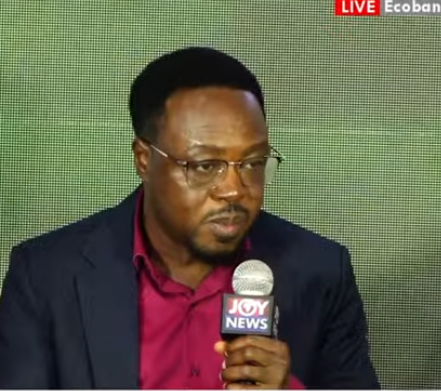
Former Director of the Peasant Farmers Association of Ghana (PFA), Dr Charles Nyaaba, says stringent documentation and collateral requirements imposed by financial institutions are restricting farmers’ access to credit, particularly smallholder farmers seeking relatively modest loans.
He said the requirements often fail to account for the varying circumstances and financing needs of farmers, making it difficult for many to secure funding for their agricultural activities.
Speaking at the Ecobank-JoyBusiness Financial Dialogue on September 22, on the theme “Green Finance, Real Impact: Powering Inclusive Agri-Growth in Ghana,” Dr Nyaaba identified access to finance as a major constraint across the agricultural value chain.
Drawing on his experience working with farmers across the country, he said the documentation demanded by financial institutions remained a significant hurdle to securing credit, from production through to marketing and distribution.
“One of the major constraints when we come to assessing financing for whatever activities, from production to market to the consumer, has to be the availability of documents that financial institutions are expecting to get from the farmer,” he said.
Collateral requirements burden farmers
Dr Nyaaba said financial institutions often failed to distinguish between the different categories of farmers and their respective financing needs when assessing loan applications.
He cited his own experience seeking funding to support farmers, despite having led thousands of farmers and helped them access agricultural inputs.
He recounted that, in a recent financing arrangement, he was required to transfer the title of a property to a bank before it would release funds to support farmers.
“Last year, I had to provide everything to the banks. Now, I was told to take the document and go to the Lands Commission and transfer the title to the bank before they can give me the financing to the farmers,” he said.
According to him, the cost of transferring the property title alone was about GH¢30,000, a substantial expense relative to the relatively small amount of financing some farmers require.
He questioned how smallholder farmers, particularly those who rely on inherited family property as their principal asset, could afford such costs to secure agricultural loans.
“Where would that farmer go, even if the farmer has a house that he or she inherited from the family or from their parents? How can that farmer get GH¢30,000 to go and transfer the title of her parents' house to be able to get that loan?” he asked.
Call for flexible agricultural financing
Dr Nyaaba called on financial institutions to adopt a more flexible and inclusive approach to agricultural financing, taking into account the different categories of farmers and their financial circumstances.
He urged lenders to reconsider their collateral and documentation requirements, as well as interest rates and repayment periods, to make credit more accessible to farmers.
He said financing arrangements must reflect the realities of agricultural production and the needs of farmers if financial institutions are to support growth across the sector.
Latest Stories
-
Immediate reconciliation key to building united NPP — COKA
2 minutes -
MPs, CSOs push for dedicated budget line for malaria
3 minutes -
Jeffrey Nortey’s viral Kanayo O. Kanayo bar gets the legend’s attention, leads to a meet-up
5 minutes -
Bagre Dam’s Annual Floods: Scientists seek a lasting solution as Northern Ghana’s farmers count the cost
5 minutes -
Why Corporate Communications Professionals Must Be Marketing-Oriented: The strategic advantage and the professional mileage
16 minutes -
DVLA hands 357 suspected cloned vehicles to GRA over customs duties
16 minutes -
Appeals will not end strike, FWSC must negotiate – GAUA General Secretary
23 minutes -
Haruna Iddrisu hails Ghana’s academic calendar as best in a decade
24 minutes -
Silent Football: A team, a dream, a $24,000 debt – the struggles of Ghana’s deaf footballers
24 minutes -
Education Minister Haruna Iddrisu demands merit-based admissions, appointments at Defence University
27 minutes -
National Defence University to strengthen Ghana’s response to emerging security threats – Haruna Iddrisu
30 minutes -
Pupil arrested after two teachers shot at French school
36 minutes -
Lamisi takes ‘Let Us Clap’ tour across five countries and 18 dates
54 minutes -
DVLA cuts roadworthy contract cost from $155.4m to GH¢2m – CEO
56 minutes -
Okyeame Kwame calls for free university education for farmers’ children
59 minutes