

Audio By Carbonatix
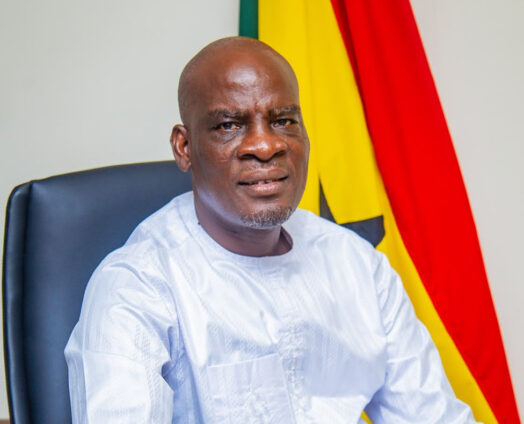
Education Minister Haruna Iddrisu says the establishment of the National Defence University of Ghana is intended to strengthen the country’s capacity to respond to emerging security threats, including terrorism, cyberattacks, violent extremism and climate-related risks.
He said the changing nature of security threats required highly trained professionals with the intellectual depth and strategic judgement to complement conventional military capabilities.
Speaking at the inauguration of the university’s governing council, Mr Iddrisu said Ghana needed to prepare for security challenges that increasingly cut across national borders and traditional military operations.
“In an increasingly complex and interconnected world with security challenges that transcend traditional military trust. Nations need to respond to terrorism, cyber threats, transnational crime, violent extremism, and climate-related security risks,” he said.
He also raised concerns about misinformation on social media and the influence of emerging technologies on the strategic environment.
“Meeting these challenges will require highly trained leaders who possess not only military expertise, but also intellectual depth, ethical judgment, and strategic foresight,” he said.
The National Defence University is expected to serve as a centre for advanced strategic studies, operational readiness, research and policy development in defence and security.
Under the National Defence University Act, 2026, the institution will operate as an autonomous, specialised higher education institution for the Ghana Armed Forces and the wider security sector.
Its functions will include awarding specialised degrees, disseminating knowledge on defence and security matters and building relationships with other institutions.
Mr Iddrisu said the university should also contribute to the development of Africa-led peace and security policies.
He cited international institutions, including China's People's Liberation Army National Defence University, the United States National War College, Pakistan's National Defence University in Islamabad and Kenya's National Defence University, as examples of specialised defence education models.
The minister stressed that the new institution should not be viewed simply as a military training facility.
He said its establishment was also intended to strengthen relations between the armed forces and civilians, contributing to Ghana’s democratic development.
“Strong civil-military relations are not merely desirable; they are essential for national development,” he said.
He added that effective national defence in the 21st century required cooperation across government and society, incorporating diplomacy, intelligence, economic resilience, technological innovation and national unity.
The government has committed GH¢25 million in seed funding to support the university’s take-off and announced plans to support faculty development and infrastructure expansion.
Latest Stories
-
Muntaka urges Ghanaian cannabis growers to form cooperatives under licensed cultivation framework
7 minutes -
84 suspected drug offenders in custody as NACOC freezes nearly 73 assets – Muntaka
17 minutes -
Immediate reconciliation key to building united NPP — COKA
20 minutes -
MPs, CSOs push for dedicated budget line for malaria
21 minutes -
Jeffrey Nortey’s viral Kanayo O. Kanayo bar gets the legend’s attention, leads to a meet-up
22 minutes -
Bagre Dam’s Annual Floods: Scientists seek a lasting solution as Northern Ghana’s farmers count the cost
22 minutes -
Why Corporate Communications Professionals Must Be Marketing-Oriented: The strategic advantage and the professional mileage
33 minutes -
DVLA hands 357 suspected cloned vehicles to GRA over customs duties
34 minutes -
Appeals will not end strike, FWSC must negotiate – GAUA General Secretary
40 minutes -
Haruna Iddrisu hails Ghana’s academic calendar as best in a decade
41 minutes -
Silent Football: A team, a dream, a $24,000 debt – the struggles of Ghana’s deaf footballers
41 minutes -
Education Minister Haruna Iddrisu demands merit-based admissions, appointments at Defence University
44 minutes -
National Defence University to strengthen Ghana’s response to emerging security threats – Haruna Iddrisu
47 minutes -
Pupil arrested after two teachers shot at French school
54 minutes -
Lamisi takes ‘Let Us Clap’ tour across five countries and 18 dates
1 hour