

Audio By Carbonatix
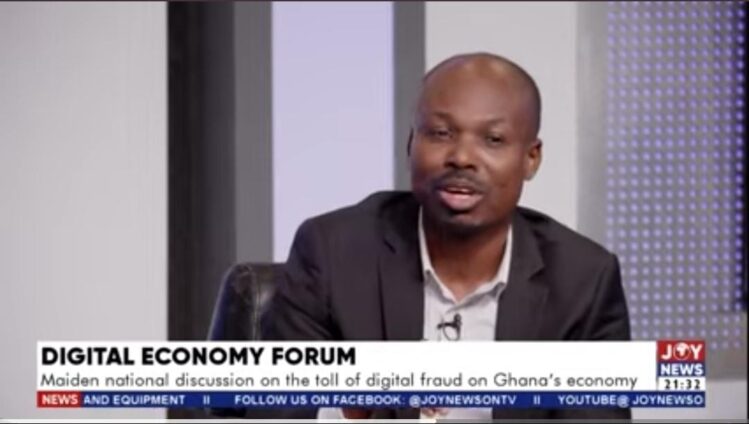
The Head of Internal Affairs at Hubtel, Ebenezer Boffour, has warned that the lack of collaboration among payment service providers (PSPs) is undermining efforts to combat fraud in Ghana's rapidly expanding digital payments ecosystem.
Speaking during the Digital Economy Forum on JoyNews on Wednesday, July 22, Mr Boffour said although banks, fintechs and payment service providers operate under similar regulatory and security requirements, the industry remains fragmented when it comes to sharing information and coordinating responses to fraud.
According to him, institutions are held to the same standards on cybersecurity, anti-money laundering and the protection of digital systems, meaning investment in securing platforms is not the main challenge.
However, he noted that the industry's biggest weakness lies in the absence of collaboration among payment service providers.
"Where I see the challenge is that when it comes to the payment service space, we have silos when it comes to fighting fraud. Even to share information among ourselves is a big issue," Mr Boffour stated.
He explained that his experience in the industry has shown stronger cooperation between payment service providers and dedicated electronic money issuers than among payment service providers themselves.
Recalling his early days at Hubtel, he said one of his first contacts was an official at MTN Mobile Money because they had to jointly resolve a fraud incident.
Mr Boffour said despite such engagements, collaboration across the wider payment services industry remains weak.
"The level of engagement between payment service providers and dedicated electronic money issuers is not the same level when it comes to engagement among the payment service providers themselves. As I sit here, I hardly know so many people from other companies," he said.
He contrasted the situation with the banking sector, where institutions regularly meet through the Ghana Association of Banks to exchange intelligence and educate one another on emerging fraud trends.
"I know the banks are doing better when it comes to engaging themselves. They have this association where they engage to educate themselves on the trends," he noted.
Mr Boffour suggested that stronger industry-wide cooperation and information-sharing mechanisms among payment service providers would significantly improve Ghana's ability to detect and prevent digital fraud.
Latest Stories
-
Mahama swears in Emelia Afi Agbenyo, Joseph Kwaku Asamoah as EC Deputy Commissioners
8 minutes -
Wetland communities in Northern Ghana face a hotter, flood-prone future as climate risks intensif
11 minutes -
Sam George tasks KNUST to develop Twi AI model as Ghana plans local-language artificial intelligence
13 minutes -
Poor roads choking eco-tourism potential – Avatime Paramount Chief cries out
18 minutes -
DVLA records GH¢25 million surplus in 2025 as contributions to state funds reach GH¢98.1 million
23 minutes -
Over 10 suspected scam centre kingpins arrested and remanded – CSA
28 minutes -
Ministers, CEOs, policymakers to grace 7th Africa Public Sector Conference in Accra
30 minutes -
NDC sets filing fees for national executive elections, with chairman aspirants paying GH¢100,000
32 minutes -
Muntaka urges Ghanaian cannabis growers to form cooperatives under licensed cultivation framework
41 minutes -
84 suspected drug offenders in custody as NACOC freezes nearly 73 assets – Muntaka
51 minutes -
Immediate reconciliation key to building united NPP — COKA
54 minutes -
MPs, CSOs push for dedicated budget line for malaria
54 minutes -
Jeffrey Nortey’s viral Kanayo O. Kanayo bar gets the legend’s attention, leads to a meet-up
56 minutes -
Bagre Dam’s Annual Floods: Scientists seek a lasting solution as Northern Ghana’s farmers count the cost
56 minutes -
Why Corporate Communications Professionals Must Be Marketing-Oriented: The strategic advantage and the professional mileage
1 hour