

Audio By Carbonatix
An initiative to connect 300 million Africans to electricity in the next six years has won new pledges worth more than $8 billion from lenders including the Islamic Development Bank and the Asia Infrastructure Investment Bank.
The Mission 300 initiative, launched by the World Bank and the African Development Bank in April, is projected to cost $90 billion. Its implementation faces challenges because the economies of countries in the region are severely constrained, mainly due to sluggish revenue and high debt service costs.
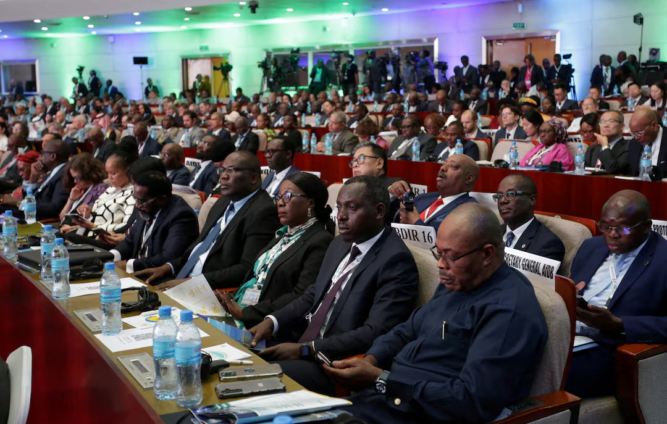
"Our national balance sheets are insufficient... to achieve Mission 300's objectives," Zambian President Hakainde Hichilema told an Africa energy summit in Tanzania.
Funding for the project is expected to come from multilateral development banks, development agencies, private businesses and philanthropic organisations such as the Rockefeller Foundation, opens new tab, which is part of the initiative.
Muhammad al Jasser, chairman of the IsDb, said in a statement released during the summit that ended on Tuesday that the Jeddah-headquartered bank was committing $2.65 billion in project financing and another $2 billion to insure power projects in Africa.
Beijing-based AIIB is set to provide $1-1.5 billion in financing.
"Six hundred million people in Africa without access to electricity is intolerable," said AIIB President Jin Liqun.
Others funding the project include the French Development Agency (AFD), which committed to providing 1 billion euros ($1.04 billion), and the OPEC Fund for International Development, which made an initial commitment of $1 billion, the AfDB said in a closing statement.
The additional finance builds on commitments of up to $48 billion from the World Bank and the AfDB, officials at the summit said. The two organisations' contributions could be increased during implementation, they said.
Provision of 300 million people with access to electricity, half of those currently without power on the continent, is a crucial building block for boosting Africa's development by creating new jobs, said World Bank President Ajay Banga.
Half of the targeted new connections will get electricity from existing national grids, officials said at the summit, while the other half will be from renewable energy sources, including wind and solar mini-grids.
Apart from lighting up homes and businesses, Mission 300 is expected to boost the provision of clean cooking energy to homes, cutting reliance on wood and charcoal which are harmful, said Tanzania's president, Samia Suluhu Hassan.
Latest Stories
-
Nearly 400 sentenced in Nigeria for links to militant Islamists
19 minutes -
Ghana’s recovery supported by gold strength despite global oil price pressures – Standard Bank Research
26 minutes -
Kwaku Azar writes: A-G vs OSP
59 minutes -
Mfantsipim–Adisadel rivalry built excellence, not division – Sam Jonah
1 hour -
Vice President launches Mfantsipim’s 150 years of shaping Ghana’s greatest mind
2 hours -
I assure Otumfuo, Mahama will join him to commission KNUST Teaching Hospital by end of this year – Haruna Iddrisu
2 hours -
Barcelona dominate derby to extend La Liga lead
3 hours -
Gov’t to roll out free special education for persons with disabilities from July 1 – Education Minister
3 hours -
Importers and Exporters Association declares full support for Publican AI port system
3 hours -
“We used it to test our officiating officials’ readiness” – Bawah Fuseini after CAA Athletics event
3 hours -
Volleyball emerges as Ghana’s fastest rising sport
3 hours -
National Sports Fund needs strong leadership from the top – Administrator David Wuaku
4 hours -
JoySports Exclusive: Steve McLaren in talks with GFA after expressing interest in Black Stars job
4 hours -
Fire guts auto parts warehouse at Bubuashie, one fire officer injured
4 hours -
I owe my victory to coach Ofori Asare – Allotey after winning WBA Africa Gold Super Flyweight belt
4 hours