

Audio By Carbonatix
Ghana’s utility landscape entered a phase of steady and cumulative pricing adjustments in 2025, with the Public Utilities Regulatory Commission (PURC) approving a combined 18.34% increase in electricity tariffs and 4.02% for water.
These increments were spread across quarterly reviews.
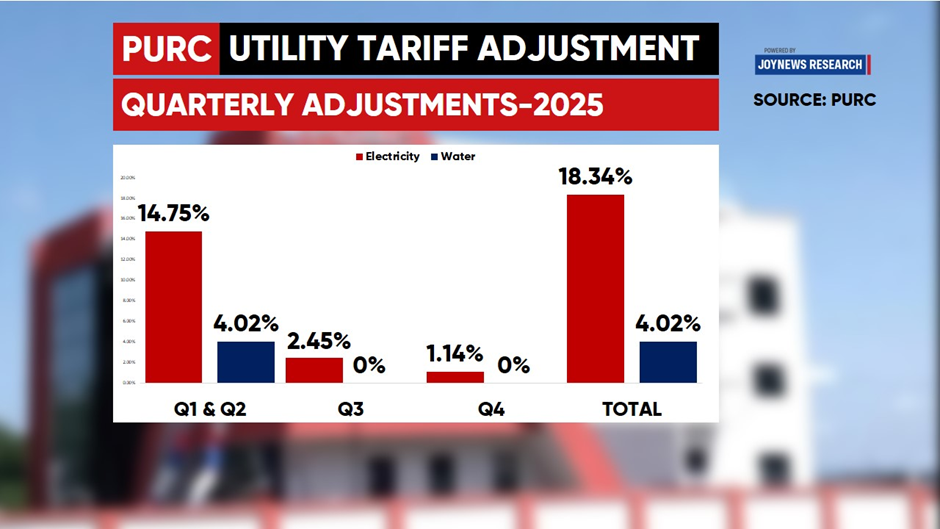
Water tariffs moved only once, in the second quarter, while electricity tariffs recorded three separate increases as the Commission sought to align prices with the underlying cost of generation, distribution and currency depreciation.
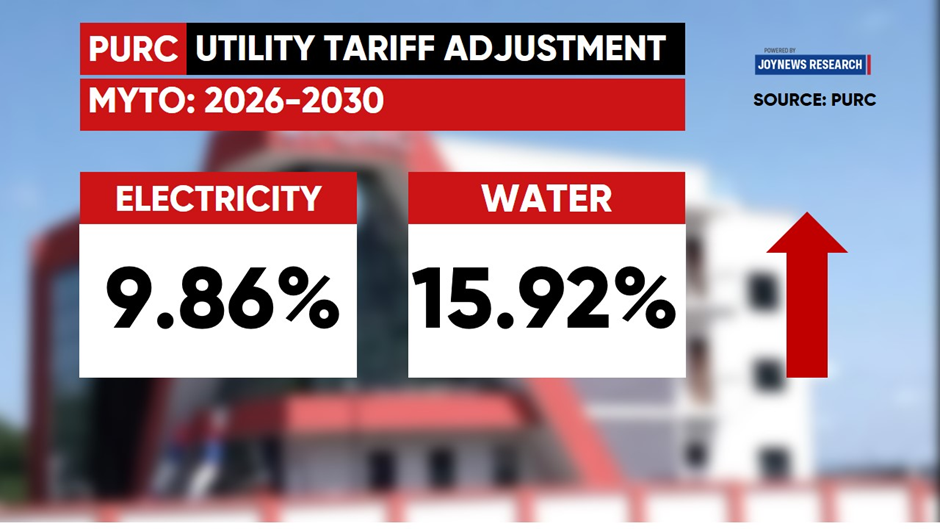
Looking ahead to 2026, PURC has announced a 9.86% upward adjustment in electricity tariffs and a significant 15.92% rise in water tariffs under the new Multi-Year Tariff Order (MYTO).
Although the MYTO sets a five-year framework, these adjustments remain subject to quarterly reviews to ensure that tariffs maintain their real value relative to prevailing economic conditions.
In principle, this means an improved macroeconomic environment could trigger a downward adjustment, while worsening conditions could necessitate additional increments over the period.
The MYTO announcement followed extensive submissions from state utilities, many of whom argued that they face severe financial stress and require drastic upward adjustments to remain operational.
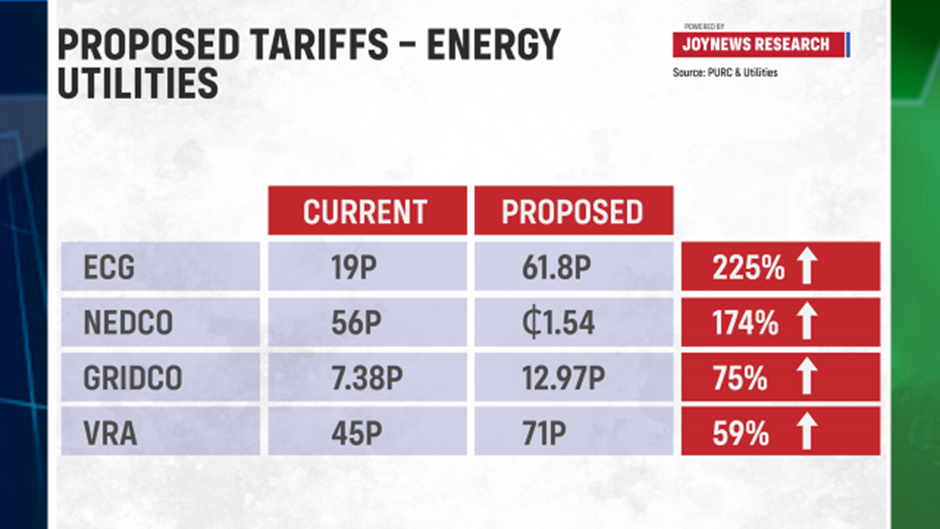
This year, utility companies requested substantial increases in their distribution charges.
For electricity alone, ECG sought a 225% increase, NEDCO 174%, GRIDCo 75% and VRA 59%.
On the water side, Ghana Water Company Limited (GWCL) pushed for a 280% increase, warning that without such an adjustment, the utility risked a nationwide shutdown.
These warnings were not abstract because GWCL has already been forced to suspend operations at treatment plants in areas where illegal mining has rendered raw water so polluted that treatment becomes economically unviable.
The electricity utilities likewise argued that significant increases were necessary to sustain operations and “keep the lights on.
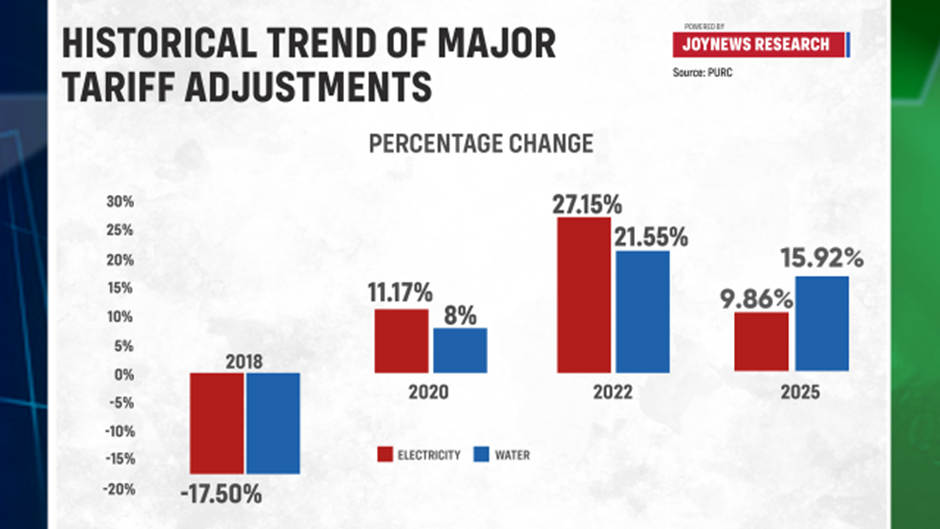
This is not the first time the Commission has faced such tension. Under the 2022–2025 MYTO, electricity tariffs rose by 27.15% and water by 21.55%.
These increments followed the 2018 review, which reduced residential tariffs (electricity) by 17.5% and non-residential by 30% in line with macroeconomic conditions at the time.
But by 2020, a combination of Covid-era revenue shocks, rising inflation, and mounting sector arrears forced the regulator to reverse course.
Utility companies once again submitted astronomical proposals.
GWCL demanded a 300% increase, ECG 148%, and NEDCO 113%, with GRIDCo and VRA requesting 48% and 37%, respectively. PURC, weighing these demands against broader macroeconomic deterioration, eventually approved the mid-20% increases in 2022.
This year’s MYTO adjustment follows the same analytical logic.
PURC appears to consider the utilities’ claims as part of its broader assessment but ultimately calibrates tariff increases to what current economic conditions can reasonably support.
With inflation easing sharply from 23.5% in January to 6.3% in November and the cedi appreciating by 30.4% against the dollar over the same period, the macroeconomic environment has improved relative to recent years.
The introduction of the mini-grid tariffs to cater for electricity distribution to island communities. PURC leveraged all these in their decision to increase tariffs.
In parallel with PURC’s tariff adjustments, a seven-member technical committee was tasked with developing a privatisation roadmap for electricity distribution.
The committee suggested 3 options: to give the entire section to the private sector, to divide it into several zones and give them to private operators or for the private sector to operate the low-voltage network (transformers) to deliver to homes.
From these options, Energy minister, John Jinapor clarified that the government is not selling ECG but will rather delegate operational responsibilities to private partners across designated zones (option 2).
The IMF has also supported renewed private-sector engagement as a way to inject capital discipline, reduce losses and modernise the distribution network.
The Commission’s modest 2026 increases may buy utilities time, but they do not guarantee improved performance. For now, this 2026 tariff order reflects another attempt to increase prices enough to keep the lights on and water flowing, but not so much as to break households already stretched by economic pressures.
Latest Stories
-
Ghana housing finance conference adopts communiqué to improve affordable housing access
2 hours -
Special Initiatives Minister urges Wa Technical Institute to enrol more girls as EU-backed solar training lab opens
3 hours -
In the matter of my first year at the Bar
3 hours -
ActionAid Ghana calls for an end to child marriage, greater investment in girls’ rights
3 hours -
Newsfile to tackle World Cup visa scandal, beach demolitions, education strikes, BRICS bid
3 hours -
UK-Ghana Trade & Investment Summit: Trade Resource Centre to help businesses maximise UK-Ghana trade opportunities
3 hours -
Embassy of Denmark celebrates World Maritime Day
4 hours -
Linking LEAP to productive inclusion could cut extreme poverty by 2030 – UNICEF
5 hours -
Trade Ministry backs use of creative arts to rehabilitate prison inmates
5 hours -
Negotiations with government to continue despite strike suspension – GNAT
5 hours -
‘Ghana cannot afford to waste public resources; every cedi has a job’ – Ato Forson
5 hours -
Ghana expects economic boost as World Assemblies of God Congress brings 10,000 delegates to Accra
5 hours -
Joy in Nayilifong as Farouk Aliu Mahama donates 100kVA transformer to improve power supply
5 hours -
Chief Justice urges employers to tackle mental health stigma in workplaces
6 hours -
Analysis: Ghana’s yellow fever numbers reveal a gap between vaccination and protection
7 hours