

Audio By Carbonatix
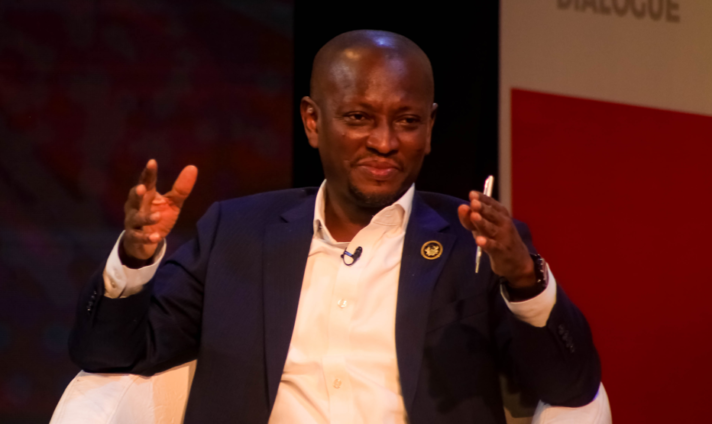
Former Deputy Attorney General Alfred Tuah-Yeboah has backed the New Patriotic Party’s concerns over what it describes as “selective justice” in the decision to continue selected criminal cases during the legal vacation.
The NPP has accused the judiciary of applying selective justice by allowing substantive hearings in cases involving some of its former government officials while numerous other cases remain pending before the courts.
Responding to whether he agreed with his party’s position that the development amounted to political interference in the judiciary, Mr Tuah-Yeboah said he "agreed with the NPP to the extent that other cases across the country were not being heard during the vacation."
He argued that the concern was not simply about the political affiliation of the accused persons, but about the apparent disparity in the treatment of cases during the vacation.
According to him, if cases involving people affiliated with a particular political party are being prioritised for substantive hearings while other cases are adjourned until the new legal year, there is justification for raising concerns about discrimination and selectivity.
“And so if you have people who belong to a particular party and have formed authorities, and are being forced under the rubric umbrella, and that they had to go to court and have the case heard in vacation, we are justified as a party to say that there's an aspect of discrimination and selectivity,” he stated.
His comments come amid an escalating debate over the Chief Justice’s decision to authorise judges to conduct hearings during the 2026 legal vacation. The controversy has particularly centred on selected high-profile criminal cases involving former officials of the previous NPP administration.
The NPP has called for the withdrawal of the warrants, while Deputy Attorney General Justice Srem-Sai has rejected allegations of selective justice, arguing that the lawyers’ objections amount to attempts to delay the cases.
Mr Tuah-Yeboah’s position adds to concerns from sections of the legal community that, if substantive hearings are to be conducted during the vacation, the arrangement should be applied consistently rather than only to selected cases.
He has previously argued that the issue is particularly problematic because thousands of civil and criminal matters remain pending before the High Court, many of which could benefit from being heard during the vacation.
Latest Stories
-
“US Embassy introduced TRIBE Culture Fest to NSA, GTA” – Kofi Adams
1 hour -
“NSA did not tell us of any embassy arrangement” – Kofi Adams
2 hours -
Glasner suffers loss on Selhurst return as Palace beat Forest
3 hours -
WAFU B U17: ‘We won but I expected more from my boys’ – Kassim Ocansey
3 hours -
Man City cruise to statement win over 10-man Liverpool
3 hours -
Be careful with cross-border lending, foreign currency exposures – BoG to financial institutions
6 hours -
GPL 2026/27: Medeama go three clear as Hearts of Oak recover and Bechem stage stunning comeback
6 hours -
Ntiamoah Foundation launches “BEYOND 20” anniversary campaign
6 hours -
Credit Risk Management Directive: BoG to begin implementation for banks, others from July 1, 2027
7 hours -
Ghana Brands Awards 2026: Leading brands, business trailblazers to shine on November 20
7 hours -
T-bills auction: Demand improves as government exceeds target by about 76%; interest rates soften
7 hours -
Ziope undertakes initiative to build a technologically inclined community, commissions self-help ICT lab
7 hours -
ECG announces power outage in parts of Tema, Central Region due to network fault, maintenance
8 hours -
When the Gospel Becomes a Weapon: The church, blackmail and the abuse of faith
8 hours -
JoyNews’ Jacqueline Ansomah Yeboah selected for UK Media Excellence for Emerging Technologies Fellowship
9 hours