

Audio By Carbonatix
The Minority Caucus in Parliament has vehemently opposed the recent utility tariff hikes, demanding an immediate reversal and labelling the policy as a "symptom of failed leadership" rather than a genuine reform measure.
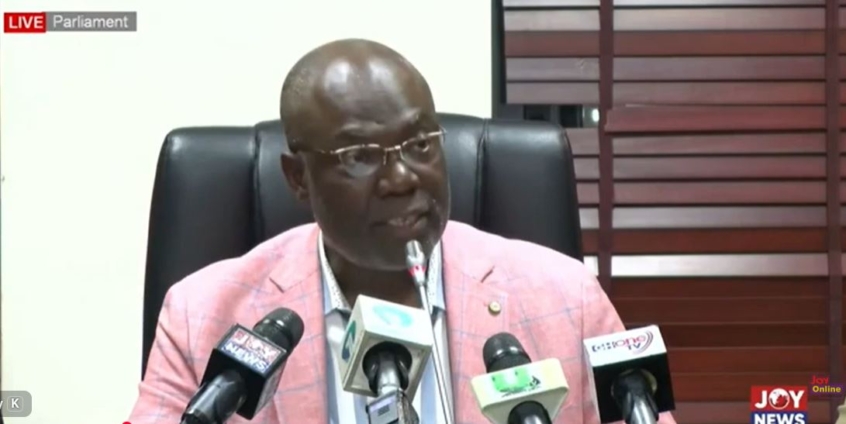
George Kwame Aboagye, the Ranking Member on Parliament’s Energy Committee, used a press conference today, Monday, December 8, 2025, to warn that the cumulative effect of the hikes would be catastrophic for Ghana’s economy and its citizens.
The NPP MPs believe that, “These tariff hacks are not reforms they are punishment they are not solutions they are sentence of failed leadership and poor policy choices.”
Mr. Aboagye articulated a stark five-point breakdown of the immediate and long-term consequences should the government fail to heed the call to withdraw the tariff increases on water (over 15%) and electricity (around 9%).
- Escalating Utility Poverty: He warned that the increases would exacerbate the cost-of-living crisis, “leaving more families unable to afford basic electricity.” This exacerbates energy poverty, particularly in low-income communities already struggling with economic hardship.
- Collapse of SMEs: The backbone of Ghana's economy—Small and Medium Enterprises (SMEs)—will face collapse “due to unbearable operating costs.” Data indicates that SMEs account for approximately 70% of Ghana's GDP and represent a significant portion of total employment, making their collapse a systemic economic threat.
- Job Losses and Unemployment: The heightened operational strain will inevitably lead to “Job losses as industries scale down or shut down operations.” Mr. Aboagye pointed to the already alarming rate of youth unemployment in the country, noting that job losses from the industrial sector would only intensify this crisis.
- Reduced Competitiveness: The rising cost of power and water will “reduce productivity and competitiveness further weakening the economy.” Ghanaian goods and services will become more expensive relative to regional competitors, negatively impacting exports and manufacturing output.
- Heightened Social and Economic Hardship: The final outcome, he argued, would be a deepening of suffering: “heighten social and economic hardship deepens the suffering of workers and households.”
Mr. Aboagye concluded his address with a scathing condemnation of the government’s policy choice, insisting that the reliance on consumer price increases demonstrates a failure to address systemic inefficiencies within utility providers like the Electricity Company of Ghana (ECG) and the Ghana Water Company Limited (GWCL).
The Minority's firm position is that the government must pursue internal efficiency measures and address financial leakage, technical losses, and overcapacity payments—estimated by some analysts to cost the nation millions of dollars annually—before shifting the burden onto consumers. The caucus has pledged to use every tool at its disposal to force a policy reversal.
Latest Stories
-
Glut! Farmers count losses as prices crash, customers happy
17 minutes -
GSA postpones auction of unserviceable vehicles
19 minutes -
Man charged with attempted murder after stabbing
23 minutes -
World Cup visa scandal: Senyo Hosi says issue goes beyond calls for Sports Minister’s resignation
24 minutes -
Yaw Ampofo Ankrah hasn’t taken or received any money to facilitate visas – Lawyer insists
42 minutes -
World Cup visa scandal: Senyo Hosi urges focus on constitutional accountability
42 minutes -
La Beach demolition: Senyo Hosi condemns lack of consultation
54 minutes -
Russian glide bomb attack on Zaporizhzhia kills at least 15 people
1 hour -
Jinapor warns underperforming energy sector CEOs of consequences, says no protection for failure
1 hour -
Fire destroys head of tipper truck on Lower Volta Bridge
1 hour -
Palmer signs new Chelsea contract until 2034
1 hour -
World Cup visa scandal: Mahama will act on corruption allegations – Abass Nurudeen
1 hour -
Abass Nurudeen accuses Minority of ‘scandal scavenging’ over World Cup visa controversy
1 hour -
US Embassy recognised NSA, GFA and GTA as separate entities for visa applications – Sports Minister’s aide
1 hour -
Only 30% of Ghanaian teachers satisfied with their jobs – CAPCOE data reveals
2 hours