

Audio By Carbonatix
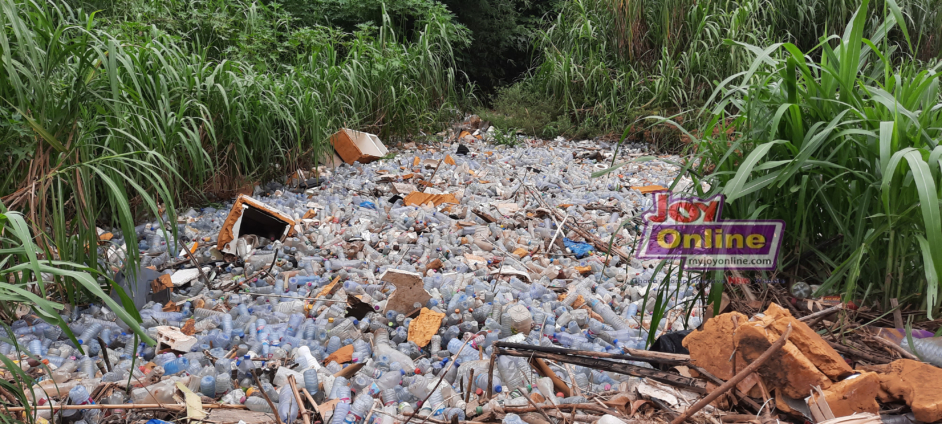
The country generates 1.1 billion pounds of plastic waste annually, Richard Adjei-Poku, the Executive Director of the Livelihood and Environment Ghana (LEG), an environmentally centred organisation, has said.
“However, only nine per cent of the waste is recycled, 41 per cent is collected, and 50 per cent remains uncollected”, he said in an interview in Sunyani, saying the nation spent close to $6 billion in cleaning plastic waste every year.
LEG is a community-based not-for-profit and Non-Governmental Organisation which promotes environmental sustainability and also seeks to better the socio-economic livelihood of marginalised people, advocates their rights and promotes transparency, accountability, and sustainable use of natural resources.
In Africa, he indicated that “research shows that the continent generates about 17 billion plastic waste, costing it close to $561 billion”.
Besides the economic impacts, Mr Adjei-Poku stressed that plastic pollution has “huge environmental and health impacts that are so catastrophic,” saying plastic-polluted water bodies caused biodiversity loss and increased greenhouse gases.
He said: “Chemicals like Bisphenol A, Dioxin and retardant use in the production of plastics contain high toxicity and can cause cancer, reproductive and developmental problems, damage to the immune system and metabolic disorders like diabetes, obesity and infertility”.
Mr Adjei-Poku said concerted and decisive approaches were required to control indiscriminate use and dumping of plastic waste and called on other NGOs and corporate bodies, and religious organisations to help intensify awareness creation on plastic pollution.
He said LEG remained committed to regreening the environment and restoring the nation’s depleted forest and vegetative cover, assuring its readiness to support the government’s Tree4Life Reforestation initiative for the nation to derive the optimum benefit.
President John Dramani Mahama launched the ‘Tree4Life Reforestation’ Initiative as a major national effort to restore the nation’s forests, which provide essential resources such as food, water, medicine, and employment to many Ghanaians.
The implementation of the Tree4Life initiative further gears towards putting the nation on the path to attaining the United Nations Sustainable Development Goals (SDGs) 11 and 13 of respectively, achieving Sustainable Cities and Communities and Climate Action.
Global goal 11 aims to make cities inclusive, safe, resilient, and sustainable, while goal 13 addresses the urgent need to combat climate change and its impacts.
Latest Stories
-
Guggisberg Fiagbenu enters race for Central Tongu NPP Chairmanship in Volta region
12 minutes -
Today’s Front pages: Thursday, April 9, 2026
36 minutes -
“Black Stars have what it takes to win the World Cup” – Sports Minister Kofi Adams
1 hour -
Bank of Ghana Governor to perform official tee-off at 3i Africa Invitational Tournament
1 hour -
Chamber of Bulk Oil Distributors urges caution amidst Special Prosecutor’s petroleum probe
2 hours -
NDC elections: Nat Tetteh eyes Eastern Regional Deputy Secretary position
2 hours -
Ablakwa highlights Ghana-France cooperation, praises Macron on reparatory justice
2 hours -
Protect people, not prices – Joe Jackson rejects fuel tax cuts and subsidies
2 hours -
Finance Ministry, BoG clarify false claims about Databank’s bond market specialist status
2 hours -
Lawyer petitions President to halt Terminal 2 refurbishment over value-for-money concerns
2 hours -
Sunyani Market traders urge government action amid surging ginger prices
2 hours -
Maphlix Farms to supply 3,000 tonnes to help bridge tomato deficit
3 hours -
Ho MP urges public access to officials’ asset declarations
3 hours -
Ecowas Bank for Investment and Development targets SMEs in Ghana with fresh funding for 2026
3 hours -
Two killed in Bosomtwe clash as residents demand increased security presence
3 hours