

Audio By Carbonatix
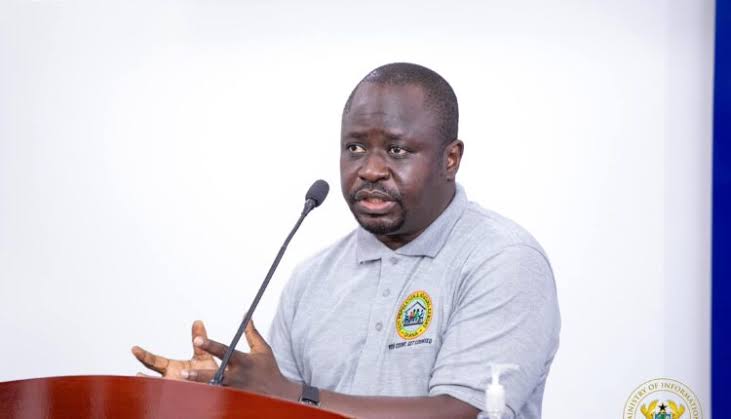
Government Statistician, Professor Samuel Kobina Annim, says there is a need for the auditing of existing policy documents to reflect national data statistics.
Speaking on JoyFM’s Super Morning Show, he stressed the need for government and its agencies to use data produced by the Statistical Service to address teething socio-economic issues in the country.
He said the focus on broad aggregates prevents state actors from addressing socio-economic problems right from the causal factors leading to poor allocation of funds and the slow progress of the country.
“Unfortunately as a country, we’re focused only on the aggregates. So everybody in Ghana talks about the inflation rate being 38.1%, but how many of us have clarity in our minds in terms of the 13 divisions in terms of the regional inflation rate, in terms of inflation for locally produced items and inflation for imported items?
“I go strongly on that and say anytime you focus on the national figures, you’re just reporting progress rather than how we can do well with a particular statistic. So it is about time we ask ourselves; what are the disaggregates? What are the trends? And how do they inform the policies that we make?” he said.
Professor Annim added that while it is expected of ministries to use data produced by the Statistical Service to audit their policy documents and measure their progress, they have failed to do so.
This he says is what has informed the Service’s decision to voluntarily do an audit of various ministerial policy documents to peg their progress.
“And again this is not happening as a country and this is what the Ghana Statistical Service has started doing.
"We pick a particular ministry’s medium-term or long-term plan and once we release any data set be it the demographic and health survey, be it the census, or any data that we collect, we go back to the policy document and say that this is where we are.
“Again this initiative should not come from Ghana Statistical Service this initiative should come from the ministries because they have developed medium-term or long-term ministry-level plans so they should work with us and say that given this data that you have collected can we benchmark where we are?
"What were the interventions that we put in? Why were we able to achieve it in this context and why were we not able to achieve it in another context?” he said.
Latest Stories
-
NPP revises internal election guidelines to strengthen transparency and inclusiveness
21 minutes -
NACOC set to issue licences to qualified applicants for cannabis cultivation – Deputy Director-General
29 minutes -
Easter Outreach: Victory Bible Church offers free healthcare, NHIS support to hundreds
33 minutes -
NPP cannot pressure Mahama to sign a bill not yet received—Solomon Owusu
42 minutes -
MPs, institutions deepen support for Ghana Sports Fund with fresh contributions
49 minutes -
Four people die trying to board boat in Channel crossing attempt
56 minutes -
Abirem MP announces GH₵500,000 education fund to support needy students
57 minutes -
African stakeholders call for stronger ‘One Health’ action on climate and health crises
58 minutes -
DVLA to commission 5 new service centres in Greater Accra
1 hour -
Agenda 111 and the right to health: A broken social contract
1 hour -
Bawa-Rock Ltd funds GH¢400,000 free surgeries for 102 vulnerable patients
1 hour -
Lambussie MP awards over GH¢200,000 in scholarships to students
1 hour -
Vice President expresses gratitude after double enstoolment in Volta Region
1 hour -
Beyond the Noise: Rebuilding trust in journalism in a digital age
1 hour -
I have to follow the law – CAF president tells Senegal regarding AFCON saga
1 hour